World
Sheffield's newspaper legacy spans centuries, from the Register to The Star
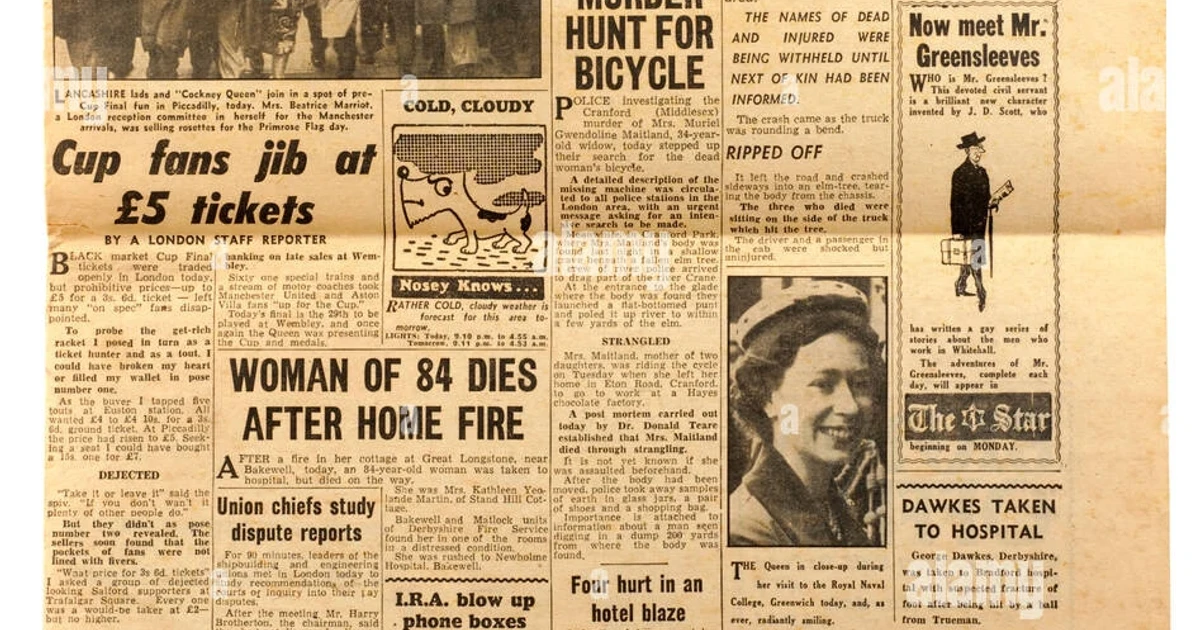
Sheffield’s newspaper history is clear once the mastheads are matched to the record. The city’s documented press lineage runs through the Sheffield Register, the Sheffield Iris, the Sheffield Daily Telegraph and The Star, while the label “The Sheffield Press” does not appear in that established trail. That distinction matters in a city where newspapers have doubled as a civic record, a commercial product and a public archive for generations.
A newspaper record that begins in the 18th century
The Sheffield Register opened the sequence, appearing from 1787 to 1794. The Sheffield Iris followed from 1835 to 1843, then the Sheffield Daily Telegraph began in 1855, and The Star arrived in 1869. Those dates show more than a string of titles: they mark the steady growth of a local press culture that tracked Sheffield’s industrial, political and civic life across changing eras.
The historical archive also preserves Sheffield Free Press, with issues dated from 1851 to 1857 in the British Newspaper Archive. That title sits between the Iris and the Daily Telegraph in the city’s chronology, adding another layer to a newspaper landscape that was never built around just one masthead. Together, the surviving titles show how Sheffield’s local news ecosystem expanded as the city itself became larger, busier and more institutionally complex.
What the archives preserve
Sheffield City Council directs readers to the city’s newspaper record through local libraries and the City Archives, where Sheffield titles can be searched for free. The council’s archive guidance lists titles including The Star, the Sheffield Independent and the Sheffield Daily Telegraph, alongside other Sheffield newspapers preserved in the British Newspaper Archive. In practical terms, that means the city’s print past is still readable, not just remembered.
That access matters because newspaper files are not only for historians. They preserve election coverage, municipal disputes, court reporting, business notices and the small details that map a city’s civic life over time. In Sheffield, the archive trail gives residents a way to verify names, dates and titles before treating them as settled fact.

The modern titles still carrying Sheffield news
Sheffield Newspapers Ltd currently publishes The Star, the weekly Sheffield Telegraph and the Green ’Un. The company is owned by National World and is based at Cubo Work on Carver Street in Sheffield city centre. That physical base keeps the city’s principal local titles anchored in the centre they cover, even as the industry around them changes.
The Star remains an active newsroom, not a relic. In July 2022, National World appointed Claire Lewis as editor, a reminder that the title still sits inside an operating local-news structure with named editorial leadership. The paper’s survival in that role underscores a broader point about Sheffield journalism: the city’s old titles have not simply disappeared, they have been reorganized, consolidated and kept in circulation under modern ownership.
Why ownership is part of the story
The ownership structure around Sheffield’s papers is part of the institutional picture. Press Gazette has reported that the top four regional publishers control 88% of the daily print market, a concentration that shapes how local newspapers are staffed, financed and edited across the UK. Sheffield’s titles sit inside that wider market, which helps explain why the city’s press history now runs through corporate groups rather than independent family ownership.
That concentration does not erase local identity, but it does change the terms on which local reporting survives. A title like The Star can remain recognizably Sheffield while also being part of a larger regional portfolio under National World. For readers, that means the familiar front page is only one part of the story; the ownership behind it also affects newsroom capacity, editorial continuity and the pressure to sustain daily print coverage.
How to verify a Sheffield newspaper title
When a Sheffield paper name appears in conversation, the safest next step is to compare it against the archive record. The city’s verified titles include the Register, Iris, Daily Telegraph, Free Press, The Star and the Sheffield Telegraph, all of which can be traced through the council’s archive guidance and the British Newspaper Archive. If a name does not appear in those lists, it should be treated as unconfirmed until it can be matched to a dated masthead, a library record or an archived issue.
• Check the exact title spelling before repeating it. • Match the title to a date range in the archive record. • Separate historic mastheads from current publishers. • Confirm ownership and editorship as separate facts, not the same thing.
That method is useful in Sheffield because the city’s newspaper tradition is both old and layered. A title can be famous, active and locally important without being the same as the one a person remembers from a family story or a passing reference.
Sheffield’s press legacy is not a single newspaper but a sequence of them, each leaving a dated trace from 1787 to the present. The record runs from the Register to The Star, and the archive trail is strong enough to show exactly where that lineage is documented and where a claim still needs a better name.