Politics
Sheffield’s power-sharing council tests an alternative to political stagnation
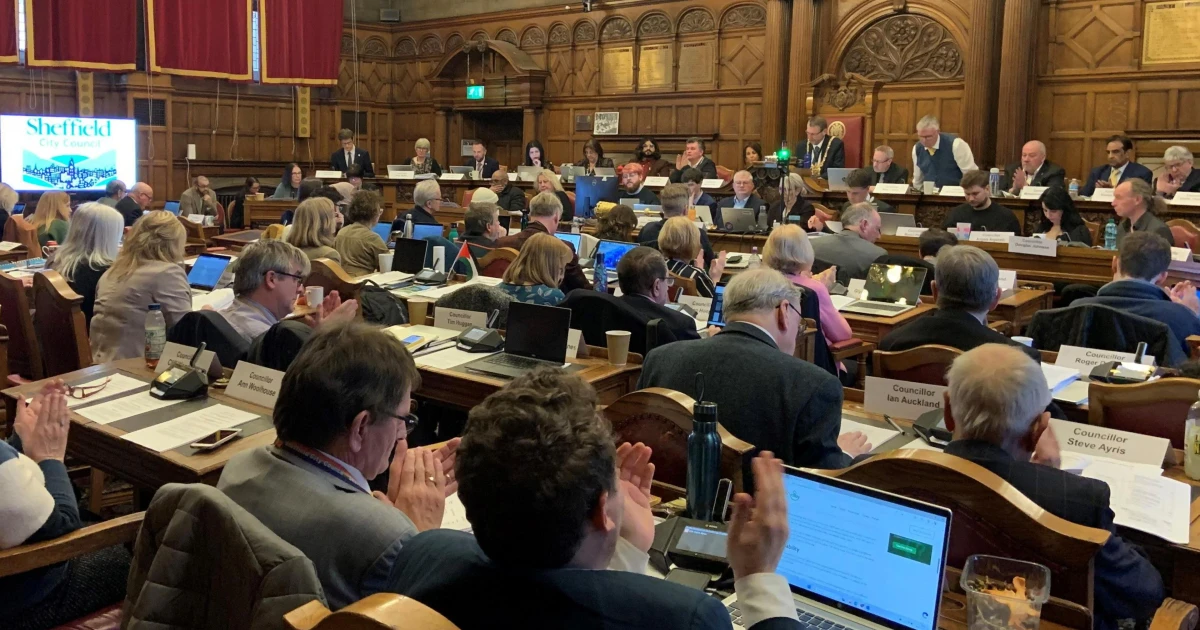
Sheffield’s 84 councillors, elected from 28 three-member wards, now operate under a committee system that replaced the old leader-and-cabinet model in May 2022 after voters backed reform by 89,670 votes to 48,727. The city’s politics now offer a live test of whether shared power can break the habits that let dominant parties govern with little friction.
How Sheffield changed its governing model
The shift began with a petition signed by more than 26,000 residents, more than 5% of Sheffield voters, which forced a referendum on 6 May 2021. The public chose to move away from the cabinet model and, by law, the authority had one year to put the new system in place. A University of Leeds-based analysis identified that vote as the first time an English city had been compelled by referendum to change its governance model.
Sheffield had used a committee system before the Local Government Act 2000. The city returned to a structure that spreads decision-making across more councillors instead of concentrating it in one executive. In the Town Hall on Pinstone Street, that change now shapes how power moves through the council chambers and committee rooms.

Why the council’s seat map matters
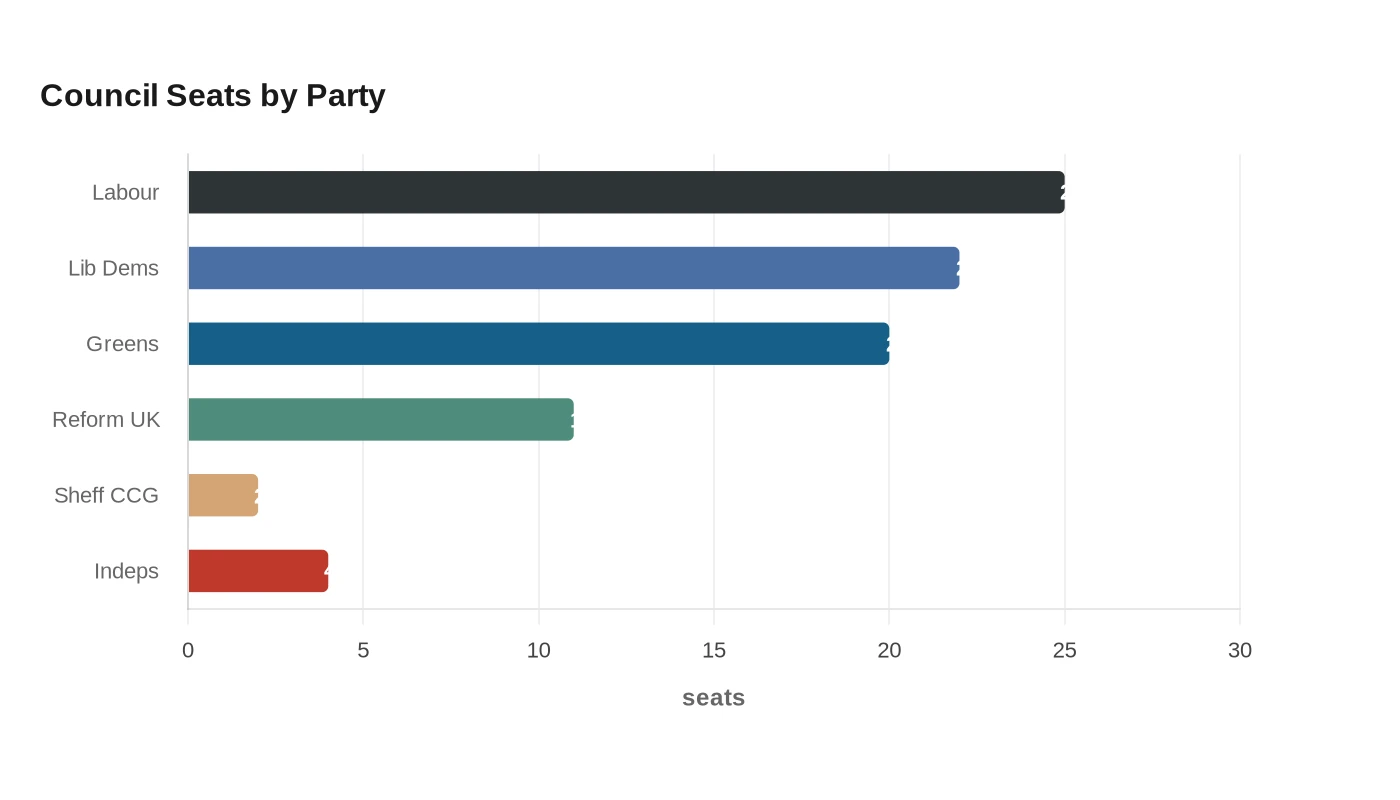
Sheffield’s electoral geography makes clean, winner-takes-all politics harder to sustain. With three councillors in each of the city’s 28 wards, no single ward produces a monopoly on representation, and the 2025 council composition shows how fragmented the chamber has become: Labour holds 25 seats, the Liberal Democrats 22, the Greens 20, Reform UK 11, the Sheffield Community Councillors Group 2, and Independents 4.
The city has been under no overall control. Labour is the largest party, but it is far from a majority, and neither the Liberal Democrats nor the Greens can govern alone.
What power-sharing looks like in practice

Sheffield’s current administration has been run by a collaboration of Labour, the Liberal Democrats, and the Green Party since 2023, and that arrangement continued into 2025/2026. The committee system is meant to broaden decision-making across elected councillors rather than concentrate it in one executive, and as of 2025 leadership and chair roles were distributed across parties rather than monopolized by a single bloc.
That structure is designed to make governing more open, but it also changes where accountability sits. Under a strong leader model, residents can usually identify a single political center of gravity. Under committee governance, responsibility is spread across multiple members and multiple meetings, which can improve representation but also make it harder for voters to pin down who owns a delayed decision, a flawed contract, or a stalled service.
Why critics link dominance to stagnation
Sheffield has become a reference point in a wider argument about what happens when multiparty democracy exists on paper but one party dominates in practice. Political science generally describes one-party or dominant-party systems as arrangements in which a single party controls government either by law or by entrenched practice, and that concentration can turn formal competition into managed politics. Sheffield’s reform debate speaks directly to that problem: if a council can be technically competitive yet functionally closed, power can drift into routine, and routine can shield bad decisions from challenge.
UNODC identifies investigative journalism as crucial to exposing corruption and fighting impunity. A council with no overall control, multiple parties in administration, and 84 councillors spread across 28 wards only works if residents, reporters, and opposition members can keep pressure on the system when agreement becomes too comfortable.
What Sheffield adds to the national reform debate
Sheffield is now one of the clearest English examples of how local institutions can be redesigned by public pressure rather than party instruction. The 2021 referendum, the 2022 launch of the committee system, and the 2025 chamber split all show a city trying to replace concentrated authority with negotiated power.