Science
Shenzhou-21 Mission Extended as Crew Completes Third Spacewalk
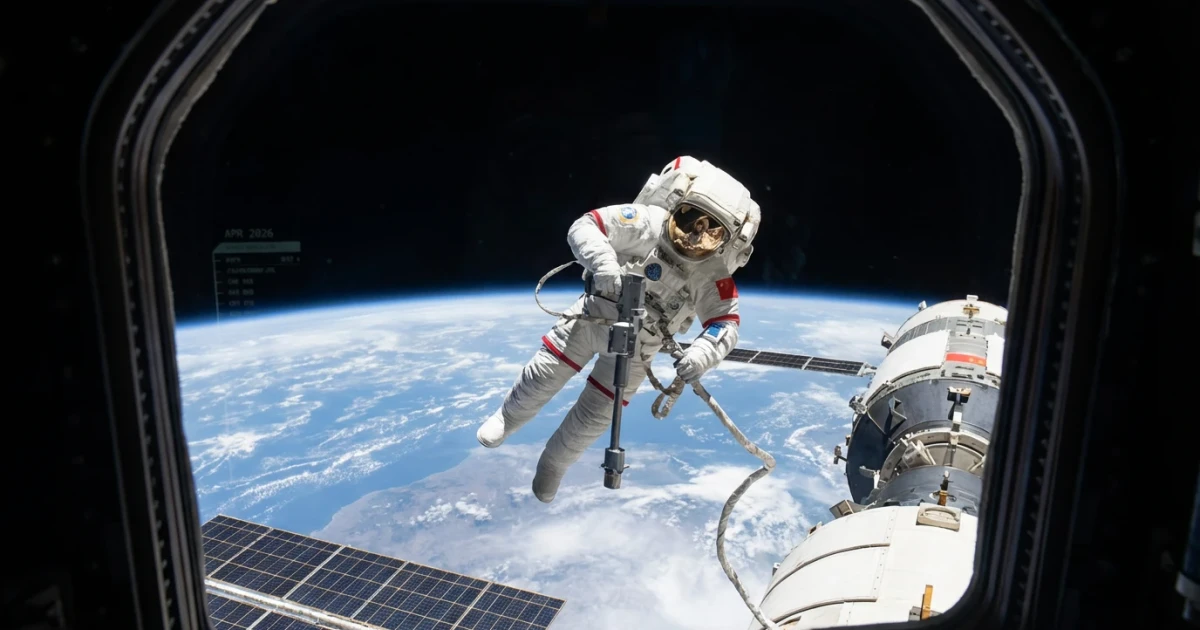
China's Shenzhou-21 crew will remain aboard the Tiangong space station for an additional month, following the completion of their third spacewalk, as confirmed by Chinese authorities this week. The mission extension underscores the country's increasing ambitions in human spaceflight and its commitment to advancing long-duration space missions.
Mission Extension and Recent Achievements
The announcement, first reported by Reuters, comes after the Shenzhou-21 crew successfully undertook their third extravehicular activity (EVA) since arriving at the Tiangong space station. Originally scheduled to last six months, the mission will now continue for an extra month, pushing the boundaries of China's crewed spaceflight capabilities and research agenda.
- Third spacewalk completed: The crew has now performed three spacewalks, focusing on station maintenance and scientific experiments.
- Mission duration extended: The extension brings the mission's total planned length to approximately seven months, a new benchmark for China's human spaceflight program.
Impacts on Scientific Research and International Collaboration
This extended mission offers the crew more time to complete a range of scientific experiments and station upgrades. The longer stay also allows for more comprehensive studies on the effects of long-term spaceflight on human health, which is crucial as China considers more ambitious missions in the future.
The Reuters report also highlighted ongoing dialogue between China and the United States on space activities, though no formal joint initiatives have been announced. However, international observers note that the extended Shenzhou-21 mission adds to China's growing profile in human spaceflight, with the nation's missions increasingly tracked alongside those of NASA and other agencies in global spaceflight databases.
China's Progress in Human Space Exploration
The Shenzhou-21 mission builds on the legacy of earlier flights, furthering China's expertise in station operations, life support, and EVA procedures. According to mission data, the crew has conducted a diverse set of experiments, contributed to station maintenance, and tested new technologies essential for future deep-space exploration.
- Record-setting duration: With the extension, Shenzhou-21 will surpass the previous record for the longest Chinese crewed mission.
- Expanded research agenda: Additional time in orbit enables more medical, biological, and materials science investigations.
Looking Ahead
The mission extension is seen by experts as a significant step toward long-duration human spaceflight, a key goal for China's space strategy. The knowledge gained from Shenzhou-21 will inform the planning of future missions—including potential lunar and deep-space crewed expeditions.
For now, the Shenzhou-21 crew's extended stay highlights both China's growing capabilities and its resolve to play a leading role in international space exploration efforts.