World
Singapore, Indonesia, Malaysia and Brunei face high haze risk this year

The Singapore Institute of International Affairs issued a red haze risk rating for Singapore, Indonesia, Malaysia and Brunei, only the second time it has used its highest warning since the Haze Outlook began in 2019. The most dangerous stretch runs from August to September, when hot, dry conditions can turn land clearing into a regional smoke problem with public-health and diplomatic consequences.
SIIA’s outlook is a risk-based assessment built on weather, policy and market signals. In 2025, the institute rated haze risk Amber, or medium, for Indonesia, Malaysia and Singapore in the second half of the year. Severe and prolonged haze in Singapore has historically tended to hit from July to October, before the year-end monsoons bring wetter weather and reduce fire risk.
El Niño and the Indian Ocean Dipole can intensify dryness and make forests and peatlands easier to ignite. Higher fertilizer and fuel costs, affected by the war involving Iran, can push some land users toward cheaper but dirtier clearing methods such as burning. Rising demand for biofuels and energy-security concerns add to land-use pressure across Southeast Asia, where plantation operators, farmers and smallholders face stronger incentives to expand or clear land quickly.
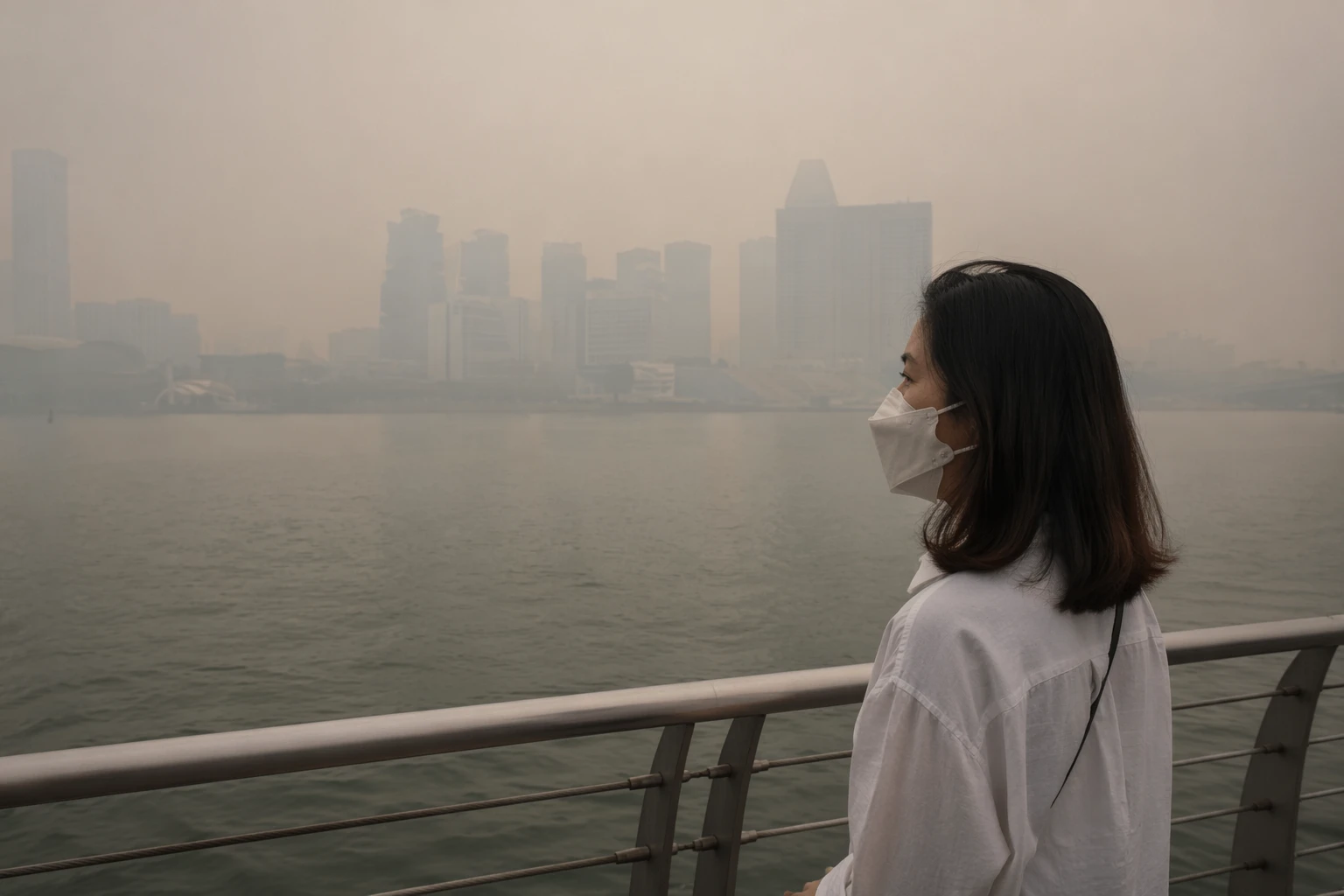
The regional response is built around the ASEAN Agreement on Transboundary Haze Pollution, which ASEAN members adopted on 10 June 2002 to prevent, monitor and mitigate smoke from land and forest fires. Indonesia reinforced that framework in April 2026 by inaugurating the ASEAN Coordinating Centre for Transboundary Haze Pollution Control secretariat in Jakarta, a move that strengthens real-time monitoring, technical coordination and early warning.
During the 2015 haze episode, Singapore’s 24-hour PSI reached 313 on 24 September and 341 on 25 September, prompting school closures. On 10 September that year, the 24-hour PSI was 116 to 128 while hotspots in Sumatra climbed to 328. NASA later classified the episode as a major haze event affecting millions in Indonesia, Malaysia and Singapore.
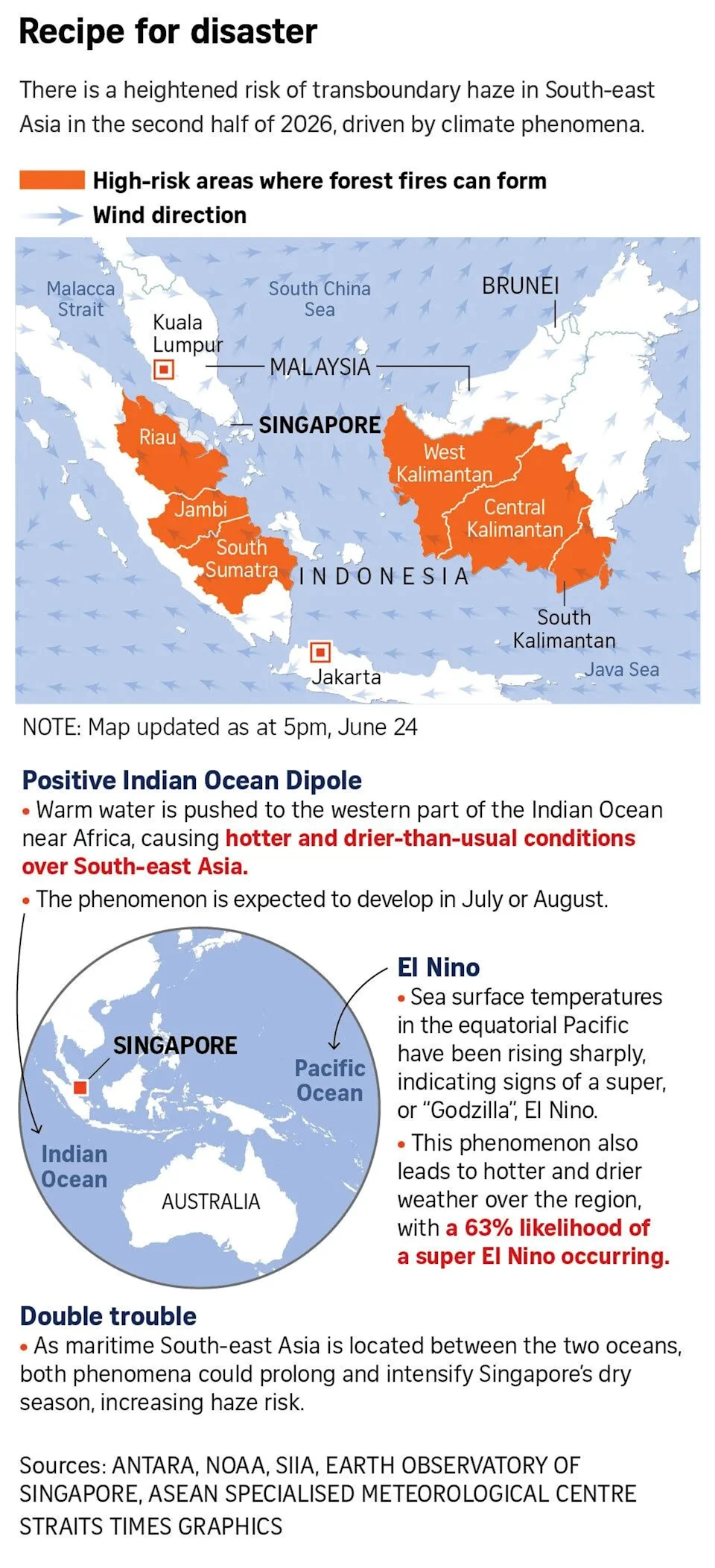
For now, Singapore’s Meteorological Service put the 24-hour PSI at 80 to 88 and the 1-hour PM2.5 reading at 47 to 69 micrograms per cubic metre, a moderate level.
Sources
- [1]kelo.com
- [2]siiaonline.org
- [3]asean.org
- [4]weather.gov.sg
- [5]nas.gov.sg
- [6]svs.gsfc.nasa.gov
- [7]en.antaranews.com