US News
Six presidential speeches that shaped American history
CBS News is folding this list into its America 250 coverage, alongside July 4 programming and a primetime special, and the point is plain: presidential speeches are not just remembered, they are used to govern. The companion video package, titled "Influential presidential speeches," frames these excerpts as some of the most impactful presidential words of the last two centuries.
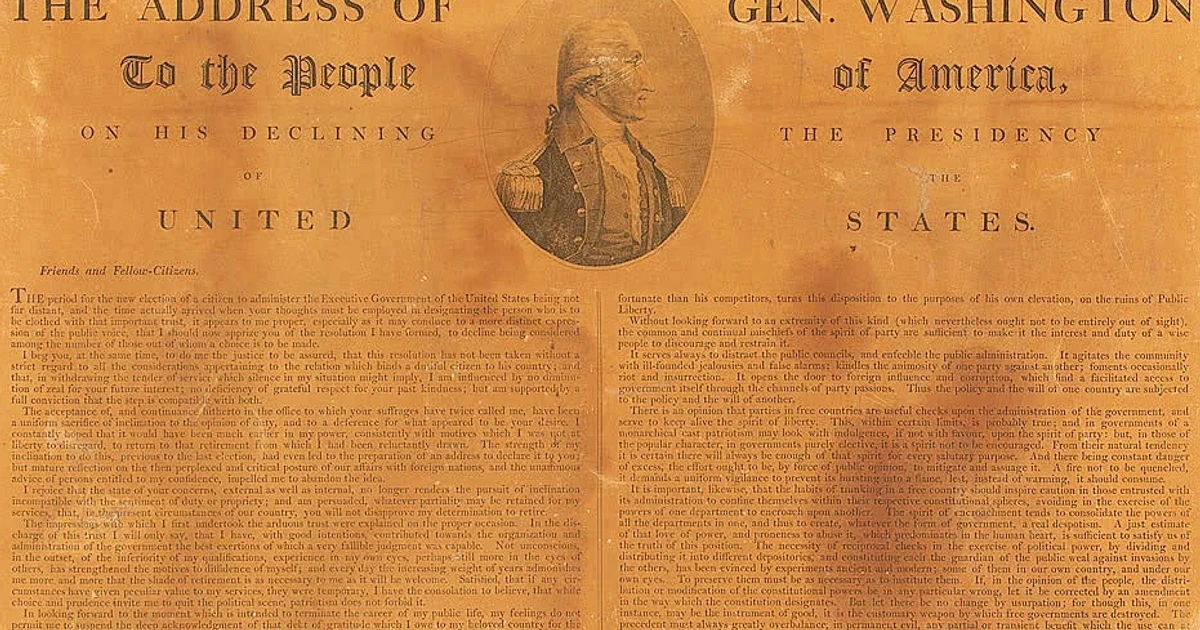
George Washington's farewell address
Washington made the farewell address a lasting political institution by refusing to deliver it publicly and instead sending it through the press in September 1796. In that moment, he did more than announce his retirement after two terms: he set a precedent for transfer of power and warned that factional conflict could corrode the republic from within. The Senate’s annual reading of the address, which began in 1893, shows how quickly the speech became a civic ritual as well as a warning.
The Monroe Doctrine
Monroe turned a routine annual message to Congress on Dec. 2, 1823, into the first major American statement about the Western Hemisphere. With France intervening in Spain and Washington worried that European powers could next threaten the new Latin American republics, the doctrine asserted a boundary around the Americas that later presidents would invoke again and again. What began as a foreign-policy warning became a durable tool for justifying U.S. influence abroad, and the doctrine remained a touchstone well into the 20th century.
The Gettysburg Address
Lincoln delivered the Gettysburg Address on Nov. 19, 1863, at the dedication of Soldiers' National Cemetery in Gettysburg, Pennsylvania, after the Battle of Gettysburg had been fought July 1-3, 1863. At roughly 272 words, the speech recast the Civil War as a test of whether a nation founded on equality could endure, and it shifted the meaning of sacrifice from battlefield loss to democratic purpose. It did not immediately become canonical; broad national embrace came decades later, especially after World War I and the 1922 opening of the Lincoln Memorial, where the address was memorialized in stone.
Franklin D. Roosevelt's first inaugural address
Roosevelt’s first inaugural on March 4, 1933, came after more than 11,000 of 24,000 banks had failed and the Great Depression had already drained confidence from the political system. The speech changed the governing bargain by making emergency federal action a public expectation, not a breach of constitutional restraint, and it helped create the political space for the New Deal. The crisis-driven logic of that moment also fed the later 20th Amendment, which shortened the transition between election and inauguration so a new administration could take power faster.
John F. Kennedy's inaugural address
Kennedy’s Jan. 20, 1961 inaugural arrived with a generational turn built into the office itself: he was 43, the youngest elected president, and the first Irish Catholic to win the presidency. The address put civic duty at the center of Cold War leadership, urging Americans to think of public service as part of national strength rather than a side virtue. That framing helped define the early Kennedy presidency as a call to action at home and abroad, and it gave a new administration a language of renewal suited to an anxious, television-era electorate.
Barack Obama's inaugural address
Obama’s Jan. 20, 2009 inaugural spoke into a financial crisis and two wars, and it treated national repair as a shared obligation rather than a partisan slogan. The White House archive described it as a call for a new era of responsibility, and that message helped set the tone for the early recovery debate by placing accountability, sacrifice, and collective effort at the center of the new administration’s pitch. In a divided media environment, the speech showed how a president can still use one address to create political room for the work that follows.
Sources
- [1]news.google.com
- [2]cbsnews.com
- [3]history.com
- [4]loc.gov
- [5]gilderlehrman.org