Business
Small Caps Draw Investor Interest Amid Market Rotation
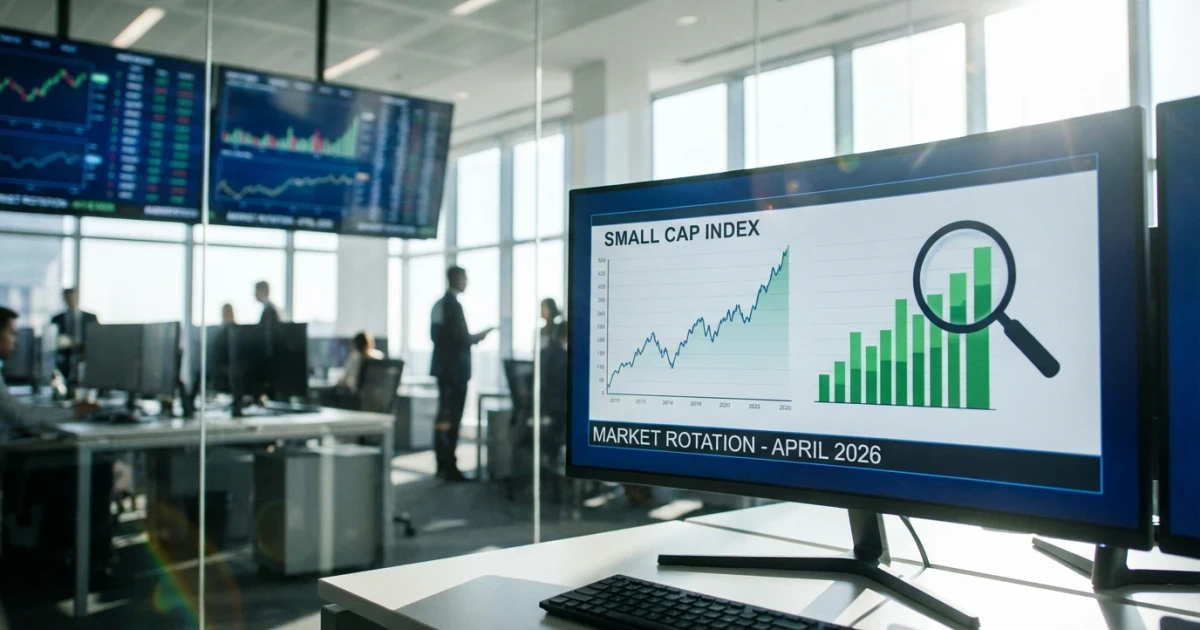
Investors are closely watching a possible market rotation in 2026, as small-cap and value stocks begin to show renewed signs of leadership. Analysts and strategists point to early-year performance, valuation metrics, and shifting economic expectations as signals that these often-overlooked segments may be poised for a comeback after several years of large-cap dominance.
Early 2026 Signals Point Toward Small Caps
Recent commentary from Seeking Alpha highlights that small-cap stocks—represented by benchmarks like the Russell 2000—have opened 2026 with notable outperformance relative to large-cap peers. Supporting this, data from NASDAQ's Russell 2000 historical data shows a marked uptick in early-year returns, reflecting increased investor interest and capital flows into these names.
- Small-cap indexes have outpaced the S&P 500 in the first quarter of 2026, according to market data tracked by Yardeni Research.
- Value-oriented stocks—traditionally underperforming in recent years—have also begun to show relative strength.
Valuation Gaps Attract Attention
One of the drivers behind this shift is the widening valuation gap between large and small companies. Morningstar's market capitalization breakdown details how small-cap stocks currently trade at significant discounts relative to their historical averages and versus large-cap indexes like the S&P 500. This has prompted some investors to reposition portfolios in anticipation of mean reversion.
Analysts cited by Seeking Alpha suggest these discounted valuations could provide a tailwind if economic conditions stabilize or improve through the year. For instance, the Fama/French Data Library tracks size and value factor returns, showing that such market environments have historically preceded periods of small-cap outperformance.
Why Investors Are Watching Value and Small Caps Now
- Potential for higher earnings growth as the economy expands, with small companies typically more sensitive to domestic economic shifts.
- Historically, small-cap and value stocks have performed well in the aftermath of Federal Reserve rate hikes, as borrowing costs stabilize and business sentiment improves.
- Unlike mega-cap tech stocks, small caps are less exposed to global uncertainty and currency fluctuations, which can be advantageous in periods of international volatility.
Contrasting Views Remain
Despite this optimism, some strategists remain cautious. The CRSP US Stock Databases show that, over the last decade, large-cap and growth stocks have outperformed small caps by a wide margin, and some investors question whether this trend can reverse meaningfully without a major economic catalyst.
What to Watch Going Forward
As 2026 progresses, market participants will be watching key economic data, Federal Reserve policy decisions, and earnings reports from small-cap companies for confirmation of a sustained rotation. The pace and durability of this shift will depend on factors such as inflation trends, interest rates, and geopolitical developments.
For investors seeking diversification and exposure to potential market leadership changes, small-cap and value segments may offer compelling opportunities. However, as always, careful analysis and risk management remain essential as the market landscape evolves.