Technology
Social media shifts toward user-controlled algorithms with AI tools
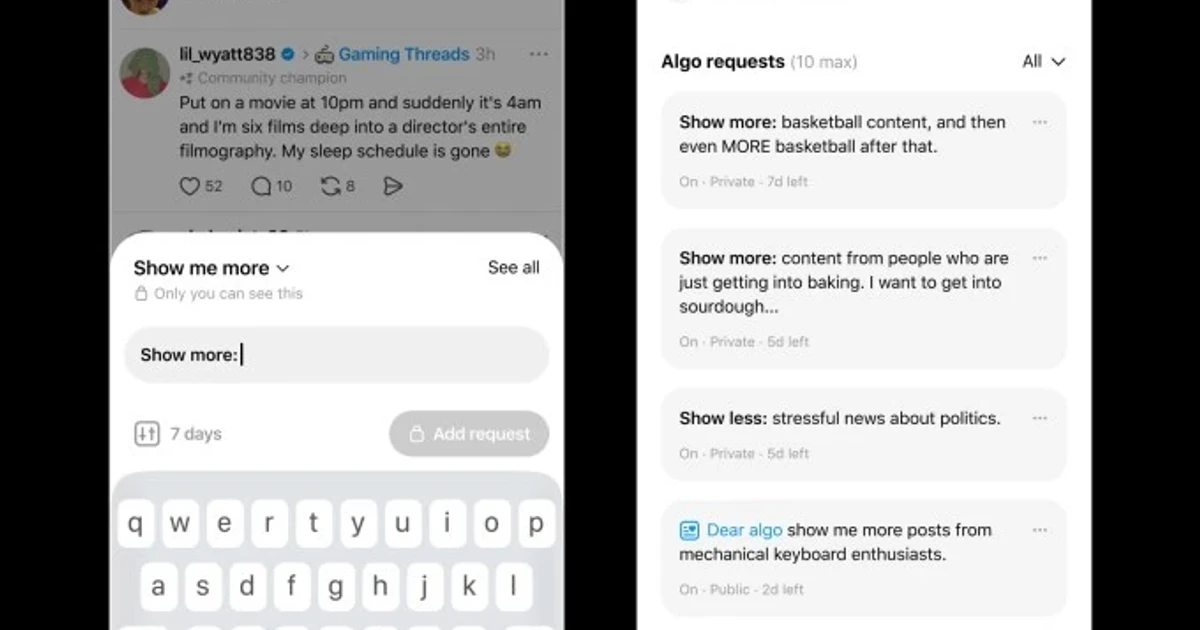
Social media feeds are moving from black-box ranking systems to tools people can actively steer. That shift sounds simple, but it carries a larger change in power: platforms are no longer just deciding what users see, they are asking users to help train the system that decides it.
The new bargain between users and platforms
For years, recommendation engines operated like hidden editors, sorting posts by rules most people never saw and could barely influence. The newer wave of controls is different because it turns feed tuning into a visible, conversational act, with users telling the app what matters right now. That may make the experience feel more personal, but it also shows how platforms are responding to long-running criticism that opaque algorithms can manipulate attention without much transparency.
The practical appeal is obvious. A feed that feels less random and more tailored can keep people engaged longer, which is good for platform business and, in theory, more useful for users. The harder question is whether these tools meaningfully change the underlying power structure or simply give people a friendlier interface for the same personalized machinery.
Threads pushes personalization into plain language
Threads has become one of the clearest examples of this shift. Meta said on June 16, 2026 that Threads had reached 500 million monthly active users, and it introduced a new “Your Algo” feature as part of that milestone. The tool builds on “Dear Algo,” which Meta launched in February 2026, and it is designed to let people tell Threads what is important to them in the moment.
The difference is not just cosmetic. With the earlier “Dear Algo” approach, users could publicly ask for more of a topic, such as posts about podcasts. “Your Algo” goes further by letting people make that request privately and set how long it should last, whether one day, three days, or seven days. Meta also pointed to live-event use cases, including wanting more about a live NBA game or less about a television show a person has not caught up on yet.
That matters because it makes feed control feel immediate rather than abstract. Instead of passively accepting a ranking system, users can now issue short, plain-language instructions that resemble how people already speak to AI tools.

Instagram extends control beyond one surface
Instagram is following the same logic, but across a wider set of surfaces. Meta said last December it launched “Your Algorithm,” initially focused on Reels, and later expanded the control so people can customize recommendations in more places across the app. The company says the tool lets users see the topics shaping their recommendations and adjust them across the feed, Explore and Reels.
This is a meaningful shift because it moves algorithm control from a single feature into the everyday structure of the app. Meta had already been testing a related “Recommendations Reset” in November 2024 for Explore, Reels and Feed, which shows the company has been working on user-facing controls for at least a year and a half. In other words, these are not one-off experiments; they are part of a broader redesign of how people interact with ranking systems.
That redesign also reflects advances in large language models, which make it easier to explain why content is being shown and to let people express preferences in everyday language. The result is a more conversational interface for a system that used to feel entirely opaque.
Why the timing matters for teens and families
The shift is not only about convenience or creator growth. Meta said in May 2026 that the number of U.S. teens enrolled in supervision on Instagram had more than doubled since the prior year, and it tied that update to giving parents more visibility into the topics shaping their teen’s algorithm. That makes the broader push toward user-controlled recommendations part of a child-safety and family-controls strategy as well.
This matters in public health and social equity terms because algorithmic design affects whose voices are amplified, whose attention is captured, and who has the tools to push back. Teen users and their parents are not entering the platform with equal levels of digital literacy, time or leverage, which raises an uncomfortable question: will these controls be used widely, or mostly by people who already understand how to game the system? If only the most engaged or most technically fluent users shape their feeds, the benefits of transparency may stay uneven.

A more accountable feed, or a more polished one
The larger political story is about accountability. For years, critics have argued that recommendation engines can steer emotions, reinforce division and concentrate power in the hands of platforms that decide what is visible, what is suppressed and what gets rewarded. Giving people more visibility into why posts appear, and more tools to tweak that process, helps platforms argue that their systems are less mysterious and more responsive.
But that does not automatically mean the core logic has changed. The ranking systems still exist, and personalization still sits at the center of the business model. What is changing is the degree to which users are allowed to intervene, which may make the system easier to trust without fully resolving concerns about manipulation or polarization.
What this signals for the next phase of social media
Taken together, Threads and Instagram suggest that feeds are moving closer to a streaming-service model, where people tune what they see rather than passively receive a broadcast-style mix. That is a real power shift, even if it is a partial one. Users now have more ways to influence recommendation systems, but platforms still control the design, the defaults and the data that make those systems work.
The most important question is not whether these tools exist, but whether they change behavior at scale. If they help people escape some of the randomness and frustration of old recommendation systems, they may improve trust and make feeds feel more humane. If they remain niche features layered on top of the same opaque machinery, they will function more as a public-relations shield than a structural fix.
Sources
- [1]techcrunch.com
- [2]about.fb.com