Science
Solar Flare Boosts Chances of Aurora Sightings
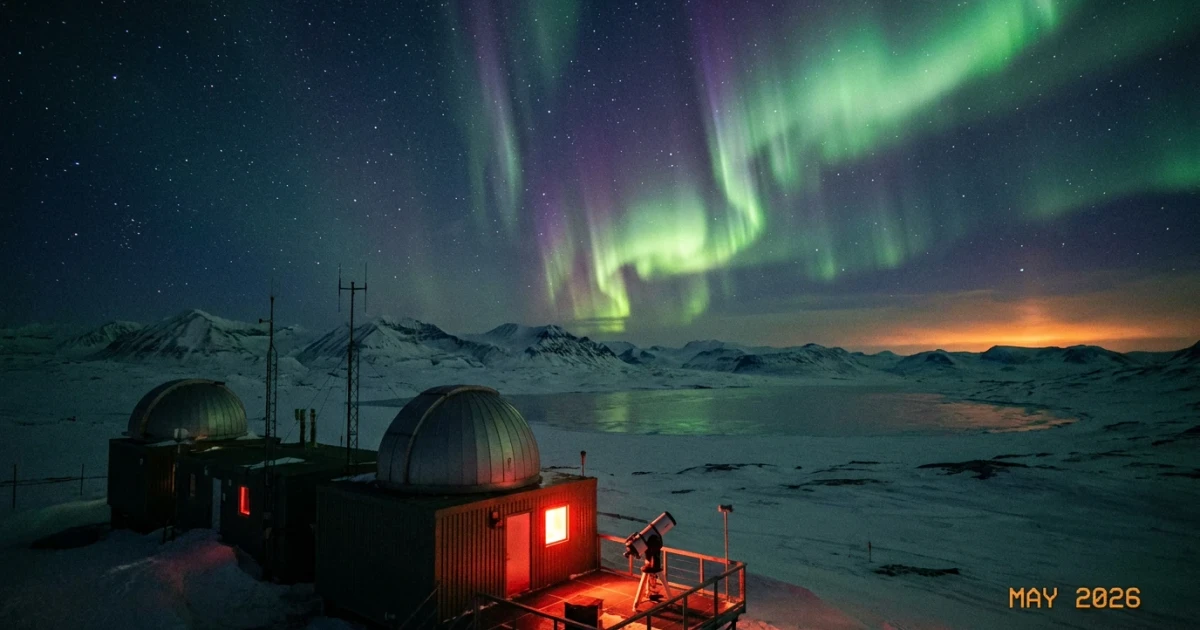
A powerful solar flare and coronal mass ejection (CME) erupted from the Sun this week, significantly increasing the likelihood of seeing vivid northern lights across unusual regions in the days ahead, according to multiple space weather monitoring agencies.
Major Solar Flare Eruption and CME
The Sun unleashed a colossal X-ray flare on May 10, 2026, accompanied by a massive expulsion of plasma known as a coronal mass ejection. Space agencies reported the event as one of the most energetic in the current solar cycle, with the flare strong enough to cause a moderate (R2) radio blackout over parts of Earth.
- The GOES satellite data registered a rapid spike in X-ray flux, confirming the intensity of the event.
- The CME is expected to reach Earth’s magnetosphere later this week, potentially triggering geomagnetic storms.
Impacts on Earth: Radio Blackouts and Aurora Potential
According to the NOAA Space Weather Prediction Center's official forecast, the solar flare caused a moderate R2-level radio blackout, temporarily disrupting high-frequency radio communications in sunlit areas of the globe. These blackouts can affect aviation, maritime operations, and emergency services that rely on such communications.
More notably for the public, the energetic CME is expected to interact with Earth’s magnetic field, raising the chances of widespread auroral activity. When charged particles from the CME collide with atmospheric atoms, they can produce brilliant auroras—popularly known as the northern lights—visible at much lower latitudes than usual.
- Forecasts suggest a strong possibility of enhanced auroral displays in regions as far south as the northern United States, central Europe, and northern Asia.
- The NOAA explainer on auroras details how solar events like this drive the phenomenon.
Solar Activity and the Current Cycle
This eruption comes as the Sun approaches the peak of its 11-year solar cycle, which brings heightened solar storms and increased auroral activity. CMEs and strong flares are more common and intense during this period. These events can also pose risks to satellites, navigation systems, and even power grids if geomagnetic storms reach severe levels.
What to Watch For in the Coming Days
- Skywatchers are advised to check local aurora forecasts and seek dark, clear skies for the best chance of seeing the lights.
- Space weather agencies will continue to monitor the CME’s arrival and potential impacts, updating the space weather forecast as needed.
- Those reliant on high-frequency radio communications should remain alert for possible further disruptions.
Looking Ahead
While dramatic solar events can disrupt technology, they also offer a rare opportunity for millions to experience the wonder of the aurora. As the solar cycle continues toward its maximum, experts anticipate more frequent and intense space weather, making events like this both a scientific priority and a spectacle for the public to enjoy.