Science
Solar Storms Surge: What to Expect from Space Weather in Early February 2026
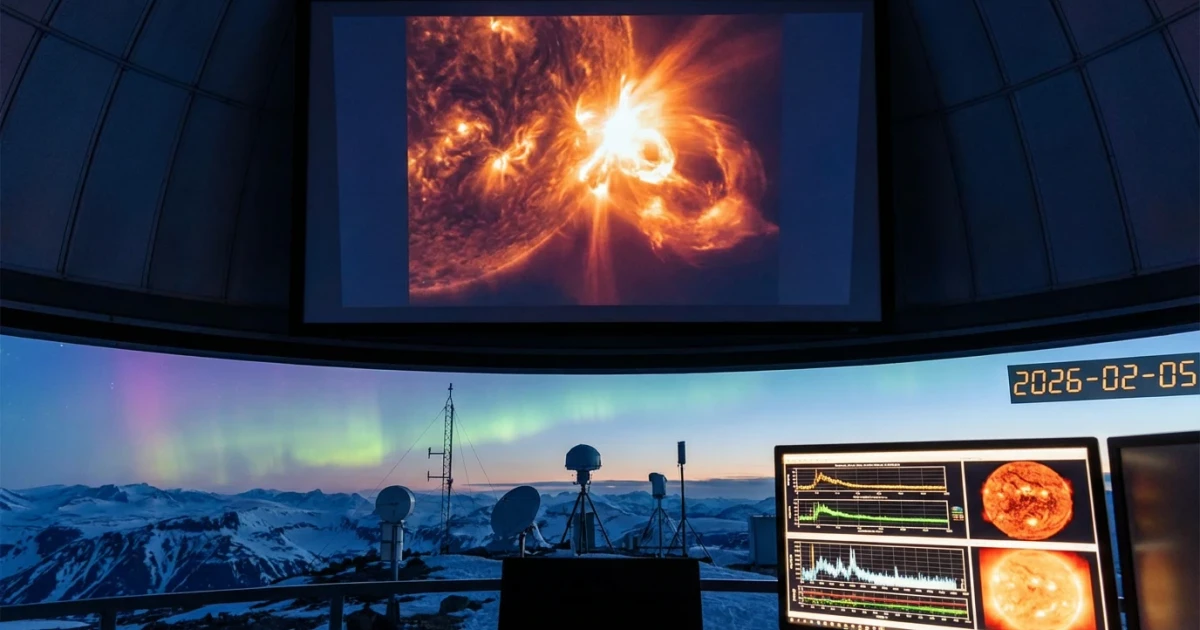
Early February 2026 is poised to bring heightened space weather activity, according to the latest National Oceanic and Atmospheric Administration (NOAA) forecast. The agency has identified complex sunspot region 4366 as a key driver behind increased solar events, raising both scientific interest and public concern about the potential impacts on Earth’s atmosphere, technology, and communications.
Sunspot Region 4366: Why It Matters
NOAA has spotlighted the emergence of sunspot region 4366, labeling it as a complex and active area on the solar surface. Sunspots are regions of intense magnetic activity, and when they become complex, they can release powerful bursts of energy known as solar flares and coronal mass ejections (CMEs). These eruptions can travel through space and interact with Earth’s magnetosphere, sometimes resulting in geomagnetic storms.
- Complex sunspot regions often indicate a higher likelihood of significant solar activity.
- Such activity can produce solar flares (brief, intense bursts of radiation) and CMEs (massive clouds of solar plasma and magnetic fields).
Potential Impacts on Earth
The increased activity from sunspot region 4366 could have several short-term effects:
- Satellite Operations: Enhanced solar radiation and geomagnetic activity can disrupt satellite electronics and GPS navigation systems.
- Communications: High-frequency radio blackouts are more likely during strong solar flares, affecting aviation and maritime operations.
- Power Grids: Geomagnetic storms can induce currents in power lines, posing risks to grid stability, especially at higher latitudes.
- Auroras: An uptick in geomagnetic activity often leads to spectacular auroral displays (Northern and Southern Lights) visible at lower-than-usual latitudes.
What Is Space Weather and Why Does It Matter?
Space weather describes the environmental conditions in space as influenced by the Sun’s activity. Solar flares and CMEs can have a range of effects on Earth’s magnetosphere, atmosphere, and critical infrastructure. Agencies like NOAA monitor these events to provide advance warnings, enabling industries and governments to prepare for potential disruptions.
Looking Ahead: The Week of February 1-7, 2026
NOAA’s forecast underscores the importance of vigilance during the first week of February:
- Space weather watchers anticipate possible solar storm events tied to region 4366, though the magnitude and exact timing remain uncertain.
- The public is encouraged to follow official updates, especially those in aviation, telecommunications, and power grid management sectors.
How to Stay Informed
NOAA provides ongoing updates and alerts through its Space Weather Prediction Center. Amateur astronomers and skywatchers may also want to monitor resources like SpaceWeatherLive.com for real-time aurora forecasts and sunspot activity.
Conclusion: A Watchful Eye on the Sun
With complex sunspot region 4366 in focus, early February 2026 is shaping up to be a period of heightened solar activity. While the full impacts remain to be seen, preparedness and timely information will be key to mitigating risks. Whether you’re concerned about technology disruptions or hoping for a glimpse of auroras, staying connected to NOAA’s forecasts will be essential in the days ahead.