Technology
Sony revives RX10 superzoom camera after nine-year hiatus
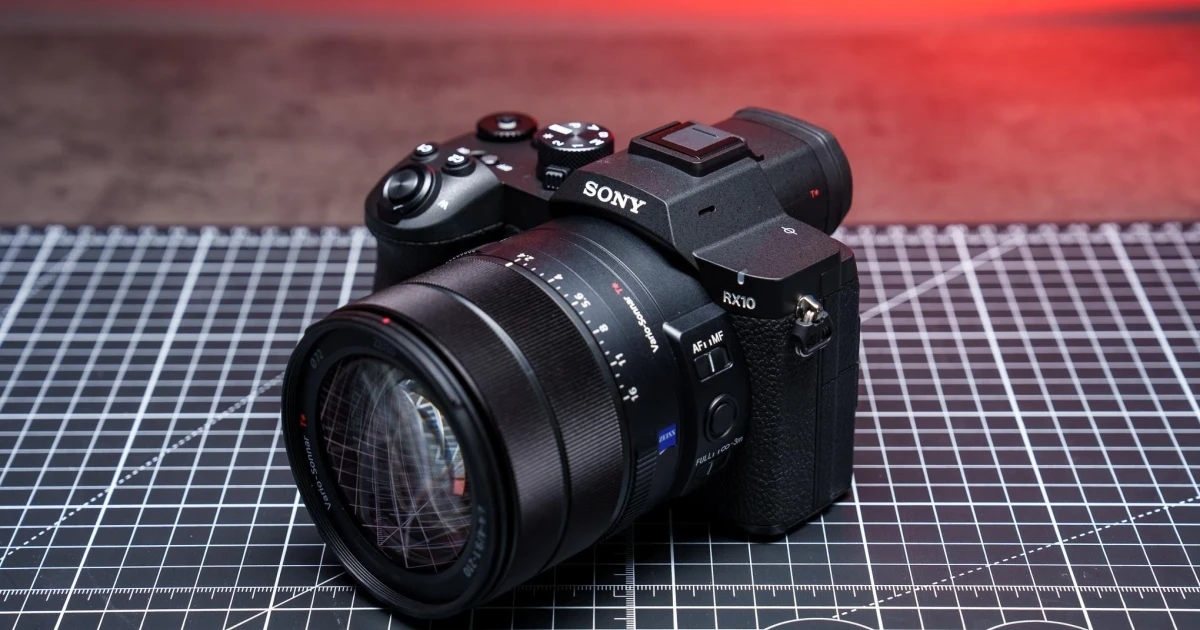
Sony put the RX10 line back on the market on July 9 with the RX10 V, ending a gap of nearly nine years since the last model and reviving a camera category that has been squeezed by phones and interchangeable-lens bodies. The new model keeps the core idea intact: one fixed 24-600mm equivalent f/2.4-4 Zeiss Vario-Sonnar zoom lens, a reach that can cover wide-angle travel scenes, distant birds and sideline action without carrying a bag of lenses.
The case for the RX10 V is convenience at the top end of the market. Sony priced it at $2,299.99 in the United States and $2,899.99 in Canada, with availability beginning in August 2026. For that money, buyers get a 20.1-megapixel 1.0-type stacked Exmor RS CMOS sensor, the BIONZ XR processor and an AI processing unit, plus AI-powered Real-time Recognition AF and Real-time Tracking for people, animals and vehicles. Sony says the camera can shoot up to 30 frames per second with blackout-free continuous shooting and full 60 fps AF/AE tracking, and it records up to 4K 120p video.

That hardware makes the RX10 V a practical tool for users who want a single body to do several jobs, especially in travel, wildlife, birding and sports. Sony vice president Yang Cheng called the RX10 series a “cult classic,” a nod to the way the line earned a following among photographers who wanted long zoom range without the weight and expense of a full interchangeable-lens kit. The RX10 IV, announced on September 12, 2017, had already set the template with a stacked 1-inch sensor, a 24-600mm lens, 325 phase-detect AF points and 24 fps shooting.

The tradeoffs are just as clear. At $2,299.99, the RX10 V sits well above many advanced compact cameras and competes for attention with mirrorless bodies that can be upgraded lens by lens over time. The fixed lens gives up that flexibility, along with the ability to choose faster telephotos or smaller travel zooms later. Sony counters with a larger Quad-VGA OLED electronic viewfinder, USB-C, 5 GHz Wi-Fi, an NP-FZ100 battery rated for about 630 shots and a familiar all-in-one format that avoids lens swapping entirely. In a market where direct bridge-camera alternatives have thinned out, that narrow but stubbornly useful proposition is the RX10 V’s reason to exist.
Sources
- [1]theverge.com
- [2]prnewswire.com
- [3]alphauniverse.com
- [4]electronics.sony.com
- [5]petaixel.com
- [6]dpreview.com
- [7]sonyalpharumors.com