World
South African airport bust uncovers 150 live venomous scorpions in luggage
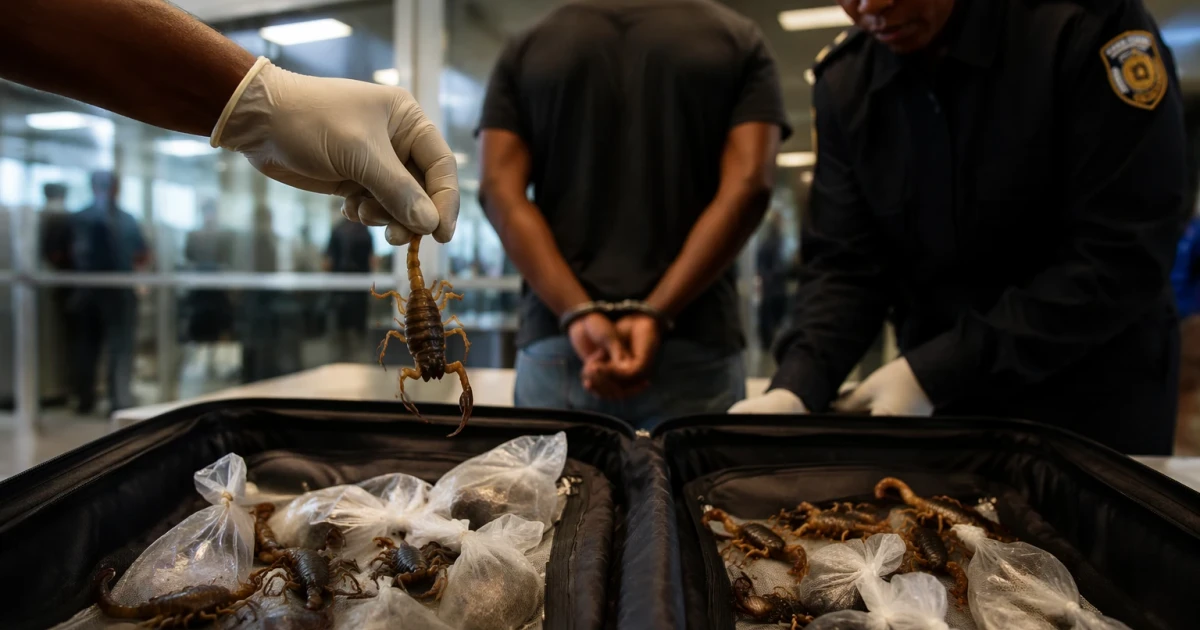
A 28-year-old man was arrested at Cape Town International Airport after officers found 150 live venomous scorpions hidden in his clothes and baggage. The animals, some individually wrapped in plastic, were seized before he could leave the airport, turning a luggage check into a major wildlife-trafficking case.
The interception came after a tip triggered an intelligence-led operation involving the South African Police Service’s Kuilsriver Stock Theft and Endangered Species Unit and CapeNature. Investigators said the scorpions were discovered inside the passenger’s luggage and clothing, but they did not publicly disclose where the shipment was headed, leaving open the question of whether the animals were meant for the pet trade, private collectors or another underground market.
The scorpions were handed over to a wildlife facility for safekeeping, while police prepared the case for court. South African media said the arrest happened on Friday, June 12, 2026, and the suspect was expected in Bellville Magistrate’s Court on Monday, June 15, 2026. The case underscored how quickly live animals can move through a major international airport when traffickers rely on concealment rather than cargo shipments.
The seizure also exposed the regulatory stakes in the Western Cape, where CapeNature serves as the permit authority for fauna, flora, hunting and CITES compliance. CapeNature says keeping any wild animal in captivity in the province requires a permit, and its rules also require permits to import, export or transport wild animals in or through the Western Cape. The Department of Forestry, Fisheries and the Environment says anyone carrying out restricted activities involving listed threatened or protected species must be registered or permitted under South Africa’s biodiversity regulations.
Officials have treated similar offenses as serious crimes, not minor customs violations. In a 2024 CapeNature case, a Durbanville trafficker was convicted on 16 charges involving 56 protected birds, snakes and spiders, sentenced to six years in prison and ordered to pay R100,000. That enforcement history reflects a broader pressure point for authorities trying to stop wildlife crime before animals disappear into private collections, breeding networks or illicit trade routes.

The broader pattern is global. The United Nations Office on Drugs and Crime says wildlife crime affects thousands of species across more than 160 countries and territories, while the CITES Illegal Trade Database has recorded seizure events reported by parties since 2016. In that context, the Cape Town bust showed how biodiversity enforcement, airport screening and public safety now intersect at the same checkpoint.
Sources
- [1]cbsnews.com
- [2]capenature.co.za
- [3]dffe.gov.za
- [4]unodc.org
- [5]citesdata.un.org