Business
South African consumer confidence sinks to weakest level since VAT crisis

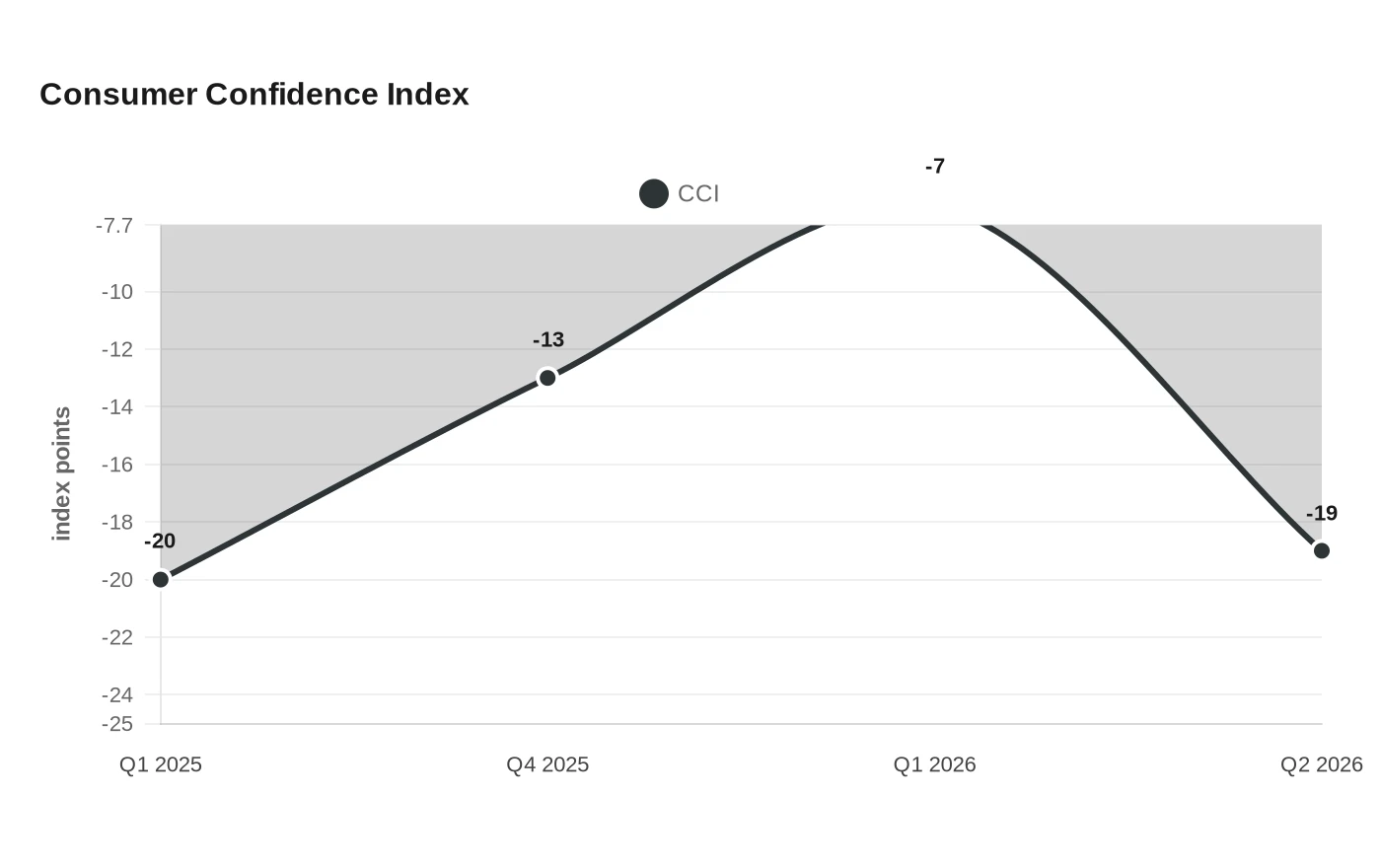
South African households have been hit first in the wallet: higher fuel costs are lifting transport, food and commuting bills just as confidence has slumped to its weakest level since the VAT crisis. The FNB/BER Consumer Confidence Index dropped to -19 in the second quarter of 2026 from -7 in the first quarter, wiping out the rebound that had briefly lifted sentiment to a 15-month high.
The Bureau for Economic Research said the latest reading was issued on Tuesday, 23 June 2026 at 10:00 and reflected surging fuel costs, renewed inflationary pressure and tighter monetary policy. Higher fuel prices added an estimated R45 billion to the South African economy in the quarter, deepening pressure on both household and corporate budgets.

That places the index back near the low point reached in the first quarter of 2025, when it fell to -20 amid the aborted proposal to raise value-added tax by two percentage points in the February 2025 budget speech. For consumers, the comparison matters: the latest decline suggests the current squeeze is severe enough to rival one of the sharpest shocks to sentiment in recent years.
The second-quarter drop also reversed the improvement seen earlier in 2026, when confidence had climbed to -7 from -13 in the final quarter of 2025. BER said that earlier recovery had been supported by lower interest rates, strong stock prices and a firmer currency. Those tailwinds have now been overwhelmed by geopolitical risk, as the fallout from the Iran war drove fuel markets higher and renewed concern about imported inflation.
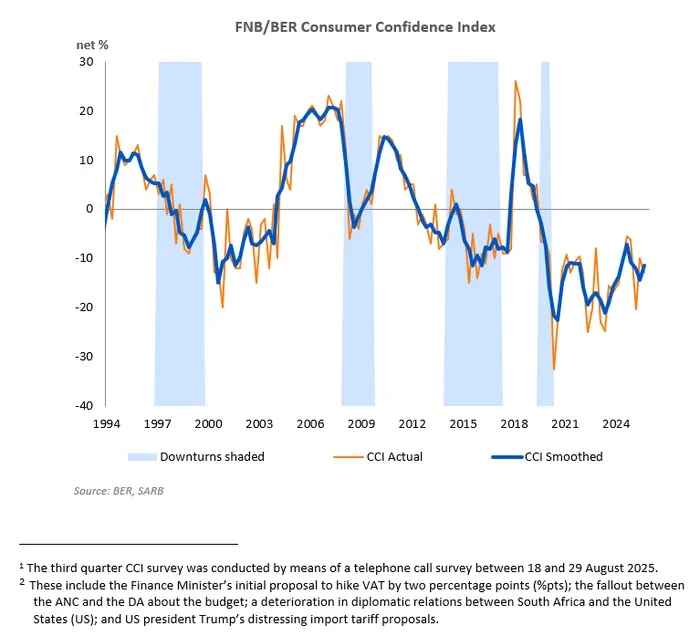
BER’s quarterly consumer survey, which polls about 2,500 adults mainly in urban areas, tracks views on the economy, household finances and whether it is a good time to buy durable goods. A reading of -19 suggests consumers are becoming more cautious about big-ticket spending, a pattern that typically hits retailers, car dealers and home-goods sellers before feeding through to the wider economy.
The latest deterioration also lands against a broader backdrop of weak demand and strain across the economy. With the South African Reserve Bank still maintaining tighter policy and households facing higher day-to-day costs, the question is whether this is a temporary geopolitical shock or evidence that consumer resilience is fading more broadly. For now, the answer is showing up at the petrol pump and in the monthly household budget.
Sources
- [1]businessday.co.za
- [2]ber.ac.za
- [3]msn.com
- [4]bloomberg.com
- [5]it-online.co.za