World
South Africa's great white sharks vanish as orcas hunt them down

Five Jewish mothers and their infants, photographed after liberation in May 1945, are among the rarest human records of Mauthausen, where an estimated 197,464 prisoners passed through the camp system between August 1938 and May 1945 and at least 95,000 people were killed. The camp, established after the Nazi annexation of Austria in 1938 and liberated by U.S. forces in May 1945, left behind a record of almost total destruction, with newborn survival inside the camp system so exceptional that the United States Holocaust Memorial Museum preserves the image of those five mothers and their babies as evidence of what endured.
Their survival matters because testimony is thinning into archive. Mauthausen’s witnesses once carried memory in person, but as the living connection to the camp system fades, photographs and recorded histories take on a heavier burden. The image of mothers holding infants born in captivity does more than document survival; it shows how close the camp came to erasing entire family lines, and why Holocaust education now depends on preserving the smallest surviving traces of experience.
A similar story of disappearance is unfolding far from Upper Austria, along South Africa’s coast. A regional assessment found substantial declines in white shark presence at two primary aggregation sites, and researchers have linked the drop around False Bay and Gansbaai to attacks by two orcas, Port and Starboard, which have targeted great white sharks since 2017. Since those attacks began, eight great white shark carcasses have washed ashore, and a 2024 Natural History Museum report said Starboard could kill a young great white and remove its liver in about two minutes.
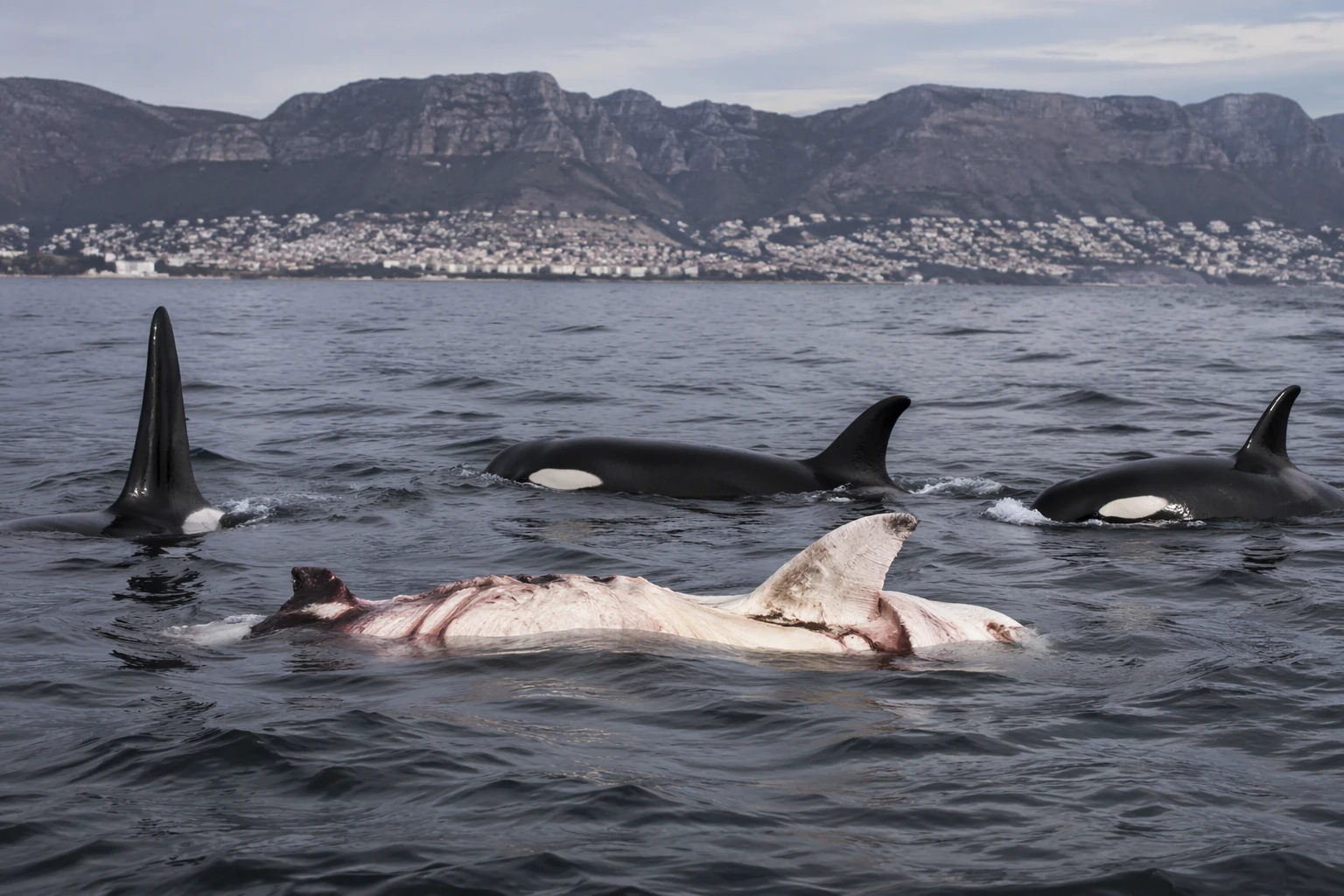
But the orcas are only part of the pressure. Stakeholder research found many respondents viewed South Africa’s shark exploitation as unsustainable and enforcement as inadequate, while commercial fishing remains a major threat. The Department of Forestry, Fisheries and the Environment has said shark populations are vital to ocean health and has stepped up compliance patrols and anti-IUU-fishing enforcement. Globally, the IUCN says overfishing is the main driver of shark declines and that about one third of sharks, rays and chimaeras are threatened with extinction.
From the photographs of Mauthausen’s miracle babies to the emptying waters off False Bay, the warning is the same: once living witnesses are gone, what remains is the harder work of reading the record and acting before disappearance becomes permanent.
Sources
- [1]cbsnews.com
- [2]encyclopedia.ushmm.org
- [3]ushmm.org
- [4]sciencedirect.com
- [5]nhm.ac.uk
- [6]dffe.gov.za
- [7]iucn.org