Business
South Korea raises rates as inflation and growth stay hot
South Korea’s central bank raised its benchmark interest rate by 25 basis points to 2.75%, its first hike in three-and-a-half years, as policymakers moved to cool a slumping won and confront inflation that has stayed stubbornly above target. The Bank of Korea said growth had strengthened, led by exports and investment, while inflation was expected to remain above the 2% target for a considerable time.
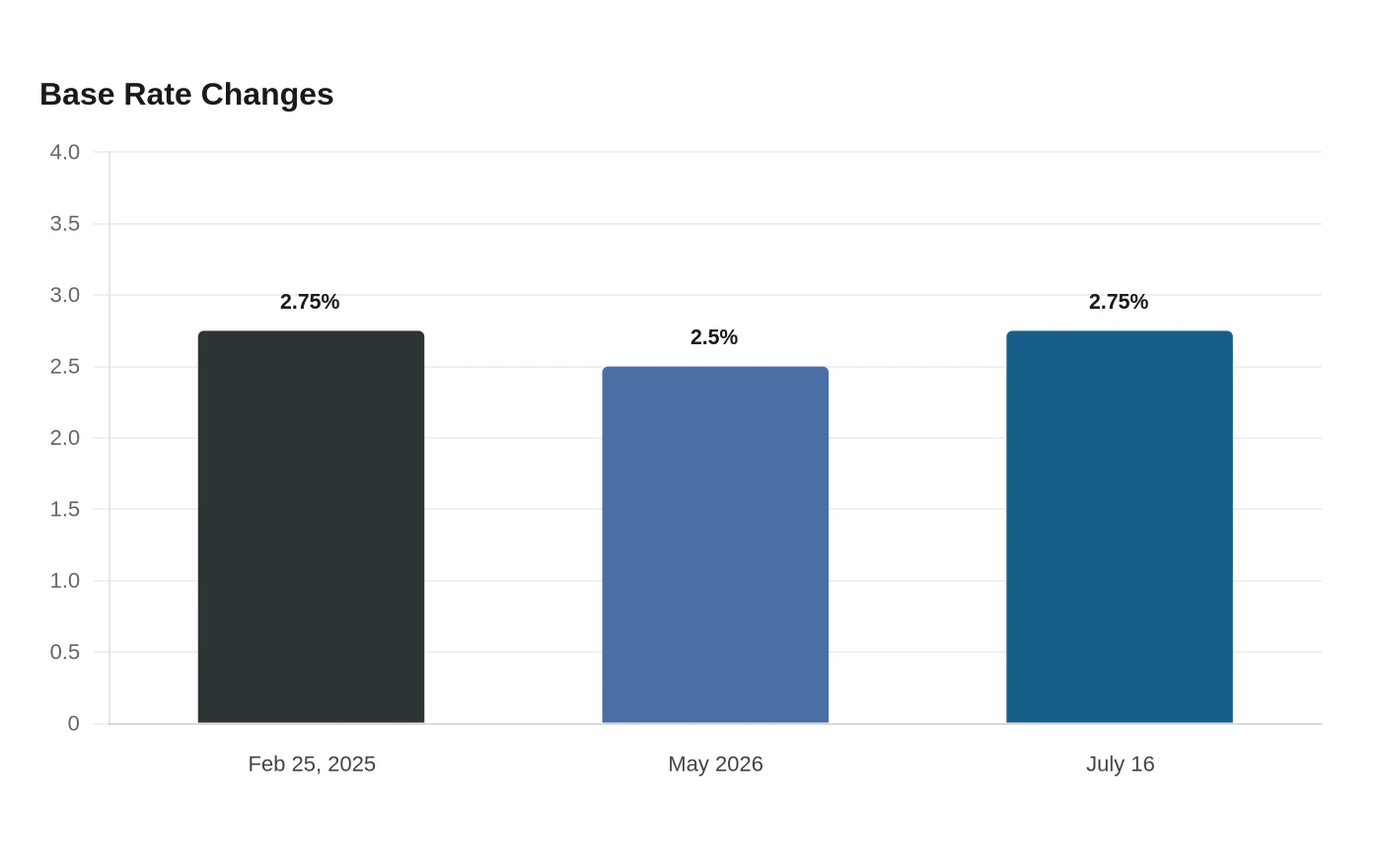
The decision, announced July 16, came after the Monetary Policy Board left rates unchanged at 2.50% in May 2026 and followed a February 25, 2025 cut from 3.00% to 2.75% when inflation had eased and household debt growth had slowed. The base rate is the fixed bid rate for seven-day repurchase agreements and the central bank’s main transmission tool for short- and long-term market borrowing costs. The Bank of Korea meets eight times a year to set policy.
The move had been widely expected in markets. A Reuters poll of 37 economists found all but one expected the base rate to rise to 2.75% on July 16. June consumer inflation accelerated to 3.2% from 3.1% in May, while the central bank’s own data showed first-quarter output rose 1.8% from the previous quarter and 3.8% from a year earlier, revised up from an earlier estimate of 3.6%.

Those numbers helped force the bank’s hand. South Korea’s economy grew fast enough in the first quarter for the government to lift its 2026 growth forecast to 3.0%, but officials still face weaker private consumption, with retail sales falling in real terms. That split, between a strong export-led manufacturing cycle and soft domestic demand, leaves the Bank of Korea balancing a hot economy against financial stability risks and a currency that has come under pressure.
The rate move also carries a wider signal for Asia and for U.S. investors watching inflation and growth. Capital Economics said further tightening is likely over the coming months, and most analysts now see at least one more increase before year-end, which would take the policy rate to 3.00%. The Bank of Korea is moving in step with other central banks in the region, including the Bank of Japan, the Australian central bank, the Reserve Bank of New Zealand, Bank Indonesia and the Bangko Sentral ng Pilipinas, all of which have tightened policy as price pressures proved harder to shake than expected.
Sources
- [1]finance.yahoo.com
- [2]bok.or.kr
- [3]money.usnews.com
- [4]msn.com