Business
South Korea stocks plunge 8.3% as Fed hike fears hit chips
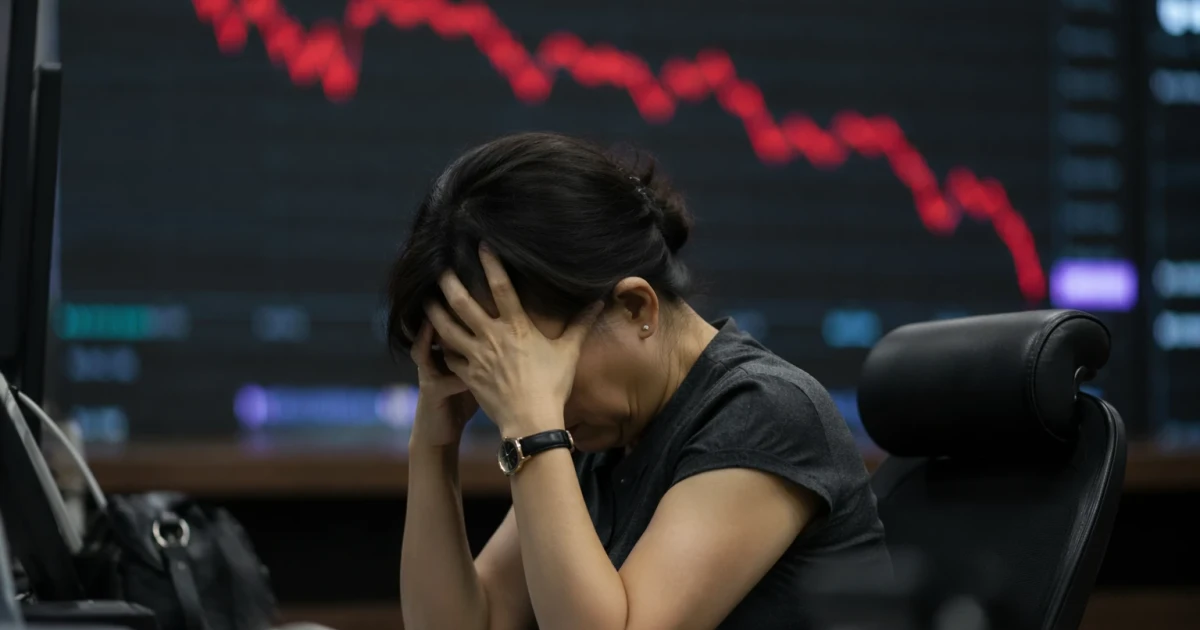
A hot U.S. jobs report jolted Seoul on Monday, sending South Korea’s Kospi down 8.3% to 7,484.41 and forcing the Korea Exchange to halt trading for 20 minutes shortly after the open. The selloff turned one strong American data point into a global shockwave, as investors quickly raised the odds of a Federal Reserve rate hike and dumped Korean technology shares.
The benchmark’s slide was its biggest daily fall since March 4, 2026, and it left the index about 15% below the record 8,801.49 that it touched only a week earlier on June 2. In early trade, the Kospi sank as much as 8.8%, briefly pushing volatility into territory that the market had not seen in months.
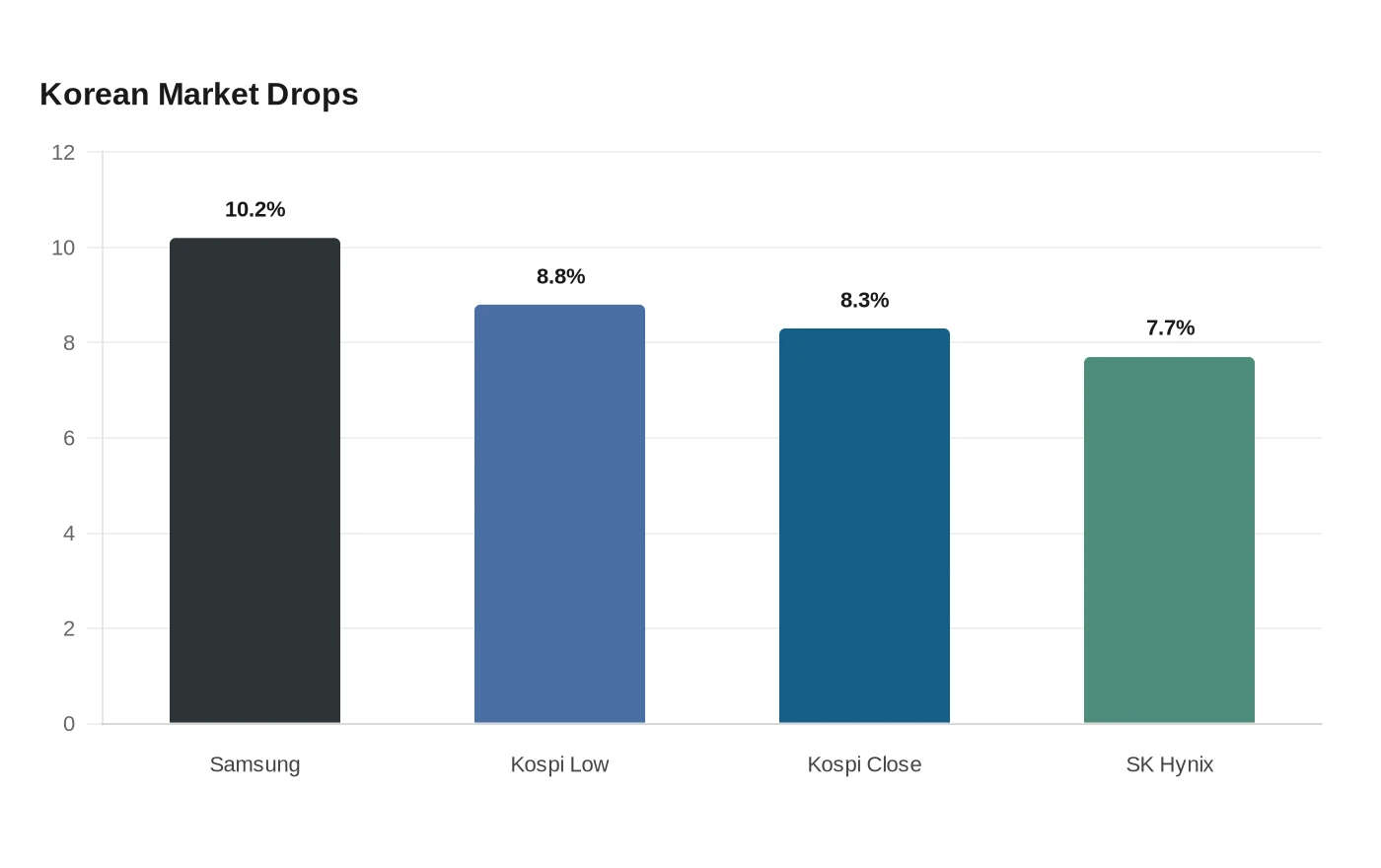
Semiconductors took the hardest hit. Samsung Electronics fell 10.2%, while SK Hynix dropped 7.7%, even after Nvidia chief Jensen Huang had called SK Hynix his “biggest partner” while unveiling new deals in South Korea. The response showed how dependent the Korean market has become on a narrow group of chipmakers and how quickly that concentration can work in reverse when global rate expectations shift.
The rout also reflected a broader unwind in the artificial intelligence trade that had made Korean stocks stand out globally. With U.S. rates now expected to stay higher for longer, investors are questioning whether the rich valuations built into chip shares can hold. The speed of the move was striking: within three minutes of the open, the Kospi had plunged nearly 9%, a pace that suggested leveraged bets were helping amplify the decline.
South Korean officials were already watching the risks closely before Monday’s break. The Ministry of Economy and Finance held a market situation review meeting on June 4 and an emergency economic headquarters meeting on June 5, both focused on developments in financial and foreign exchange markets. That backdrop underscored how exposed Seoul has become to imported rate fears, especially when global investors move out of crowded growth trades.
The day’s action was a reminder that South Korea’s market, long powered by chips and AI enthusiasm, now moves in lockstep with the Fed outlook. When U.S. data shifts the policy forecast, the ripple can be immediate, severe and concentrated in the country’s most important exporters.
Sources
- [1]money.usnews.com
- [2]koreatimes.co.kr
- [3]bloomberg.com
- [4]english.moef.go.kr
- [5]en.yna.co.kr
- [6]ipotnews.com
- [7]usnews.com