Science
SpaceX Sends Two Starlink Batches Into Orbit From Both Coasts
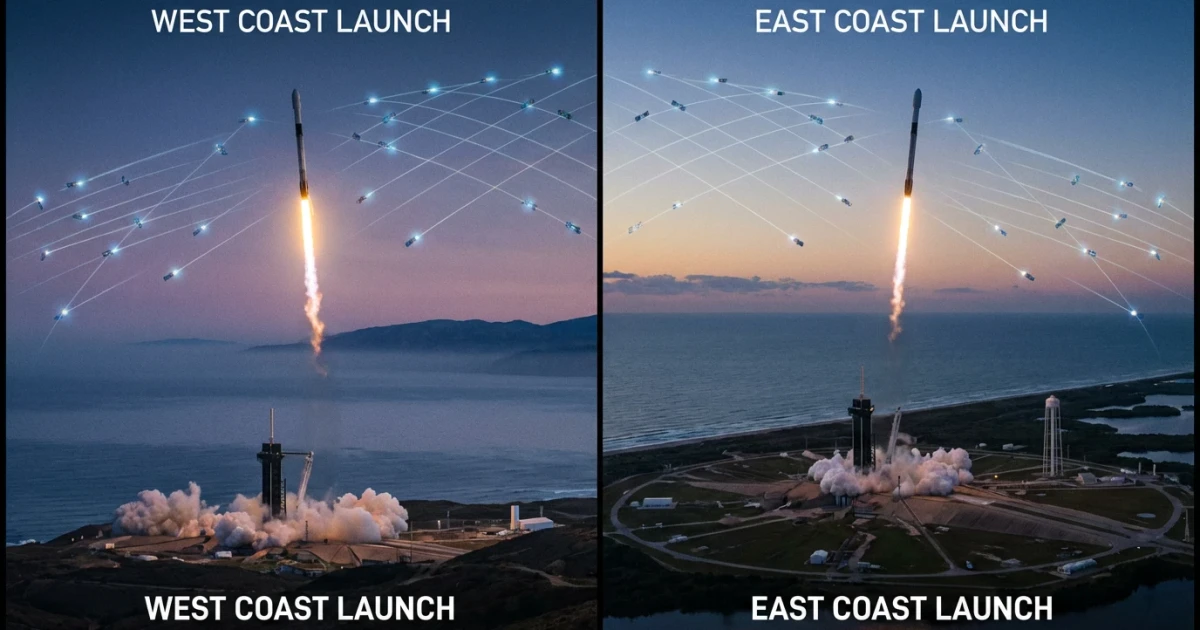
SpaceX has successfully launched two new batches of Starlink satellites in a span of just two days, utilizing launchpads on both the U.S. East and West coasts. The missions, part of SpaceX’s ongoing effort to expand its global broadband constellation, underscore the company’s rapid launch cadence and operational flexibility.
Back-to-Back Launches From Florida and California
The first of the two Starlink missions lifted off from Cape Canaveral on a cloudy Saturday morning, marking another routine yet impressive deployment for SpaceX’s workhorse Falcon 9 rocket. Less than 48 hours later, a second batch of Starlink satellites was launched from the opposite coast, demonstrating the company’s ability to operate at a high tempo across multiple launch facilities.
- Both launches utilized Falcon 9 rockets, known for their reliability and reusability.
- Each mission carried a new batch of Starlink satellites to low-Earth orbit.
- The rapid launches contribute to SpaceX’s goal of expanding Starlink’s internet coverage and capacity worldwide.
Expanding the Starlink Constellation
With these two launches, SpaceX continues to add to its ever-growing Starlink satellite fleet. The Union of Concerned Scientists satellite database lists Starlink as the world’s largest satellite constellation, with thousands of operational satellites providing broadband service to areas around the globe.
The most recent launches bring the total number of Starlink satellites in orbit even higher, increasing network density and aiming to improve coverage, particularly in underserved and remote regions. According to Spaceflight Now’s launch schedule, SpaceX has maintained a brisk cadence throughout 2026, with Starlink launches accounting for a significant portion of its manifest.
Operational Flexibility and Reusability
One of the key factors enabling SpaceX’s rapid launches is the company’s focus on reusable rocket technology. The Falcon 9’s reusable first stage allows for faster turnaround between missions and helps keep costs down.
Launching from both coasts also maximizes orbital opportunities, enabling SpaceX to place satellites in a variety of orbital planes for optimal coverage. This flexibility is crucial as the constellation grows and the company works to maintain global connectivity with minimal gaps.
Impact on Global Connectivity and Astronomy
The expansion of Starlink has broad implications for internet coverage worldwide. Customers in rural and remote locations continue to benefit from improved access to high-speed internet, creating new opportunities for education, commerce, and communication. However, astronomers have raised concerns about the growing number of satellites and their potential to interfere with ground-based observations, as outlined in a recent impact study published on arXiv.
- Starlink’s expanding network aims to bridge the digital divide globally.
- Researchers continue to study the constellation’s effects on astronomical observations and the night sky.
Looking Ahead
SpaceX’s back-to-back launches from Cape Canaveral and the West Coast highlight the company’s commitment to rapid deployment and innovation in satellite internet technology. As the Starlink network grows, SpaceX remains at the forefront of commercial spaceflight, pushing the boundaries of what’s possible in both launch cadence and global connectivity.