Science
SpaceX Sends Viasat-3 F3 Satellite Into Orbit Aboard Falcon Heavy
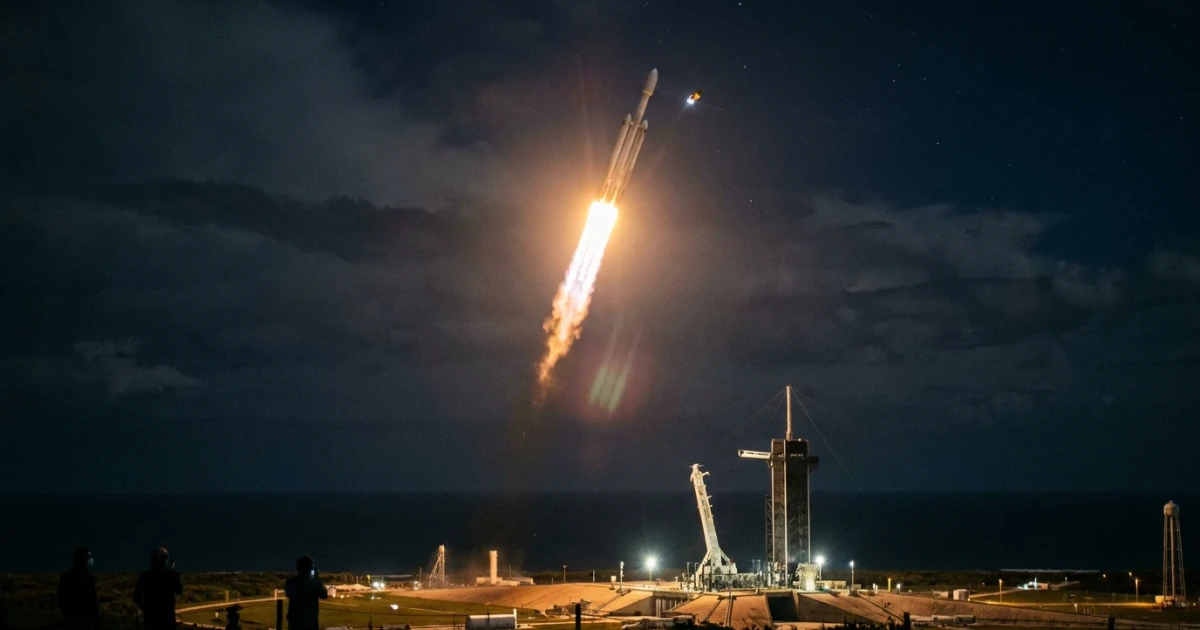
SpaceX has successfully launched the 6-ton Viasat-3 F3 communications satellite aboard its Falcon Heavy rocket, marking another milestone in commercial satellite deployment and global connectivity. The mission, which lifted off after a previous weather-related delay, highlights the continued partnership between launch providers and satellite operators in expanding global broadband coverage.
Mission Overview and Launch Details
The Falcon Heavy rocket, SpaceX's most powerful operational launch vehicle, carried the Viasat-3 F3 satellite to geostationary transfer orbit. According to Spaceflight Now's launch timeline, the mission marked one of the few instances where the heavy-lift rocket was used for a commercial payload of this scale, with the satellite itself weighing approximately 6 metric tons.
- The Falcon Heavy lifted off from Florida's Kennedy Space Center.
- The mission required precise orbital insertion to deliver the large Viasat-3 F3 payload to its designated slot.
- This was SpaceX's second attempt at the launch, after an earlier scrub due to adverse weather conditions.
Viasat-3 F3: Strengthening Global Communications
The Viasat-3 F3 satellite is part of the Viasat-3 constellation, aimed at delivering high-capacity, high-speed broadband to customers across the globe. Each satellite in the Viasat-3 series is designed to provide terabit-class throughput, supporting a wide range of services from residential broadband to in-flight connectivity and enterprise networks.
- Viasat-3 F3 joins its predecessors in orbit, further expanding the constellation's coverage and bandwidth.
- According to the N2YO satellite tracking database, Viasat-3 F3 entered geostationary orbit, where it will remain fixed above a specific region to provide continuous coverage.
- The official NASA investigation page for Viasat-3 F3 details its mission objectives and technical capabilities.
Technical Achievements and Broader Impact
The launch reinforces SpaceX's position as a leading provider of commercial launch services, especially for large, complex payloads. Falcon Heavy's ability to deliver heavy satellites like Viasat-3 F3 to high-energy orbits makes it a critical asset for the satellite communications industry.
The Viasat-3 constellation, including F3, is expected to:
- Boost high-speed internet access in underserved regions.
- Support growing demand for data-intensive applications worldwide.
- Enhance the resilience and redundancy of global communications networks.
These advancements are particularly important as satellite operators seek to bridge the digital divide and offer connectivity where terrestrial infrastructure is limited.
Looking Ahead
With Viasat-3 F3 now in orbit, the satellite will undergo post-launch checkouts before entering operational service. The successful deployment signals ongoing momentum for both SpaceX and Viasat, as the industry continues to push the boundaries of satellite size, capacity, and coverage.
For more on the broader satellite landscape, readers can explore the Union of Concerned Scientists' detailed database of active satellites. As satellite technology and launch capabilities evolve, missions like Viasat-3 F3 set the stage for the next generation of global connectivity solutions.