Science
SpaceX Super Heavy Booster Passes Cryogenic Testing Milestone
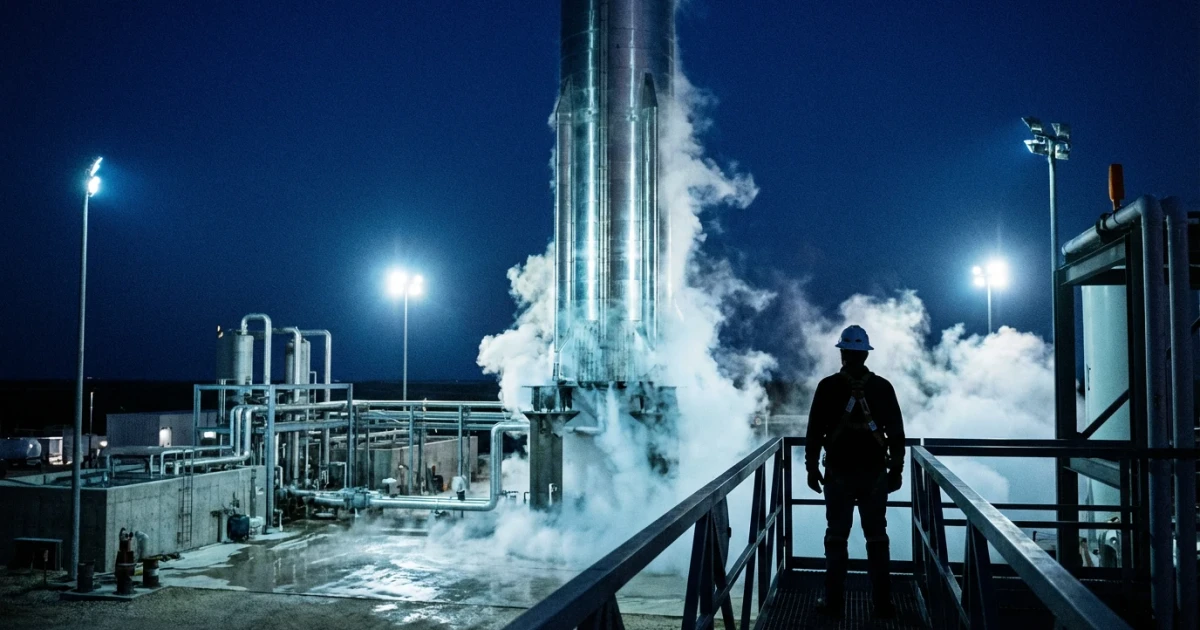
SpaceX has achieved a significant milestone in its Starship program with the latest Super Heavy booster successfully completing four days of intensive “cryoproof” testing, according to reports from Ars Technica and NASASpaceFlight.com. The achievement marks a pivotal advancement in the development of the company’s fully reusable launch system, aimed at enabling ambitious missions to the Moon, Mars, and beyond.
Testing at the Forefront of Reusable Rocketry
The recently tested booster, designated Booster 19, was rolled out to SpaceX’s Masseys test facility for a comprehensive series of cryogenic proof tests. These tests involved filling the vehicle’s massive propellant tanks with ultra-cold liquid nitrogen to simulate the stresses of actual flight conditions, without the risks associated with live propellants. Over the course of four days, the booster was subjected to repeated cycles of chilling, pressurization, and inspection, with SpaceX engineers monitoring for any signs of leaks, material fatigue, or structural anomalies.
- Booster 19 features several design improvements over previous iterations, reflecting SpaceX’s iterative approach to rocket development.
- The cryogenic testing regime is crucial for validating the integrity of the booster’s advanced propellant tanks and structural elements.
- Successful completion of these tests paves the way for static fire trials and, ultimately, the next Starship orbital launch attempt.
What Is Cryogenic Proof Testing?
Cryogenic proof testing is a standard procedure in the development of large rocket stages, especially those using cryogenic propellants like liquid methane and liquid oxygen. By filling tanks with inert liquid nitrogen at extremely low temperatures, engineers can safely assess the booster’s ability to withstand the thermal and pressure loads it will experience in flight. According to NASASpaceFlight.com, SpaceX’s test campaign included both full and partial tank fills, as well as pressurization cycles to confirm the booster’s resilience and leak-tightness.
Implications for Starship’s Next Steps
This successful test campaign is a positive sign for the Starship program, which relies on the Super Heavy booster’s performance to deliver payloads to orbit and beyond. SpaceX’s iterative design and testing process has seen previous boosters undergo similar proof tests, but Booster 19’s four-day campaign was notable for its duration and thoroughness. The results suggest continuing refinement in manufacturing and quality assurance, bringing the company closer to routine, rapid reusability.
With Booster 19 now cleared from cryogenic proof testing, engineers are expected to conduct further analyses before proceeding to static fire tests—where the booster’s Raptor engines are fired while the vehicle is held down on the pad. If those milestones are achieved, SpaceX could be on track for an integrated flight test in the near future, a crucial step in demonstrating the full Starship system’s capabilities.
Why This Matters
- The Super Heavy booster is central to SpaceX’s vision of commercial spaceflight and interplanetary transport.
- The successful completion of cryogenic testing demonstrates progress in reusability and reliability—key to reducing launch costs and expanding space access.
- Upcoming static fire and flight tests will provide further data on booster performance and readiness for operational missions.
Looking Ahead
While challenges remain on the path to routine Starship flights, recent progress with Booster 19 underscores SpaceX’s commitment to rapid development and rigorous testing. Industry observers are watching closely as the company prepares for the next major milestones, which could shape the future of large-scale orbital and deep-space missions.