Politics
Spanish judge orders Pedro Sánchez’s wife to trial, bans travel
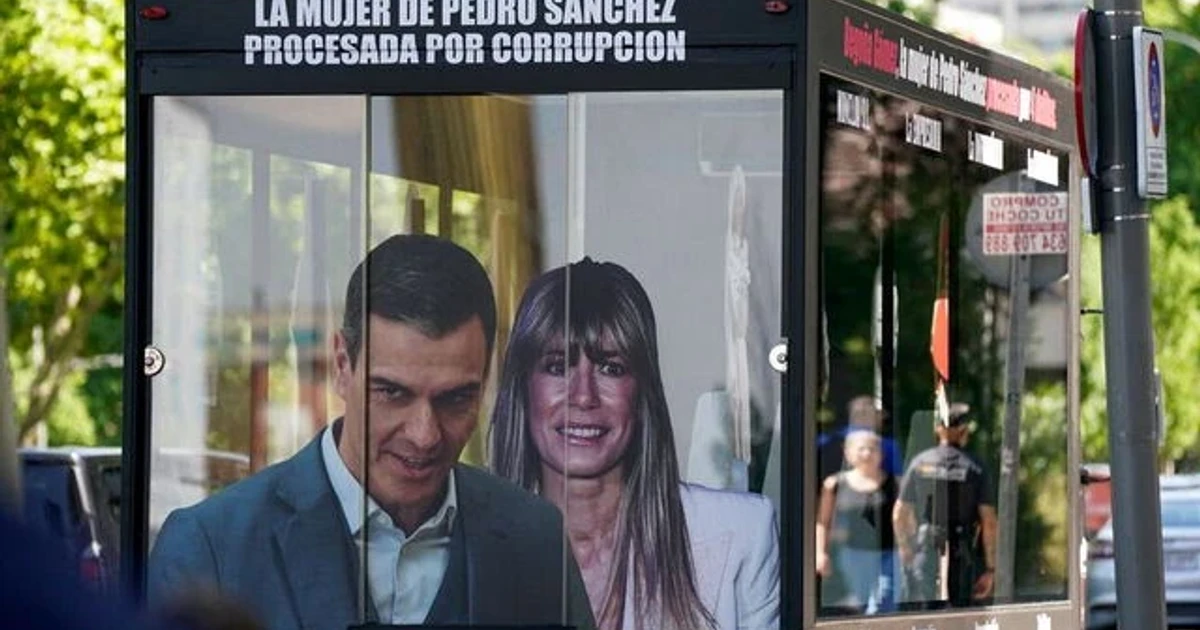
A Spanish judge has ordered Begoña Gómez, the wife of Prime Minister Pedro Sánchez, to stand trial and barred her from leaving the country, turning a politically charged corruption case into a direct test of Spain’s institutions. Judge Juan Carlos Peinado also required Gómez to surrender her passport and appear before court twice a month while the case moves forward.
The order raises the stakes far beyond a family scandal. It comes as Sánchez’s minority government is already under pressure from other corruption probes, including the Koldo case, and it gives the opposition fresh ammunition to argue that the prime minister’s circle has become a liability. At the same time, the ruling forces Spain’s judiciary to navigate a case that cuts across legal standards, political loyalty and public trust.

The investigation began in April 2024. It centers on allegations that Gómez used her position as the prime minister’s wife to help secure business contracts and advance private interests linked in part to an academic chair at Madrid’s Complutense University. In April 2026, she was formally charged on four counts: influence peddling, embezzlement, corruption in business dealings and misappropriation of public funds. A fifth count, professional intrusion, was dropped for lack of evidence.
The complaint was brought by Manos Limpias, a far-right-linked anti-graft group whose leader has been linked to the extreme right. The case has therefore always carried a political edge, with Sánchez’s critics treating it as proof of rot around the Socialists and his supporters portraying it as an attack on the prime minister through his family. The judge’s latest order suggests the court believes the case has moved from suspicion to a level of evidence sufficient for formal proceedings, even if no trial date has yet been set.

The same precautionary measures were applied to co-defendant María Cristina Álvarez Rodríguez, while businessman Juan Carlos Barrabés Cónsul was also sent to trial. Spanish media reported immediate backlash: opposition parties called for Sánchez’s government to resign, while ministers and Socialist Party figures denounced the decision as disproportionate. The Moncloa government accused the judge of persecution, obsession and excess, and some Spanish police unions criticized the court’s suggestion that escorting officers could help Gómez flee.

For Sánchez, the case now sits at the intersection of personal reputation and governing stability. The legal process will continue without a trial date, but the political damage is already unfolding in public, where every new step in the case is now being read as a measure of the government’s resilience.
Sources
- [1]usnews.com
- [2]internazionale.it
- [3]dw.com
- [4]newsday.com
- [5]elpais.com
- [6]swissinfo.ch
- [7]democrata.es