World
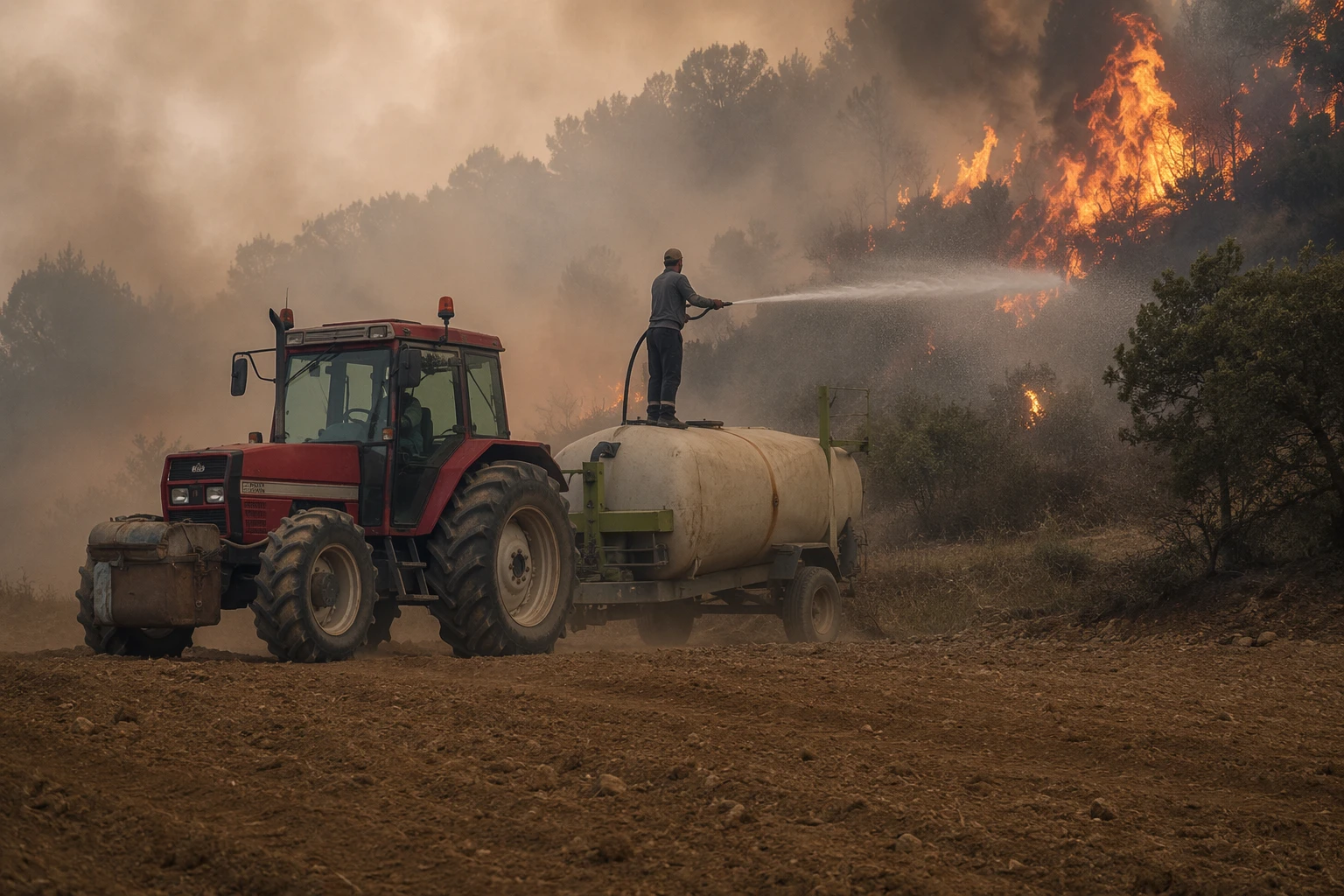
Spanish town residents fight wildfire with tractors and water tanks

Residents in Hijes and nearby towns used tractors, water tanks and sprays to carve firebreaks and protect homes as wildfire closed in on their community in Spain’s Guadalajara province. The effort showed how quickly ordinary neighbors can become the first line of defense when flames move faster than formal response.
The local response came as Spain faced a worsening stretch of fire danger across the Mediterranean region. At least a dozen new wildfires broke out across the country on July 22, while firefighters worked through the night in northeastern Spain and a blaze in northern Aragon drew around 400 firefighters and emergency personnel, supported by 15 aircraft. One Reuters video item said that fire burned more than 38,000 acres across a 50-mile perimeter.
Spain’s largest wildfire of the year had already burned for a fifth day as a new heatwave loomed, and another account said the fire scorched 12,000 hectares and forced mass evacuations. The scale of the response underlined the gap between what a village can do on its own and what it takes to stop a fast-moving summer fire once wind, heat and dry land turn into an emergency.
In Hijes, the defense depended on local knowledge as much as equipment. Residents knew where roads narrowed, which fields could slow a flame front, and where water could be brought in quickly enough to matter. That kind of improvised action can buy time, but it also shows how vulnerable small towns become when firefighting resources are stretched across multiple blazes at once.
The same week, wildfires in southern Spain killed 12 people and left 23 missing, and another wildfire in southern Spain left homes and cars burnt as residents used instinct to get out. The human cost made clear that the fire season is no longer a matter of crews arriving to contain a perimeter. It is a community-wide survival problem that can move from farmland to streets in hours.
For towns like Hijes, the lesson is blunt. Volunteer action can slow a fire, protect a cluster of homes and help firefighters find workable access. It cannot replace aircraft, crews, water supply and land management that reduce fuel before flames arrive. As Spain faces hotter summers and more simultaneous outbreaks, the line between civic self-defense and state capacity is becoming harder to see.
Sources
- [1]reuters.com
- [2]facebook.com
- [3]reutersconnect.com
- [4]bbc.com