World
Sri Lanka grapples with deadly prison riot amid overcrowding crisis

The clashes at Negombo prison, about 35 kilometers north of Colombo, left eight prison officials and 20 prisoners dead and more than 100 injured. Sri Lanka has named a three-person committee to investigate the deadly prison violence after years of warnings that the country’s jails were already buckling under crowding, prolonged pre-trial detention and weak oversight.
Negombo was built for about 650 inmates but was holding around 2,400 when the fighting broke out. Across Sri Lanka, prisons hold roughly 41,000 people, about 400% above capacity. Prisoners sleep in shifts, a practice known as salmon packing, and some women are forced to sleep in toilets.
Justice and National Integration Minister Harshana Nanayakkara told parliament that recruitment of about 1,300 prison staff has moved slowly because of bureaucracy and because prison jobs are not attractive to better-qualified applicants. The government has also reversed a plan to turn an old colonial prison, closed in 2014, into a hotel and instead intends to move about 2,000 prisoners there.
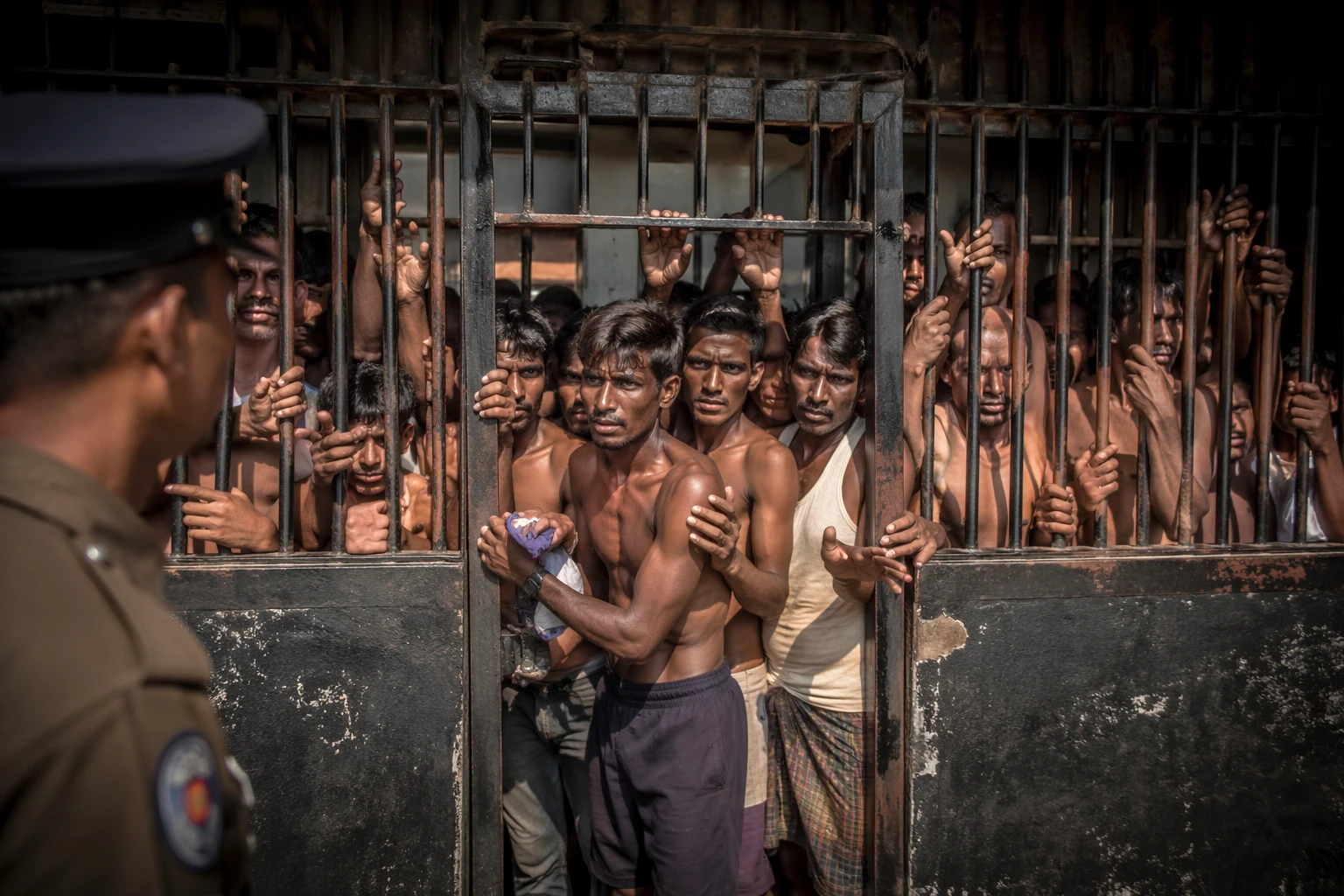
The UN Subcommittee on Prevention of Torture visited Sri Lanka from June 14 to 25 and found that people deprived of liberty still faced prolonged pre-trial detention, overcrowding and inadequate conditions, while several recommendations from its 2019 visit had still not been fully implemented. The Human Rights Commission of Sri Lanka has also directed the Commissioner General of Prisons to take immediate measures to protect inmates and ensure access to prisons after the riot.
The commission’s own prison study, carried out in 20 prisons, found conditions far below basic living standards, with poor healthcare and rehabilitation, severe staff shortages and officers left overworked and dissatisfied. A UNODC-linked prison-reform paper recorded overcrowding at 461% in 1998, helping spur the Community Based Correction Act No. 46 of 1999 and the creation of the Department of Community Based Corrections in 2008.

Amnesty International put prison overcrowding at nearly 200% in 2022 and found that 63% of convicted people were sentenced for drug-related offences. A UN human-rights submission counted more than 29,000 arrests by January 9, 2024, with nearly 1,500 people held in administrative detention for further investigation. Amnesty International also recorded two inmates transferred from Negombo later died in other prisons.
Sources
- [1]ca.news.yahoo.com
- [2]ohchr.org
- [3]amnesty.org
- [4]unodc.org
- [5]hrcsl.lk