Business
States Advance AI Laws Amid Congressional Gridlock
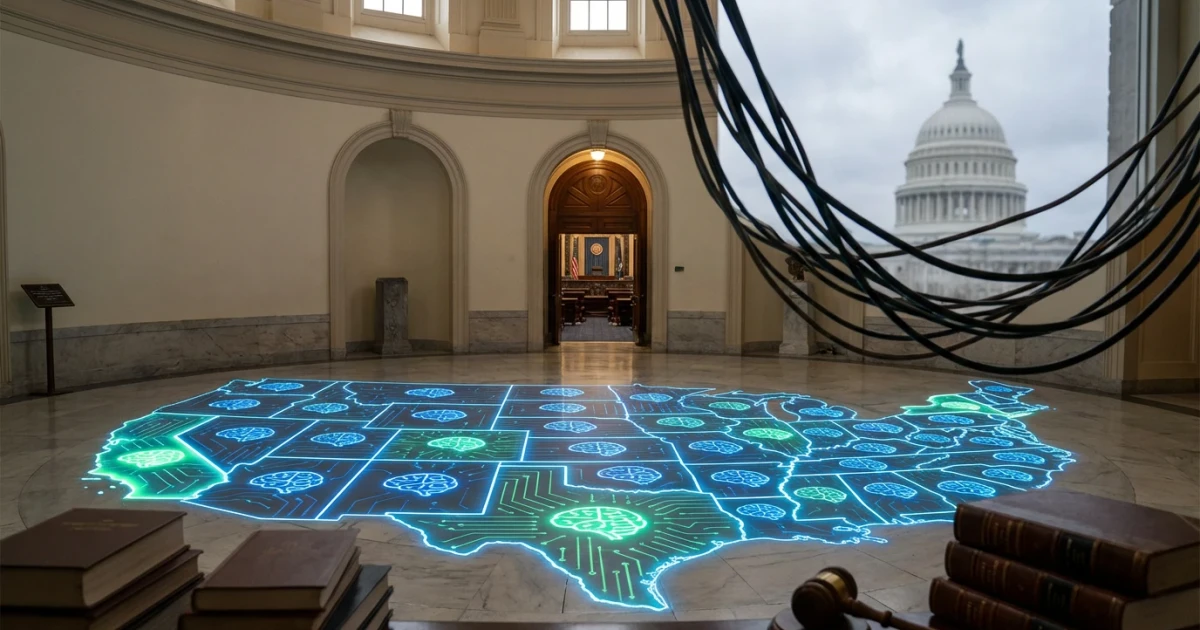
As Congress remains deadlocked on federal artificial intelligence (AI) legislation, states across the country are taking matters into their own hands—enacting new laws and regulatory frameworks to address the rapidly evolving technology. While former President Donald Trump has called on Congress to act, many state leaders say they are no longer waiting for Washington’s cue.
State Action Fills Federal Void
With Congress struggling to reach consensus on AI legislation, states have accelerated their own lawmaking efforts. According to NPR, state officials express frustration with the lack of federal direction, arguing that the urgency of AI-related risks and opportunities demands immediate action. Many states have introduced or passed laws governing privacy, algorithmic transparency, and ethical standards for AI deployment.
- Oklahoma recently became the twentieth state to enact a comprehensive privacy law, joining a growing list of states with broad data and AI-related regulations.
- The 2024 AI Legislation Tracker shows dozens of AI bills introduced in state legislatures this year alone, with topics ranging from consumer protection to public sector AI use.
- The Center for Democracy & Technology maintains an interactive database of state AI bills, reflecting the increasing legislative momentum.
Key State Efforts and Trends
Several states are now recognized as national leaders in AI regulation. Oklahoma’s new law, for example, not only addresses personal data privacy but also includes provisions for AI-powered decision-making in both government and private industry. According to analysis from WilmerHale, Oklahoma’s framework is part of a broader trend toward comprehensive state-level data and AI regulation that often goes beyond what has been proposed at the federal level.
States are also experimenting with different approaches:
- Transparency requirements—Some states mandate that organizations disclose when AI is used in critical decisions, such as hiring or credit approval.
- Algorithmic accountability—Laws in several states set standards for testing and auditing AI systems for bias, accuracy, and fairness.
- Consumer protections—States are expanding individuals’ rights to know, correct, or delete personal data, especially when used in automated tools.
Frustration with Federal Inaction
As reported by NPR, former President Trump has called for Congress to break its stalemate and pass national AI legislation, citing the risks of a patchwork of state laws. However, state officials point out that in the absence of federal leadership, they have little choice but to act. Many worry that inconsistent rules across state lines could create compliance hurdles for businesses and confusion for consumers, but see no alternative as AI adoption accelerates.
Looking Ahead: The Push for Uniform Standards
The ongoing state-level activity is intensifying calls for federal action. Industry groups and advocacy organizations argue that only Congress can create a unified national framework, while some experts warn that diverging state laws may eventually force nationwide companies to adopt the strictest standards by default. The White House Office of Science and Technology Policy continues to promote executive branch initiatives, but comprehensive federal legislation remains elusive.
The coming months are likely to see more states introducing and refining AI regulations. Unless Congress acts, the United States may see an increasingly complex legal landscape for artificial intelligence—shaped not by a single national policy, but by the sum of fifty different state approaches.