Business
Stock futures fall after U.S. strikes Iran, oil rises
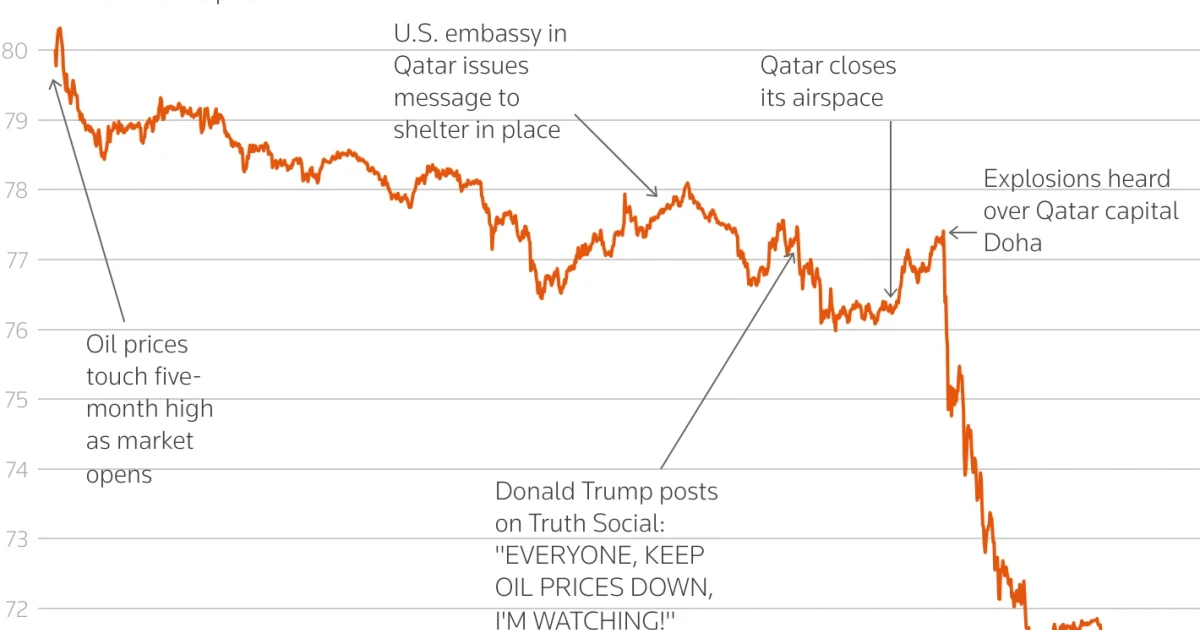
U.S. stock futures fell and oil prices climbed as the latest strikes on Iran pushed investors toward safer assets and raised fresh questions about how long the shock could last. The move hit a market already on edge over inflation and Federal Reserve policy, with traders watching whether the flare-up becomes a brief risk-off swing or the start of a wider geopolitical repricing.
Early Wednesday, S&P 500 futures were down 0.50%, Nasdaq 100 futures fell 0.87% and Dow futures lost 140 points after the United States carried out what it described as self-defense strikes against Iran. West Texas Intermediate crude rose about 1% to around $89 a barrel, while Brent also moved higher. The immediate market reaction showed how quickly conflict in the Middle East can spill into the cost of energy, transport and eventually consumer prices.
U.S. Central Command said it struck Iranian radar and command-and-control sites for drones in Goruk, Iran, and on Qeshm Island. CENTCOM said the action followed the shootdown of a U.S. MQ-1 drone over international waters and that no American service members were harmed. In Washington, officials framed the operation as a response to Iranian aggression, while the market focused on the chance that retaliation could widen.

That concern was reinforced by the next wave of regional headlines. Iran’s Islamic Revolutionary Guard Corps claimed attacks on U.S. military bases in Bahrain, Kuwait and Jordan, and Al Jazeera reported that Jordan intercepted missiles while air-raid alarms sounded in Bahrain and Kuwait. For traders, those developments matter because any expansion beyond a limited exchange could threaten oil shipping lanes, insurance costs and the broader flow of goods through the Gulf.
Energy markets have been especially sensitive because the Strait of Hormuz remains a choke point for global oil and liquefied natural gas. U.S. Energy Secretary Chris Wright said traffic and oil exports through the Gulf and the strait were “rising very meaningfully,” even as he warned that it could take many months for normal flows to return after lasting peace. Prior hostilities have already blocked around 20% of global oil and LNG supplies, underscoring why crude prices can move before the supply disruption is fully felt.
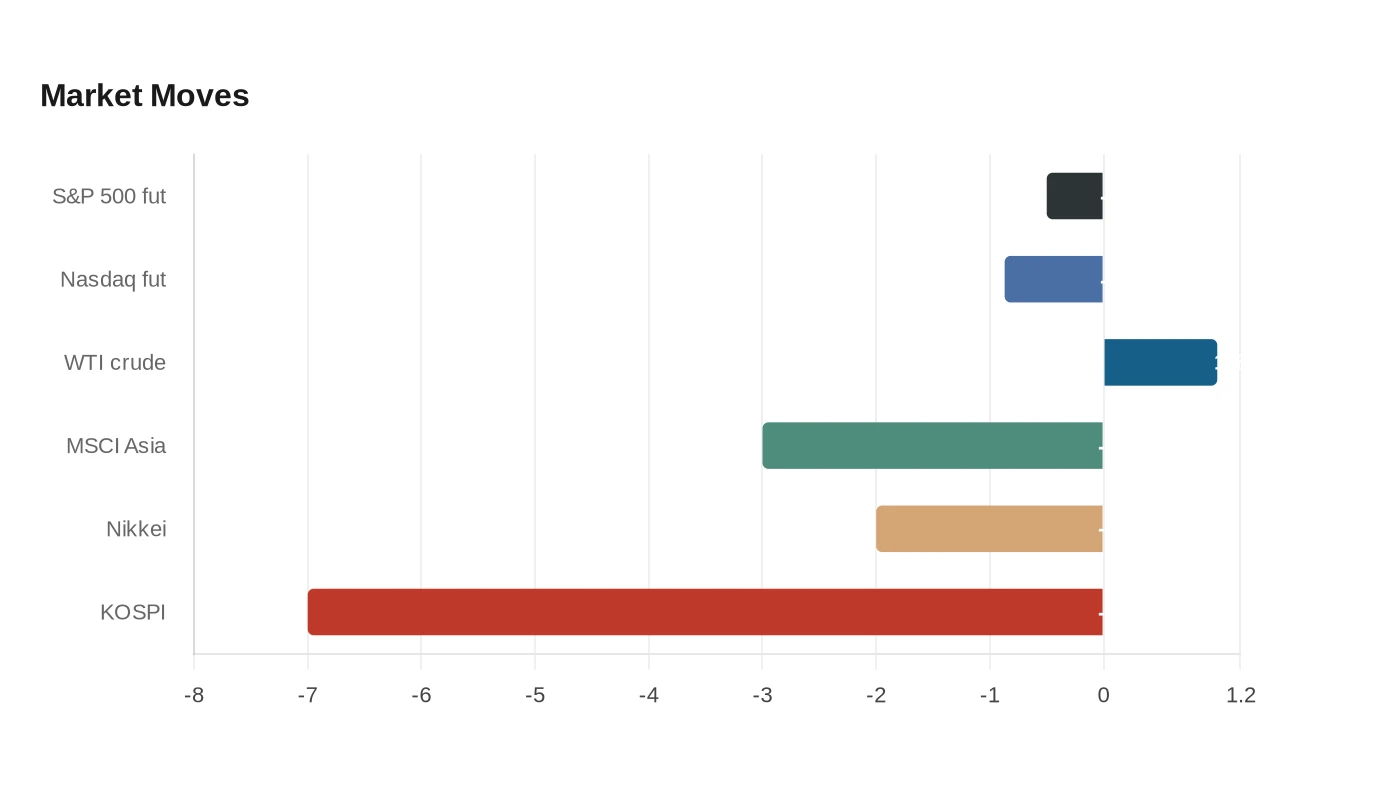
The pressure was not limited to the United States. Asian stocks tumbled, with MSCI Asia-Pacific ex-Japan down about 3%, Japan’s Nikkei off 2% and South Korea’s KOSPI nearly 7% lower. Reuters also reported Brent at $92.08 a barrel and WTI at $88.73. The market backdrop was already fragile, with investors awaiting U.S. inflation data and fully pricing in a 25-basis-point Federal Reserve hike in December. A sustained rise in oil could complicate that outlook, feeding costs into fuel, freight and, eventually, retirement accounts tied to broader equity markets.
Sources
- [1]news.google.com
- [2]cnbc.com
- [3]money.usnews.com
- [4]centcom.mil
- [5]straitstimes.com
- [6]aljazeera.com
- [7]theguardian.com