Business
Stock futures slide as investors await inflation data, Iran deal progress
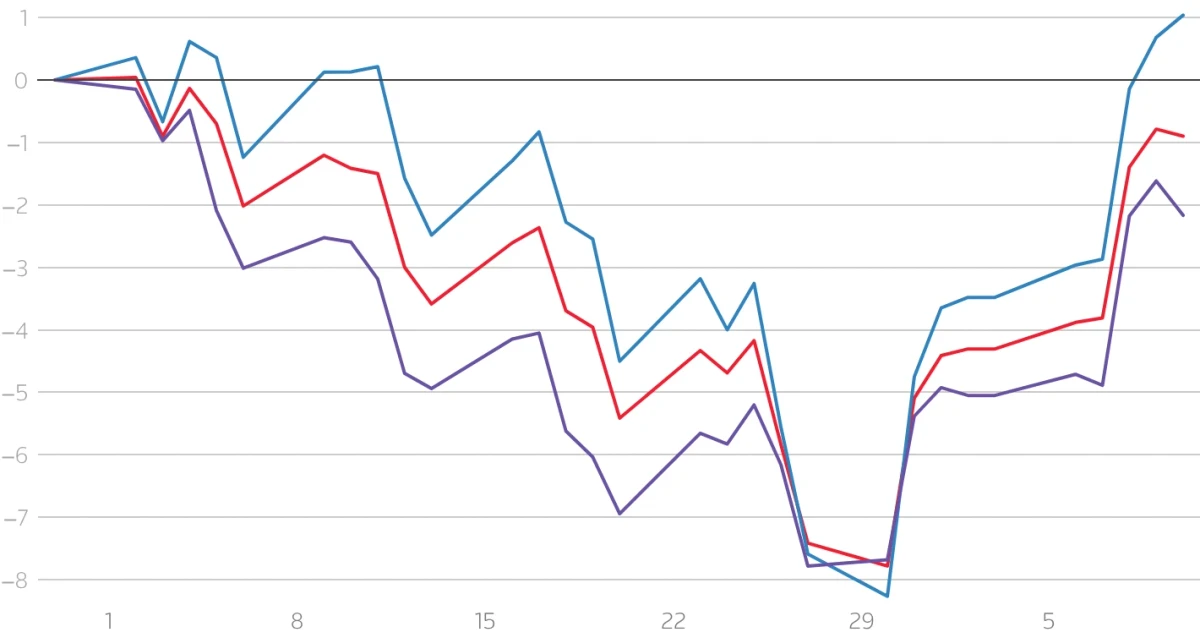
Stock futures slipped Monday as traders weighed a fragile breakthrough in U.S.-Iran negotiations against a far more important test for markets this week, Thursday’s May personal consumption expenditures price index, the Federal Reserve’s preferred inflation gauge. S&P 500 futures fell 0.5%, Nasdaq-100 futures lost 0.6%, and Dow futures dropped 187 points, or 0.4%, as investors tried to gauge whether easing geopolitical risk can offset the chance of tighter monetary policy.
Oil prices helped shape that mood. Mediators Qatar and Pakistan said U.S. and Iranian officials agreed on a roadmap to a final deal within 60 days, pushing Brent crude for August down 0.38% to $80.26 a barrel after an earlier gain, while U.S. West Texas Intermediate for July was about 1% higher at $77.52 a barrel. The moves followed a volatile stretch in which markets briefly celebrated a U.S.-Iran peace deal announcement, then questioned whether the agreement can hold because it remains unsigned and exposed to implementation risks.

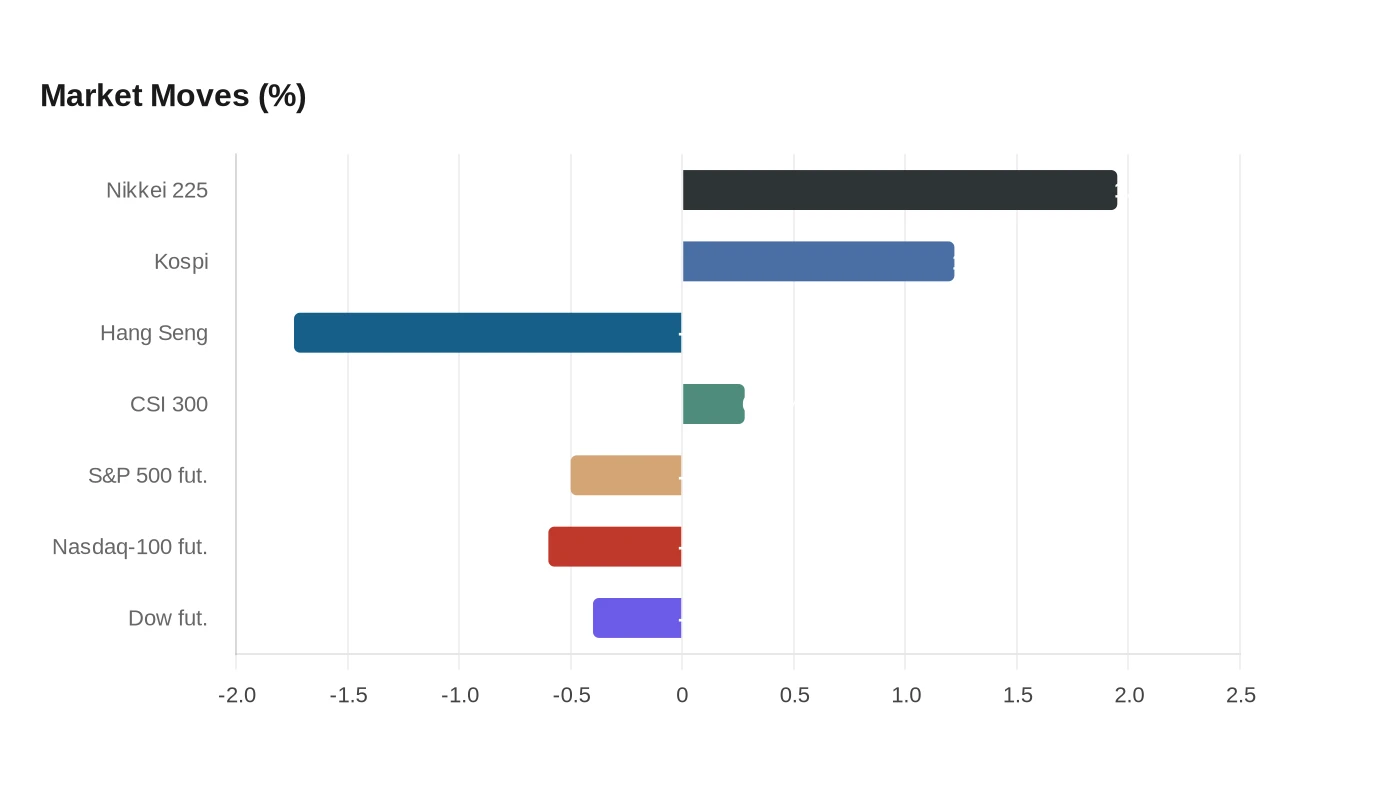
The regional backdrop was mixed. Japan’s Nikkei 225 climbed 1.95% to a fresh record above 72,000, South Korea’s Kospi rose 1.22%, Australia’s S&P/ASX 200 edged higher, Hong Kong’s Hang Seng fell 1.74%, and mainland China’s CSI 300 added 0.28%. The split highlights how quickly global investors are shifting between relief over lower energy prices and concern that any disruption in the Strait of Hormuz could still jolt supply chains and keep inflation sticky.

That inflation risk is what matters most for households beyond the trading screen. The latest May consumer price report showed core CPI rising 0.2% from April and 2.9% from a year earlier, still above the Fed’s 2% target. After last week’s hawkish Fed meeting, markets have pulled forward expectations for an interest-rate increase to as soon as October, so a hotter-than-expected PCE reading could harden bets on tighter policy, keeping pressure on mortgage costs, credit conditions, and equity valuations that support retirement accounts.
The stakes were clear in June 10’s selloff, when President Donald Trump threatened more action against Iran and the Dow fell 953.33 points, the S&P 500 lost 1.62%, and the Nasdaq Composite dropped 1.98%, even as WTI crude jumped to $90.03 a barrel. The opposite reaction also showed how sensitive markets remain: on the peace-deal announcement, U.S. crude fell 4.77% to $80.83 and Brent slid about 4% to $83.77. For now, investors are looking for evidence that lower oil can calm inflation without being undone by a harder Fed stance.
Sources
- [1]news.google.com
- [2]cnbc.com
- [3]bls.gov