Business
Stock Market Misreads Impact of Iran Conflict
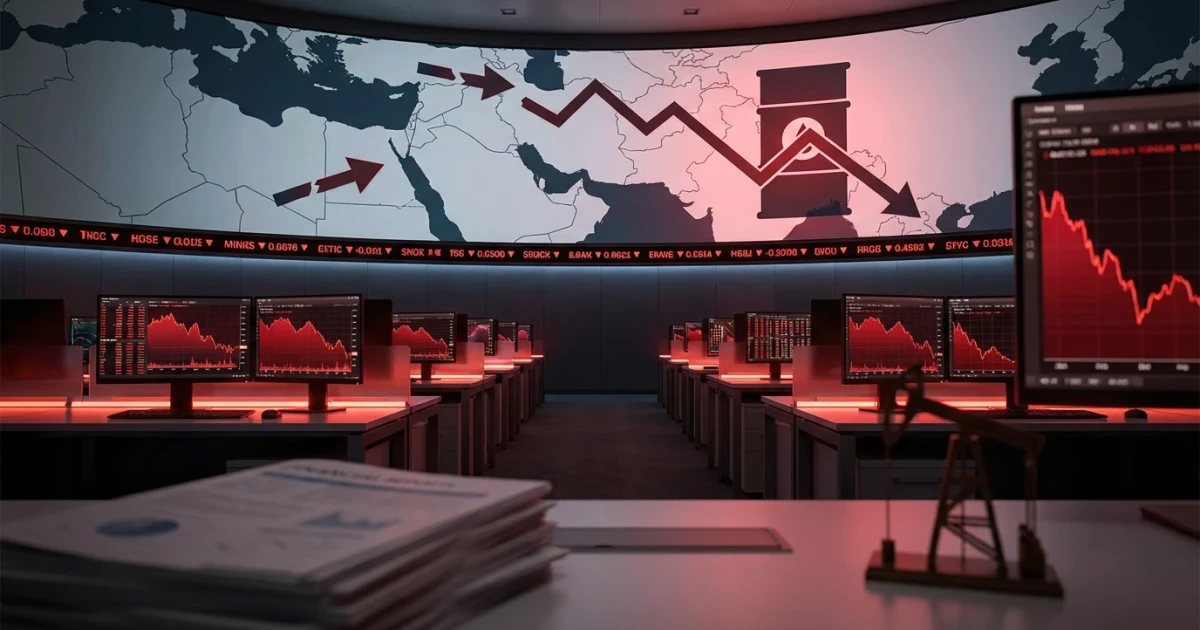
Recent fluctuations in the stock market following the escalation of the Iran war have sparked debate about whether investors fully grasped the long-term risks and economic implications of the conflict. While markets responded with sharp moves immediately after hostilities began, some analysts argue the initial reactions overlooked broader uncertainties.
Initial Market Reactions
When news broke of escalating tensions and open conflict involving Iran, major U.S. indices such as the S&P 500 saw a swift downturn. Volatility spiked, with the Cboe Volatility Index (VIX) reflecting heightened uncertainty among investors. At the same time, crude oil prices surged on fears of supply disruptions in the Middle East, a region critical to global energy flows.
- The S&P 500 dropped rapidly in the days following the initial military strikes, though it later stabilized.
- Oil prices reached their highest point in over a year, reflecting anxieties about restricted exports.
- Trading volume and volatility, as reported by Cboe U.S. Equities Market Statistics, both jumped significantly.
Why the Market Might Have Missed the Mark
Despite these sharp moves, The Washington Post highlights that the market may have underestimated the lasting consequences of the Iran war. Historically, geopolitical crises produce complex and sometimes delayed effects on global markets, especially when they involve energy supplies and international trade.
Some analysts point out that equity markets often return to relative calm after the initial shock, as was observed in the days following the outbreak of hostilities. However, this pattern can mask persistent risks, including:
- Prolonged disruptions to oil shipments, raising costs for businesses and consumers globally
- Heightened volatility, with the VIX remaining above its long-term average
- Potential for further escalation, which could trigger additional market sell-offs or currency instability
Broader Economic Risks
The potential for a drawn-out conflict introduces uncertainties that go beyond immediate market swings. According to the IMF World Economic Outlook, sustained high oil prices and instability in the Middle East could weigh on global growth forecasts and increase inflationary pressures. These factors can have a ripple effect across sectors, from manufacturing to consumer goods.
Data from Our World in Data shows that wars in the region have historically resulted in significant economic costs, not just locally but worldwide. Markets that recover quickly in the short term may not be fully pricing in the risk of longer-term disruptions or policy responses, such as sanctions or shifts in energy strategy.
Investor Takeaways
The Washington Post notes that while markets are efficient at processing immediate news, they can sometimes misjudge the complexity of geopolitical events. Investors are advised to consider the full spectrum of risks—including potential for escalation, policy shifts, and economic contagion—rather than relying solely on short-term market rebounds as a signal of safety.
Conclusion
The Iran war’s impact on the stock market illustrates how initial market reactions can underplay lasting risks. As the situation continues to evolve, investors and analysts will be closely monitoring not just headline moves, but underlying fundamentals and geopolitical developments that could shape market behavior for months to come.