Technology
Streaming’s ad-free promise fades as prices keep rising

The cheapest way to watch TV now is often the one with ads. Across the biggest streaming services, ad-free viewing has shifted from the default upgrade to the most expensive tier, while ad-supported plans have become the industry norm. For households stacking Netflix, HBO Max, Disney+ and Hulu, the monthly math is starting to look a lot like cable all over again: pay more, watch ads, or cut back.
Ad-free is no longer the norm
Nielsen said content with ads accounted for 73.6% of overall TV viewing in the second quarter of 2025, a 1.2-point gain that shows how deeply ad-supported viewing has moved into the center of the market. Antenna estimated that by June 2026 there were more than 110 million ad-supported streaming plans in the United States, excluding Amazon Prime Video. Those two figures capture the same shift from different angles: ad tiers are no longer a side option for cost-conscious viewers, but the main traffic lane for streaming.
That change matters because it reverses one of streaming’s original selling points. Early streaming promised on-demand convenience and a cleaner, interruption-free experience, but the economics now favor a more familiar television model built around lower-priced entry tiers and advertising. The result is not just more commercials, but a different class structure inside the apps, where uninterrupted viewing is increasingly treated as the premium product.
The price ladder keeps climbing

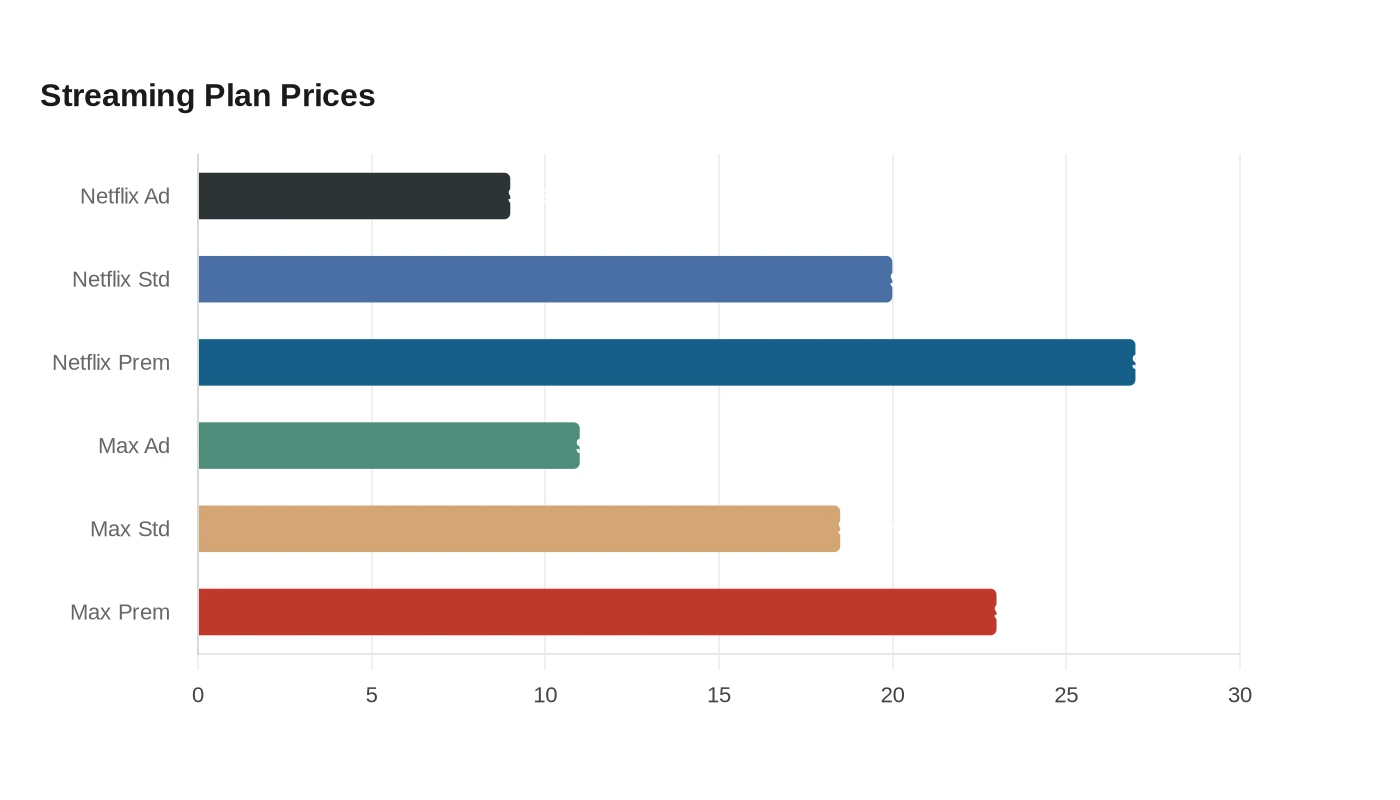
Netflix made that logic visible in March 2026 when it raised U.S. prices across all of its plans. The company set its ad-supported plan at $8.99 a month, its Standard plan at $19.99, and its Premium plan at $26.99, while extra-member pricing also moved higher. That gap is the clearest expression of the new model: the cheapest subscription comes with ads, and the price of escaping them rises sharply.
HBO Max is using the same structure. Its current U.S. pricing lists Basic with Ads at $10.99, Standard at $18.49, and Premium at $22.99. Disney+ and Hulu have also moved into tiered plan structures that include both ad-supported and ad-free options, with Disney+ noting that pricing can vary by bundle and billing partner. The names differ, but the pattern is now consistent across the business: ad-free access is the top-shelf product, not the default.
That tiering is important because it recreates cable’s old bundle logic inside a digital shell. Instead of one flat monthly bill for broad access, viewers face a menu of tiers, upsells, and pricing jumps that nudge them toward either accepting ads or paying extra for the same content without interruptions. The platforms are no longer selling only shows and movies; they are selling different levels of access to the viewing experience itself.
What the monthly math looks like

The clearest way to see the pressure on household budgets is to compare ad-supported and ad-free plans side by side. A subscriber paying for Netflix Premium and HBO Max Premium would spend $49.98 a month before tax. Switching both services to ad-supported tiers cuts that bill to $19.98, a difference of $30 every month, or $360 over a year.
That kind of spread is where streaming starts to feel less like a single entertainment choice and more like a budgeting decision. The gap grows every time a household adds another service, and the rise of ad-free pricing means the old habit of keeping multiple subscriptions active at once becomes harder to sustain. In practical terms, families are being pushed toward a rotating model, keeping one or two services at a time, then dropping them when the bill gets too high or the desired shows run out.
The pressure is especially sharp because the services do not all cost the same, and the ad-free tiers are clustered at the top of each price ladder. The more platforms move to this structure, the more viewers are forced to compare not just content libraries, but monthly cash flow. Streaming is no longer a single cheap alternative to cable. It is a stack of recurring charges that can quickly crowd out other household spending.
Why platforms prefer the ad model
The business case for ad tiers is now strong enough to reshape the entire market. Nielsen’s 2026 Upfront Planning Guide said streaming accounted for 66.7% of the time adults 18 to 49 spend with ad-supported TV, which gives advertisers a large and measurable audience inside streaming environments. Antenna added that ad-supported plans now make up the majority of new subscriptions for most premium SVOD services that offer them, showing that growth is coming from the ad tier rather than from pure ad-free premium demand.
That is why the industry has moved beyond treating ads as a discount add-on. Ad tiers let streamers monetize price-sensitive customers while preserving a more expensive lane for viewers willing to pay for uninterrupted access. The model is effective for platforms, but it also narrows the distance between streaming and the old cable bundle, where the consumer paid more for convenience, paid less for a smaller package, or accepted commercials as part of the deal.
The promise of streaming was simplicity. The reality is now a more segmented market in which ad-free viewing carries a premium label, and the monthly choice for many households is no longer whether to subscribe, but how much interruption they are willing to buy back.
Sources
- [1]theverge.com
- [2]nielsen.com
- [3]antenna.live
- [4]cnbc.com
- [5]help.hbomax.com
- [6]help.disneyplus.com
- [7]help.hulu.com