Science
Study challenges old lizard-brain model of human evolution
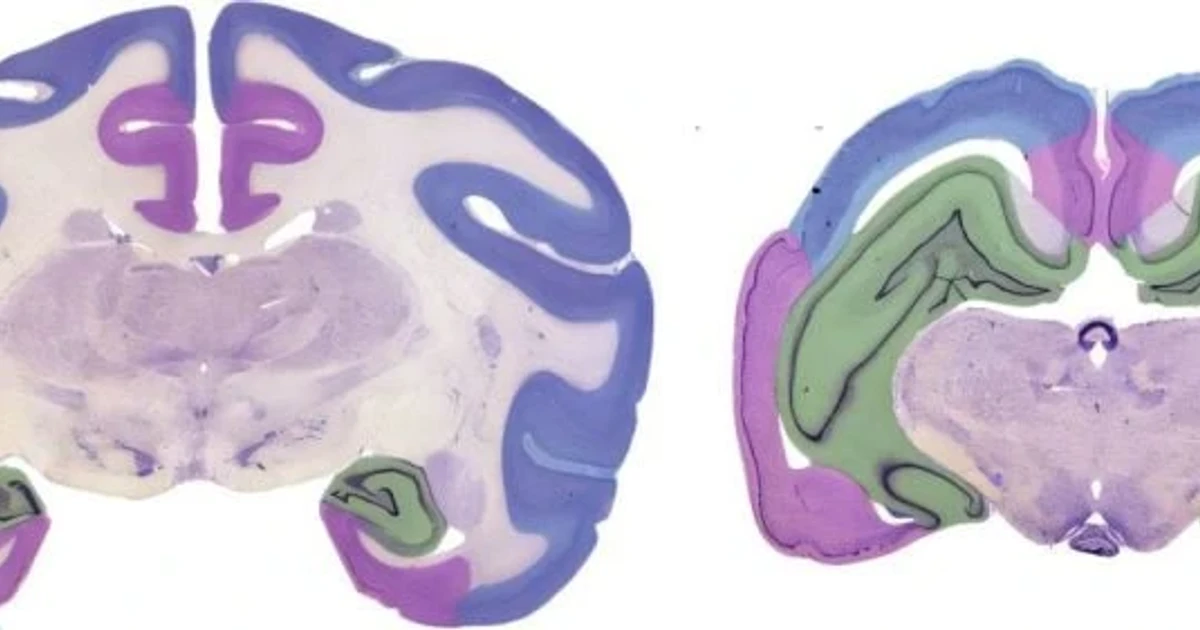
Across 182 mammalian species in 10 taxonomic groups, a new analysis found that brain systems expand and contract through tradeoffs rather than piling new rational layers onto older emotional ones. The study, published in Science Advances on April 22, 2026, points to a messier reality built around wiring strategies, limited space and limited energy, with different systems expanding or shrinking depending on what a species needs to survive.
Why the old model took hold
The “lizard-brain” idea became popular in the 1950s because it offered a clean metaphor for human behavior. Under that model, instinct, emotion and basic survival drives were treated as an older engine, while reasoning was imagined as a thin, recent overlay. Nabil Imam, one of the study’s authors at the Georgia Institute of Technology, said evolutionary biologists do not describe brains as a simple ladder from primitive to advanced.
The newer work replaces that ladder with a systems view. The authors examined biological brains and artificial brains to understand how neural systems change together, and their conclusion is that evolution does not expand every function equally. Brains face physical and energetic limits, so growth in one system often comes with contraction or reorganization in another.
What the study found
The paper, titled “Dual computational systems in the development and evolution of mammalian brains,” identifies two broad wiring patterns. One involves spatially organized circuits, where information follows ordered layouts. The other involves distributed networks that expand and shrink together over time. Those patterns help explain coordinated changes across brain systems.
Across mammalian brain evolution, there was a robust inverse relationship between the limbic system and the neocortex. The supplementary materials show that neocortex scaling was hyperallometric, with a slope of 1.40, while several limbic-system components showed hypoallometric scaling. In practical terms, the cortical systems associated with larger brains did not all grow in lockstep, and the growth pattern varied by structure.
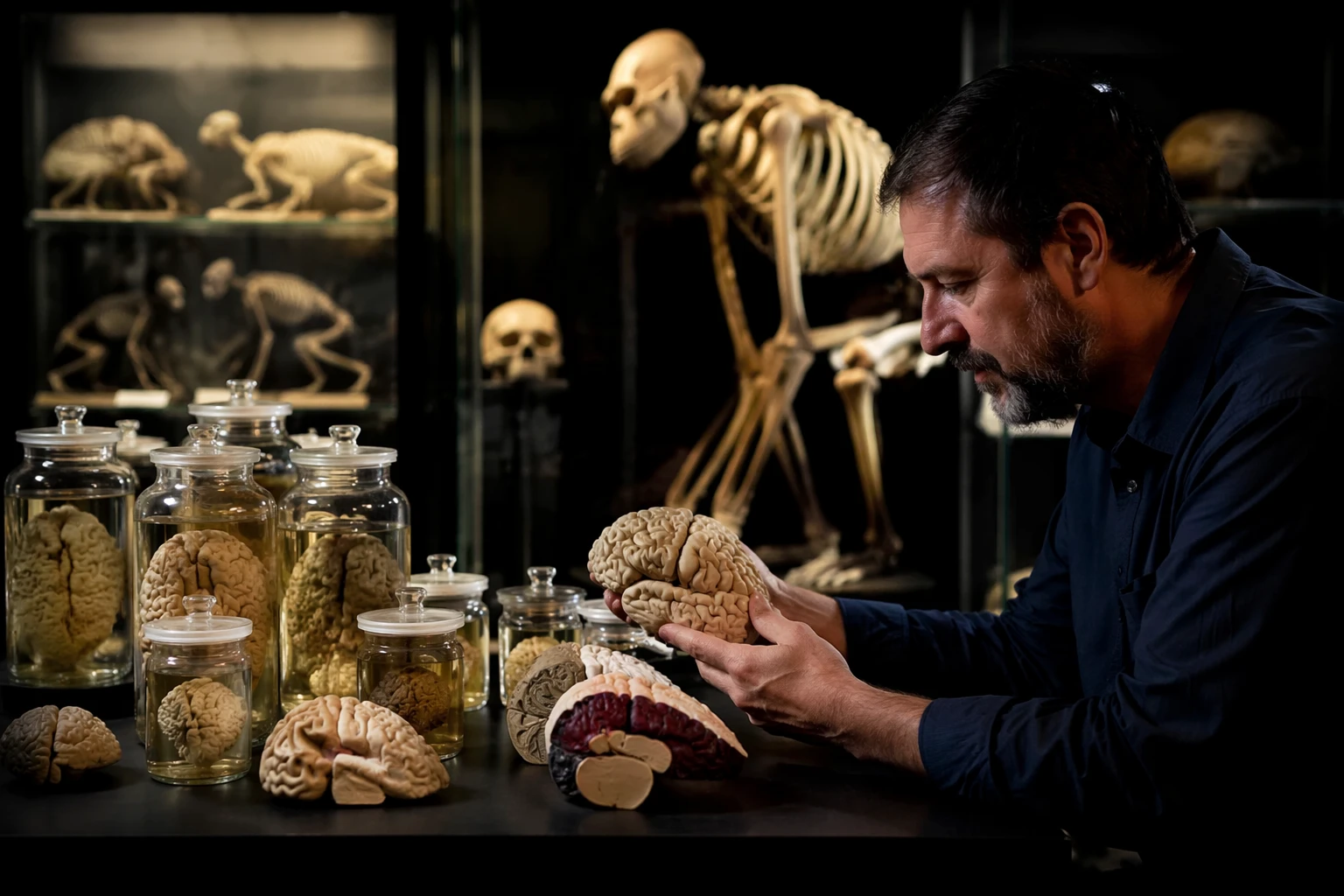
The study also distinguishes between map types inside different brain systems. Visual, somatosensory and auditory systems tend to form ordered spatiotopic maps, where information is laid out in structured topographic patterns. Olfactory and relational memory systems, by contrast, tend to form fractured maps with distributed patterns of information convergence. Not all brain functions are organized the same way, and the architecture reflects the job each system has to do.
Tradeoffs, not a hierarchy
The paper’s broader point is that brain evolution is shaped by tradeoffs. Limited physical volume and limited energy force species to prioritize some capabilities while constraining others. That is why the architecture of one animal’s brain can look very different from another’s, even when both are highly adapted to their environments.
The examples in the study make that tradeoff concrete. The squirrel monkey is used as an example of a species with a larger neocortex linked to vision and cognition. The nine-banded armadillo illustrates a different evolutionary path, with larger olfactory and memory-related structures tied to a scent-driven lifestyle.
The limbic system includes separate regions for memory, smell and navigation in addition to emotional regulation. In this framework, it is not just an “emotion center” sitting below a rational cortex. It is part of a larger set of interacting systems that support different forms of perception, memory and decision-making.
What this changes about behavior and mental health
If brain evolution is a network of interdependent tradeoffs rather than a stacked hierarchy, then human behavior should not be reduced to a battle between a primitive emotional brain and a superior rational one. That old shorthand can be useful in casual conversation, but it flattens the biology and misses how many decisions are shaped by memory, sensory processing, spatial mapping and learned circuits.
A model that treats emotion as an outdated leftover can make it harder to explain why feelings, habits and cognition are so tightly linked. The new evidence instead supports a view of the brain as an integrated system, where different networks specialize, overlap and constrain one another.
Why artificial intelligence is part of the story
The study also reaches beyond neuroscience. Its authors say understanding these brain architectures may help researchers design more efficient or more brain-like artificial systems. That is not a claim that current AI should mimic every feature of mammalian brains, but it does suggest that lessons from evolution could inform how future systems manage memory, pattern recognition and resource use.
If biological brains achieve flexibility by reusing and reorganizing circuits under severe energy constraints, then AI systems might become more efficient by adopting similar design principles. The possible translation from neuroscience to machine learning would be systems that learn with less wasted computation and more adaptive structure.
The research lineage behind the paper
Finlay has previously coauthored earlier work on the self-organization of cortical areas in neocortex development and evolution, giving this study a longer lineage inside the same lab and institution. Georgia Tech’s School of Computational Science and Engineering and its Institute for Neuroscience, Neurotechnology, and Society provide the setting for that work, where math, science and AI are being used to understand how the brain functions and changes over evolutionary time.