Health
Study examines GLP-1 weight loss drugs in early pregnancy

GLP-1 weight loss drugs are colliding with pregnancy care in the most uncomfortable place: the gap between real-world use and limited human safety data. A new study adds another signal, but it does not resolve the central question for patients and clinicians deciding what to do when conception happens before the medication washout period is complete.
What the study adds
The new analysis reviewed 149,790 singleton pregnancies delivered between June 1, 2016, and March 31, 2025, and focused on pregnancies exposed to GLP-1 receptor agonists before or during early pregnancy. In that cohort, 448 GLP-1RA-exposed pregnancies were matched to 1,344 unexposed pregnancies, giving researchers a closer look at outcomes after drug use around conception.
The main finding was not a birth-defect signal or a definitive safety verdict. It was a difference in maternal weight gain: mean gestational weight gain was 13.7 kg in GLP-1RA-exposed pregnancies versus 10.5 kg in matched unexposed pregnancies, a difference of 3.3 kg. That result suggests prior GLP-1 use may affect pregnancy weight trajectories, but it does not establish whether the drugs caused the change or what that means for fetal outcomes.
Why the issue has become more common
The clinical pressure comes from a simple fact: improved metabolic health can increase fertility. As more people use GLP-1 receptor agonists for diabetes and obesity, clinicians are seeing more unplanned conceptions during treatment or soon after it ends.
That matters because obesity is the most common medical condition in women of reproductive age, and the American College of Obstetricians and Gynecologists says obesity management should begin before pregnancy and continue through the postpartum period. In practice, that means the same medication class being used to improve long-term health can also create immediate reproductive questions, often before a pregnancy is recognized.
An earlier review in the American Journal of Obstetrics and Gynecology noted that GLP-1 receptor agonist use can improve fertility, which increases the chance of unplanned pregnancies during periconceptional use. That is the core decision-making gap: a medication may help weight and glycemic control, but it can also change the odds of conception at exactly the wrong time for a patient who has not planned a pregnancy.
What the study does not answer
The new cohort study adds weight-gain data, but it does not settle drug safety in early pregnancy. It does not override the fact that human pregnancy evidence is still emerging, and it does not replace the need for caution built into drug labels and obstetric guidance.
The most important limitation is that the current evidence base is still built from retrospective cohorts, reviews, and product-label warnings rather than randomized trials in pregnant patients. That leaves doctors with observations, not certainty, when a patient becomes pregnant while taking a GLP-1 drug or stops one shortly before conception.
What regulators and labels say
For semaglutide, the Food and Drug Administration labeling for Wegovy says to discontinue the drug at least 2 months before a planned pregnancy because of semaglutide’s long half-life. MotherToBaby similarly says the product labels for Ozempic, Wegovy, and Rybelsus recommend stopping semaglutide 2 months before pregnancy.
Wegovy labeling also notes a pregnancy exposure registry for women who use the drug during pregnancy, reflecting the reality that some exposures will happen despite planning. That registry exists because the field still lacks large, definitive human data on outcomes after early exposure.
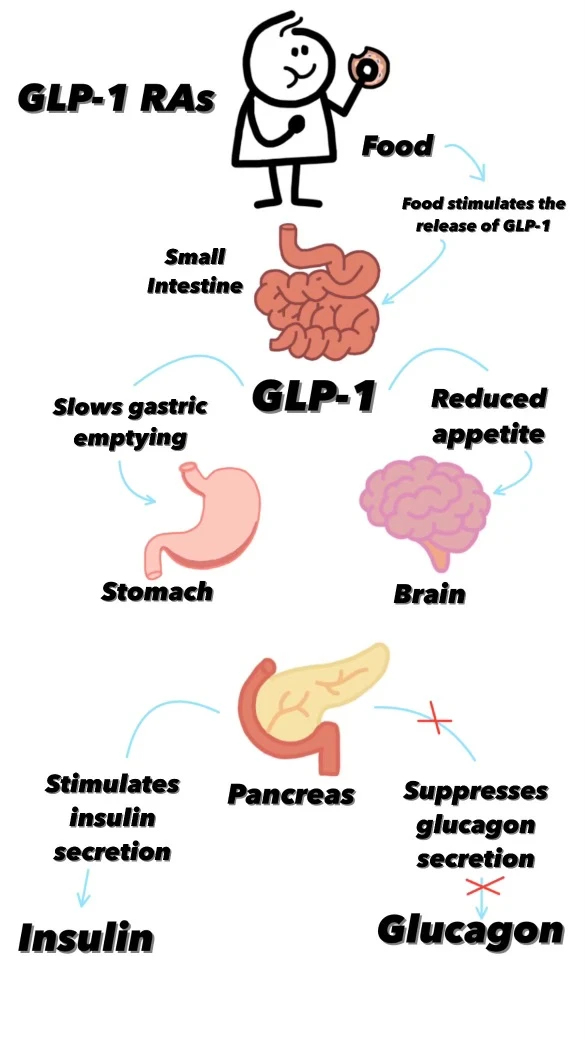
Tirzepatide, sold as Zepbound, carries a different but equally cautious message. The FDA labeling says available data in pregnant patients are insufficient to evaluate drug-related risk of major birth defects, miscarriage, or other adverse maternal or fetal outcomes. In other words, the label does not say the drug is proven harmful; it says the available pregnancy data are not enough to judge risk reliably.
How clinicians are interpreting the evidence
The practical takeaway for doctors is not to treat GLP-1 use in early pregnancy as a solved problem. It is to recognize that this is a counseling issue, a timing issue, and a risk-management issue all at once.
The ACOG guidance cited in the research points back to prevention and continuity: obesity management should start before conception and extend through the postpartum period. That framing is important because it moves the conversation away from a single pregnancy test and toward longer planning around fertility, contraception, medication selection, and medication discontinuation.
For patients already using a GLP-1 drug, the key clinical questions are now predictable even if the answers are not always simple: • Is pregnancy planned or possible in the near term? • Has enough time passed for the medication washout period? • If conception already occurred, what evidence exists for exposure timing and dose? • What is the balance between stopping a drug abruptly and losing control of weight or glucose?
Those questions are not hypothetical. They are exactly where the uncertainty lives, especially when treatment is being used for obesity, diabetes, or both.
Why the weight-gain finding matters, but only within limits
The 3.3 kg difference in gestational weight gain is clinically notable because pregnancy weight trajectory can matter for maternal health, glucose control, and obstetric outcomes. But it should not be overstated. The study shows an association in a matched retrospective cohort, not a direct causal mechanism and not a comprehensive safety profile.
That distinction matters because weight gain is only one part of pregnancy risk. The study does not prove the drug changes congenital risk, miscarriage risk, or long-term infant outcomes. It instead adds one more piece to an incomplete puzzle, showing that prior exposure may be linked to a different pregnancy weight pattern while leaving the bigger safety questions unresolved.
The larger public health reality
GLP-1 drugs are now widely used for diabetes and obesity, and their reach into reproductive care is growing fast. That makes counseling around contraception, pregnancy planning, and discontinuation intervals increasingly important in routine practice, not just in specialty clinics.
The policy implication is straightforward: when a medication class becomes common enough to affect fertility patterns, reproductive guidance has to keep pace. Until stronger human pregnancy data arrive, patients and physicians will keep relying on the same imperfect tools now shaping decisions across clinics: drug labels, observational cohorts, registry enrollment, and obstetric guidance that favors caution.
The new study does not close the debate. It clarifies the size of the uncertainty, and that may be the most useful finding of all.
Sources
- [1]cbsnews.com
- [2]acog.org
- [3]jamanetwork.com
- [4]accessdata.fda.gov
- [5]mothertobaby.org
- [6]ajog.org