US News
Study finds a simple acoustic code unites all birdsong
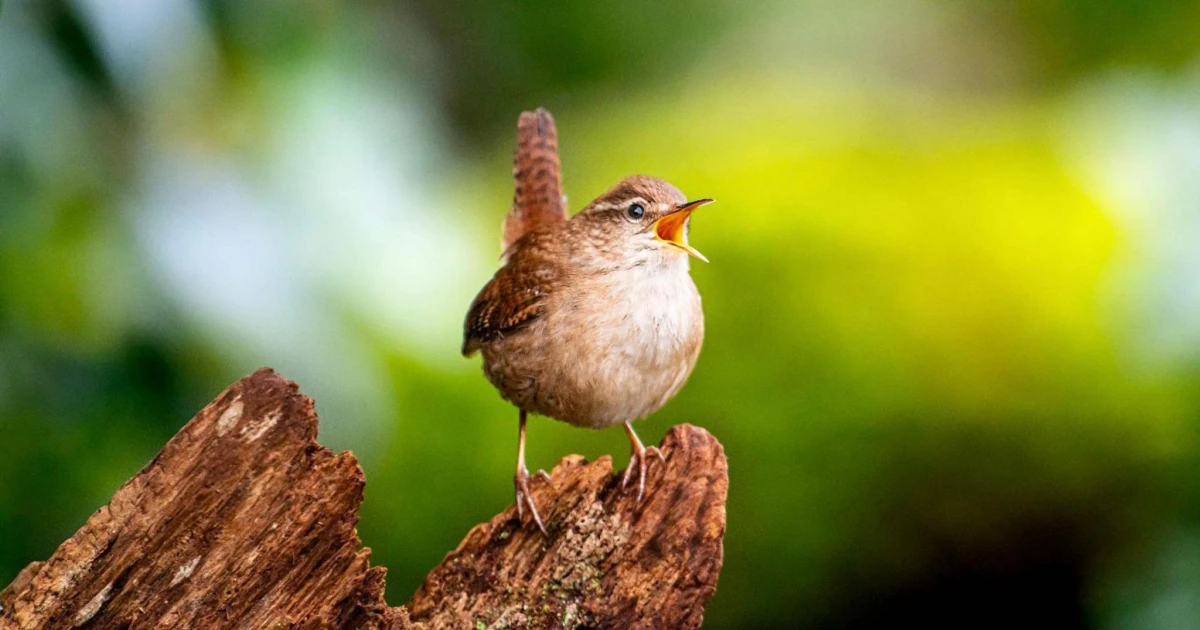
Fast trills, flat whistles and other bird sounds rest on common acoustic building blocks. The new study finds those shared components can produce signatures that seem, at first hearing, unrelated. The result gives researchers a more systematic way to compare vocal systems across species and to ask how birds make songs that sound so different.
A shared code behind the variety
Birdsong is not a loose collection of one-off performances. A shared acoustic code runs through the diversity of song types, with different songs arising from how the same basic ingredients are arranged.
If very different songs can emerge from the same underlying set of sound elements, researchers can compare species by looking for those elements rather than treating each song as a separate language. It also gives evolutionary biology a cleaner framework for tracing how new song forms arise without assuming that every bird invented its own vocal machinery from scratch.
How songbirds build sound
Songbirds do not produce song with a mammalian-style larynx. They use a specialized voice box called a syrinx, and that organ sits at the branch point between the trachea and bronchi, giving birds a unique acoustic setup for generating sound. The anatomical arrangement is a major reason birds can produce such tightly controlled and varied vocalizations.
Birdsong is also commonly divided by structure. In biphonic song, two different notes can be sung at the same time, while monophonic song uses a single line of sound and can take several forms, including rich harmonic song, single-frequency song and chaotic song. Those categories help explain why the same bird family can produce songs that seem orderly in one moment and highly textured in the next.
Why the question has lingered
Birdsong has long been treated as a central problem in biology and psychology because it sits at the intersection of learning, anatomy and social signaling. In a University of Lethbridge lecture on March 30, 2023, psychology professor David Logue centered the enduring mystery of birdsong on how songbirds make their music, who they are singing to and why they bother.

The new acoustic-code finding does not erase that mystery. It narrows one part of it by showing that variety may be built from shared pieces, rather than from entirely separate systems. That gives scientists a more precise way to study how a bird learns song, how a song changes with age or context, and how the same species can use different vocal forms for different social situations.
Ecology still shapes the song
Even a shared code does not mean every birdsong sounds the same in every place. Earlier work has shown that environment and habitat can shape vocal behavior, and a 2015 Living on Earth segment placed birdsong within an intricate communications system influenced by environment, migration, climate change and pollution.
Studies on acoustic background, urban noise and habitat structure have all pointed in the same direction: birdsong diversity is shaped not only by vocal learning, but also by the soundscape in which birds live. A dense forest, a noisy city corridor or a changing climate can alter which sounds carry, which sounds get masked and which songs birds are most likely to use.
From rubber tubes to massive song datasets
Researchers have also built tools to test how bird song works. On August 29, 2017, a Harvard and Wyss Institute project used air blown through a stretched rubber tube to recreate complex birdsongs, including those of zebra and Bengalese finches. That kind of model helps scientists isolate the mechanics of sound production without needing to rely only on recordings from the field.
The analytical side has expanded just as quickly. On March 10, 2025, new University of Oxford research analyzed more than 100,000 songs to examine how bird songs evolve over time. Large datasets like that make it easier to track patterns across populations and species, and machine-learning methods are becoming important for sorting the enormous volume of material. Neuroscience and speech research have also used birdsong as a model for parsing human speech.
Sources
- [1]bbc.co.uk
- [2]youtube.com
- [3]wyss.harvard.edu
- [4]loe.org
- [5]npr.org
- [6]nature.com