Health
Study Finds Red Hair and Leaner Bodies Favored in Recent Evolution
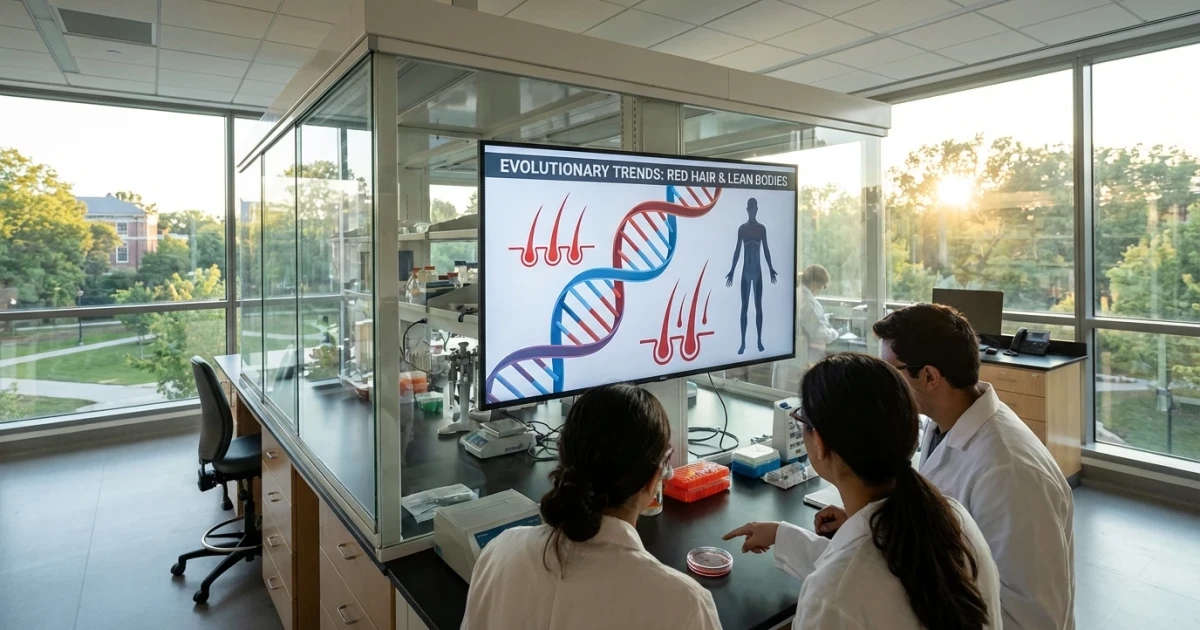
Recent scientific findings suggest that human evolution in West Eurasia has accelerated in the past several thousand years, favoring traits such as red hair and lower body fat percentages, according to a major study analyzing ancient DNA. The research, published in Nature and covered by Ground News, offers fresh insights into how natural selection has shaped modern populations, shedding light on both the pace and direction of genetic change.
Uncovering Evidence from Ancient DNA
Scientists examined thousands of ancient genomes recovered from archaeological sites across West Eurasia, spanning a timeline from the Stone Age to the present. This large-scale genetic analysis allowed researchers to directly observe how certain traits became more common over time, providing rare evidence for ongoing recent human adaptation.
- The study found evidence of pervasive directional selection—a process where specific traits increase in frequency due to environmental or social advantages.
- Traits like red hair and lower body fat percentage showed the strongest signals of selection, meaning these features were increasingly favored over time among West Eurasian populations.
Why Red Hair and Body Fat Levels?
The genetic basis for red hair color is well characterized, with variants in the MC1R gene playing a central role. According to the GWAS Catalog, several mutations are associated with the distinctive pigmentation found predominantly in Northern Europe. The new DNA evidence indicates these mutations became more common in certain regions, possibly linked to adaptation to lower sunlight levels, which could affect vitamin D synthesis.
Lower body fat percentage also showed signs of selection. Researchers suggest that as ancient populations adapted to new climates, diets, and lifestyles—such as the transition from hunter-gathering to agriculture—body composition became an important factor for survival and health. The GWAS Catalog lists dozens of genetic loci associated with body fat percentage, and many of these appear to be under selection in the ancient DNA data.
What Accelerated Evolution Means
The study’s authors argue that human evolution has not slowed in recent millennia, as once assumed, but has actually accelerated in some cases. Factors such as changing environments, shifting diets, population migrations, and the spread of agriculture created new pressures that drove rapid genetic change. This is visible in the rise of certain traits and the decline of others across different populations.
- Recent selection also affected genes related to immunity, metabolism, and physical characteristics—demonstrating that the human genome remains highly dynamic.
- The pace of change observed in the study challenges the idea that evolution requires millions of years to leave a mark on our species.
Implications for Modern Populations
These findings help explain regional differences in traits like hair color, body type, and disease risk among today’s populations. They also highlight the value of ancient DNA in reconstructing the evolutionary history of humans—offering clues not just about our past, but about how we might continue to adapt in response to changing lifestyles and environments.
Experts note that while selection for traits like red hair and lower body fat was particularly strong in West Eurasia, different patterns are likely to be found in other regions, reflecting local adaptation to diverse conditions around the globe.
Continued Research and Open Questions
As more ancient genomes are sequenced, researchers expect to uncover further examples of recent human adaptation and to clarify the complex interplay between genetics, environment, and culture. For now, the study stands as one of the most comprehensive efforts to map the genetic signatures of selection in our recent past.
For those interested in the data and technical methods, the full research article and supplementary materials are available in Nature, and additional trait-specific genetic data can be explored in the GWAS Catalog for red hair and body fat percentage.
Looking ahead, ongoing advances in ancient DNA technology will continue to illuminate how evolution has shaped—and continues to shape—the human story.