Health
Study suggests laughter evolved 15 million years ago in great apes
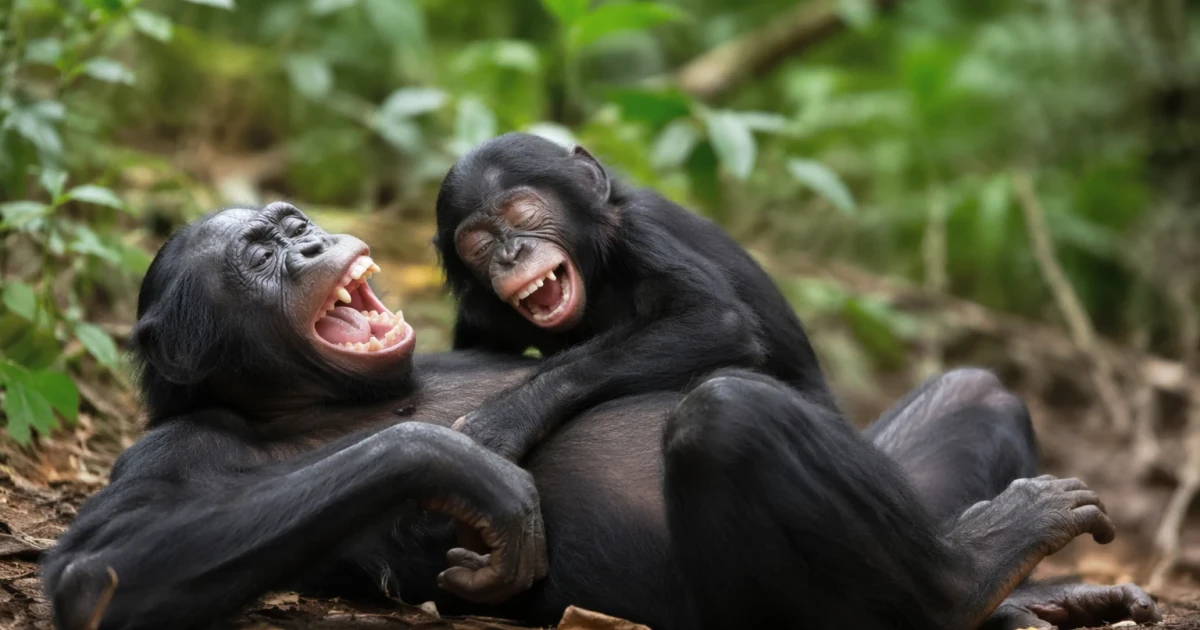
University of Warwick researchers said laughter’s basic rhythm may reach back about 15 million years, to the last common ancestor of living great apes. In their comparative analysis of 140 laughter sequences from four orangutans, two gorillas, three bonobos, four chimpanzees and four humans, every species produced evenly spaced rhythmic intervals between successive sounds.
That pattern gives new weight to the idea that laughter is not a human invention but an inherited primate signal that still carries traces of its oldest form. The researchers said human laughter has since become faster, more variable and more dependent on context, but the underlying beat has stayed conserved across the great ape family.
The new work builds on a 2009 Current Biology study led by Marina Davila-Ross, which tickled 22 young apes and three human infants and made more than 800 recordings of tickle-induced vocalizations. That study examined orangutans, gorillas, chimpanzees, bonobos and humans and found that their laughter-like sounds shared acoustic features, with the differences among species matching the known splits in the ape family tree.

Davila-Ross’s team also found signs that gorillas and bonobos had some control over breathing while laughing, a detail that mattered because it pointed to more than a simple reflex. The earlier findings suggested laughter may have a shared evolutionary origin in great apes and humans, rather than being uniquely human, and they fit with the observation that human laughter appears across cultures and in deaf and blind children.
Together, the two studies frame laughter as a social vocal behavior with deep biological roots and measurable structure. The newer research focused on rhythm rather than just sound quality, and that shift matters: rhythmic timing is central to how humans coordinate speech, emotion and group interaction. By showing that great ape laughter still follows a shared timing pattern, the University of Warwick team strengthened the case that vocal control, social bonding and the building blocks of language may have emerged from older primate communication systems long before human speech existed.
Sources
- [1]nytimes.com
- [2]news.bbc.co.uk
- [3]sciencedirect.com
- [4]nature.com
- [5]phys.org
- [6]pubmed.ncbi.nlm.nih.gov