Science
Study suggests the brain makes decisions in sensory regions too

A University of Illinois Urbana-Champaign team has found that the brain’s primary somatosensory cortex may help make choices, not just pass touch signals upward. The study, led by electrical and computer engineering professor Yurii Vlasov, was published in Proceedings of the National Academy of Sciences on April 29, 2026, as PNAS 123(18): e2514107123.
The paper, titled Neural correlates of perceptual decision-making in the primary somatosensory cortex, used rodent whisker-based perceptual decision-making as its model system. That matters because the primary somatosensory cortex is the first major cortical stop for touch information, and the classic textbook account has treated it as a stage in a feedforward cascade that pushes sensory data toward higher decision areas. This study challenges that hierarchy.
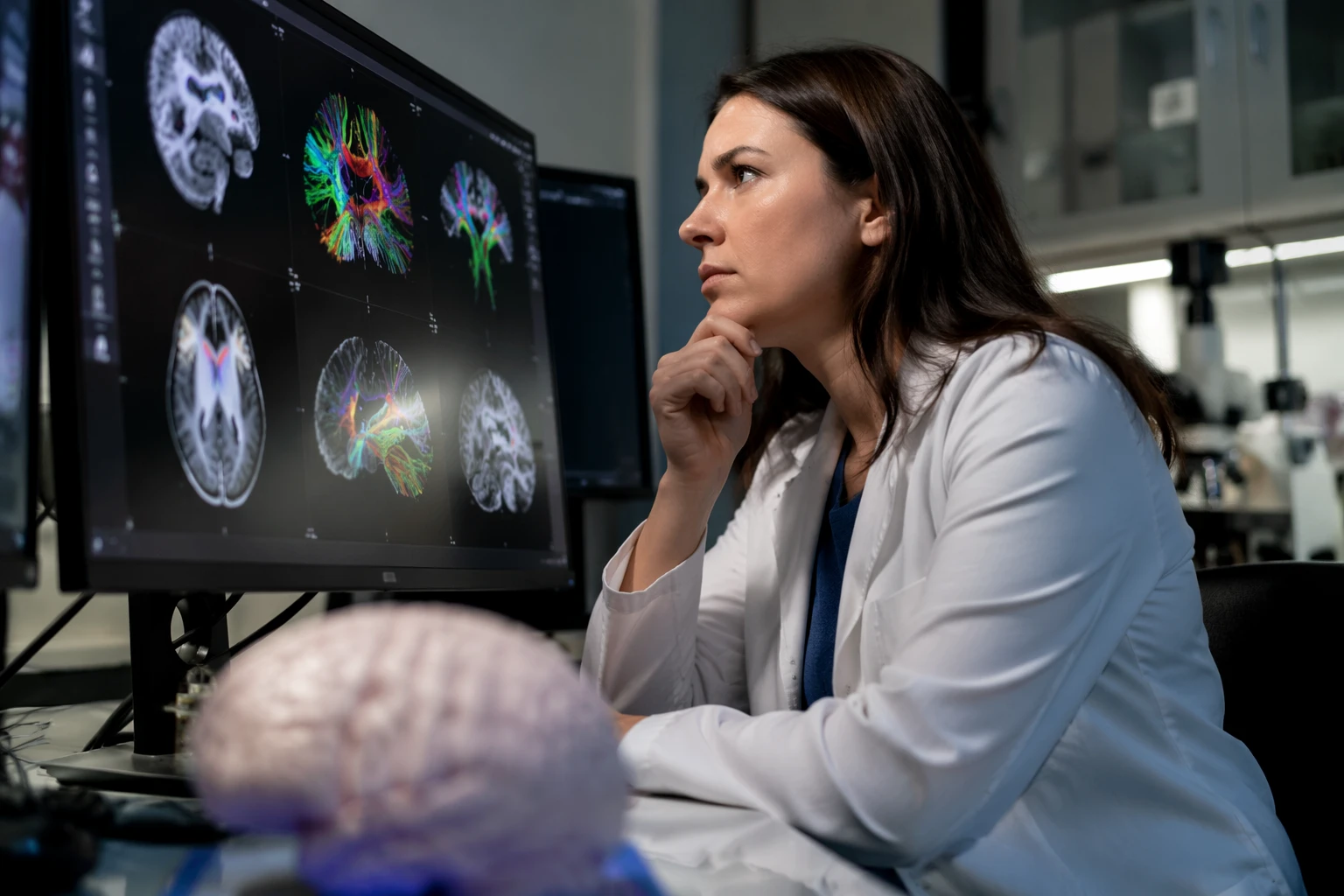
Instead of a one-way pipeline, the findings point to rapid feedback loops linking higher brain areas back into early sensory regions. In that view, the cortex is not waiting for a complete sensory report before choosing an action. It is already refining the choice while the sensation is still being assembled. The result is a more distributed and simultaneous model of decision-making, one in which early sensory regions participate in the act of choosing itself.
That shift has consequences for neuroscience. It changes the questions researchers ask about attention, perception and conscious awareness, because a sensory cortex may be doing more than encoding raw input. It may be part of the machinery that turns input into a decision, which means experiments built around strict stage-by-stage processing may miss how the brain actually works.

The AI implications are just as direct. If biological brains rely on feedback loops rather than purely forward computation, machine-learning systems could be built with less wasted processing and more efficient use of energy. That is especially relevant for low-power devices, robotics and embedded systems that need fast judgments without the cost of large always-on models.
The work also fits into a larger engineering goal that has been central to the University of Illinois and to the National Academy of Engineering’s 14 grand challenges named in 2008: reverse-engineering the brain’s efficiency. For artificial intelligence, the message is clear. The brain’s sensory regions may not be passive relays after all, and any model that treats decision-making as strictly bottom-up may be leaving out a core part of the process.