Health
Superworms offer faster, safer way to clean museum skeletons
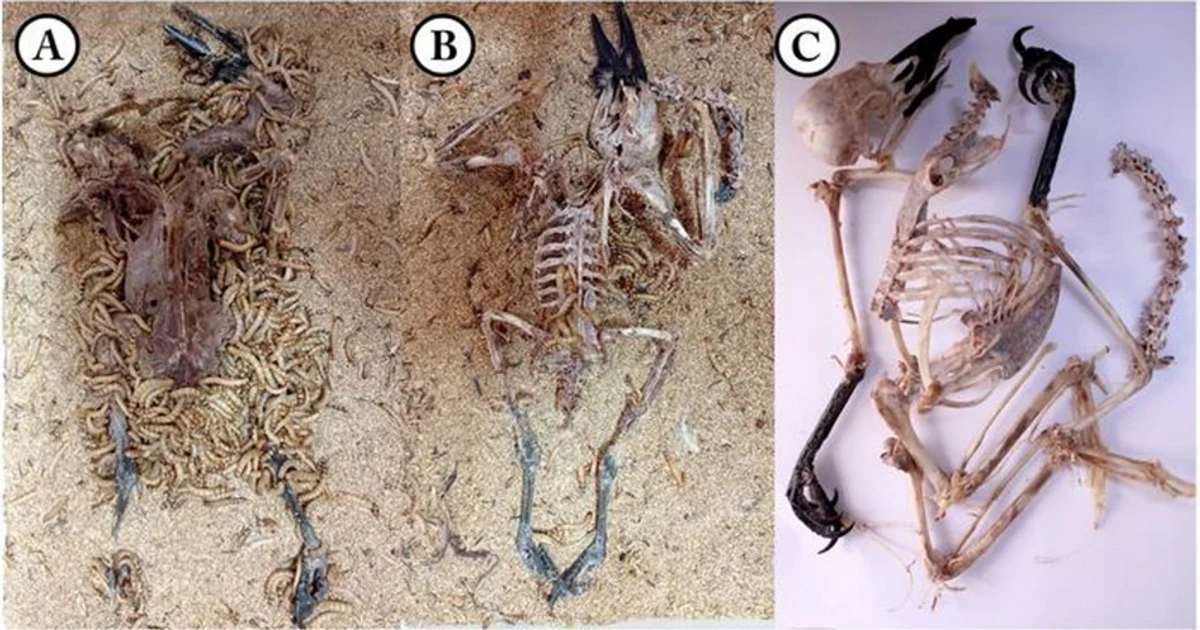
Superworms, the mealworm-like larvae of the darkling beetle Zophobas morio, can clean museum specimens quickly while preserving skeletal detail. In PLOS One, researchers found they can strip flesh from animal remains without damaging the bones.
A small insect with a large museum role
The appeal is partly speed and partly control. The researchers found the larvae can be a practical and safe alternative for skeletal cleaning, and a carcass can be cleaned in hours or days while the bones stay intact. Museum skeletons are research records used to document anatomy, support education, and preserve reference material for future comparison.
The insect itself is not exotic in the pet trade. Superworms are commonly sold as pet food, yet in this setting they become a precision biological tool. The species is native to South and Central America.
Why skeleton preparation is such a bottleneck
Preparing bones for study has always been labor-intensive. Museums and scientific collections need clean skeletons for taxonomic work, teaching collections, and display, but the standard methods each come with trade-offs. Dermestid beetles, chemicals, enzymes, and boiling can all work, yet they can be slower, riskier, or harder to manage than curators want.
Dermestid beetles have long been the classic insect solution. Natural history museums have used them for more than 100 years, and their first museum use dates to 1895, when Charles Dean Bunker decided to employ them at the National Museum of Natural History.
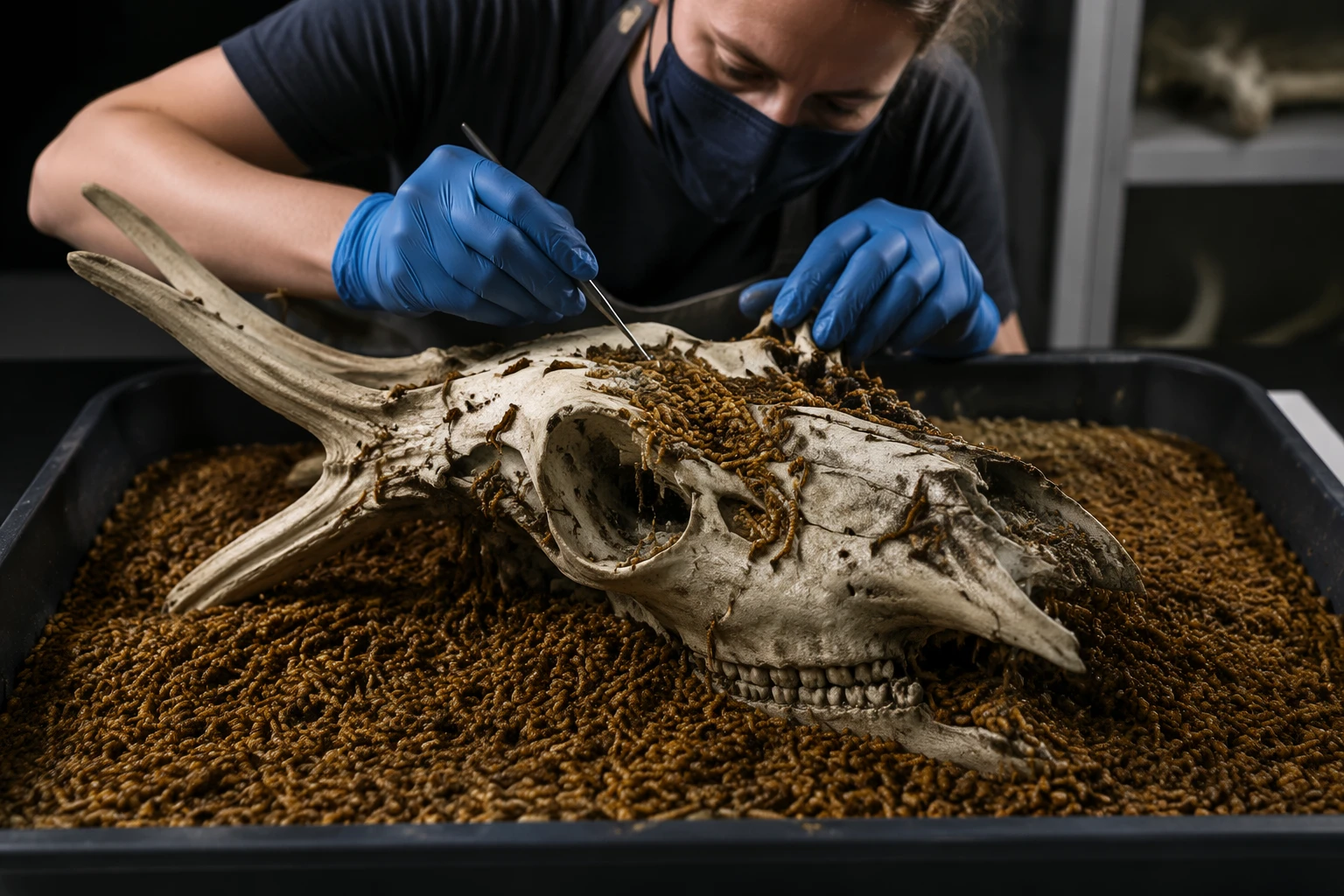
Dermestid colonies need care, temperature control, and steady oversight, which turns skeleton prep into a small husbandry operation as much as a lab procedure. A cleaner method that shortens turnaround time and reduces handling could ease pressure on collections staff already balancing preservation, cataloging, and research access.
What the study found
The paper, titled “A practical and safe alternative method for skeletal cleaning for museum specimens using superworms, Zophobas morio,” was received on October 22, 2025, accepted on May 3, 2026, and published in PLOS One on July 1, 2026 as article e0349669. The authors are F. Rastekar, N. Alaei Kakhki, M. Aliabadian, and M. Monfared, and the article was edited by Wesley D. Colombo of Universidade Federal de Minas Gerais in Brazil.
The key operational finding is the dosage. The researchers found that 10 to 15 grams of larvae per gram of animal specimen minimized cleaning time while also avoiding damage to the bones.
They removed tissue fast enough to be useful in routine collection work while leaving skeletal material intact enough for identification, comparison, and long-term archiving.
Why speed and cleanliness matter for biodiversity science

Biodiversity research depends on specimen libraries that can be compared across time, geography, and changing ecosystems. When bones are prepared quickly and cleanly, museums can process more material, reduce backlog, and keep reference specimens available for researchers tracking species variation and decline.
National scientific archives depend on the steady preparation of specimens, not just major discoveries. If a cleaning method cuts hours or days from processing while lowering the risk of damage, it can improve how quickly collections are incorporated into databases, loaned to researchers, or used in training the next generation of taxonomists.
Every bone cleaned without breakage preserves shape, texture, and diagnostic detail that can be crucial for measurement and comparison. In a field where a chipped jaw or missing small bone can complicate identification, a safer cleaning process has real scientific value.
What this means for collections managers
For museums, universities, and other collections holders, superworms add another option to a limited toolkit. The strongest case for them is not novelty but workflow: a biological cleaner that is faster than many conventional alternatives and easier to manage than a full dermestid colony. The dosing range of 10 to 15 grams of larvae per gram of specimen gives the method an operational edge that many collection techniques lack.
Sources
- [1]npr.org
- [2]journals.plos.org
- [3]eurekalert.org
- [4]phys.org
- [5]science.org
- [6]onlinelibrary.wiley.com
- [7]researchgate.net