Politics
Supreme Court birthright citizenship fight stirs fear among immigrant families

The Supreme Court fight over birthright citizenship is no longer confined to briefs and oral arguments. For immigrant families, it is already shaping how they talk about their children’s status, what they disclose to schools, and whether a birth certificate still feels like a guarantee of belonging.
At the center is a question the Constitution has answered for more than a century: whether a child born on U.S. soil is a citizen from birth. For parents in mixed-status households, that legal debate has become a deeply personal one, touching the daily routines that anchor family life, from school enrollment to attendance decisions and the trust they place in public institutions.
The constitutional fight behind the fear
The case turns on the Fourteenth Amendment’s Citizenship Clause, ratified in 1868 after the Civil War. The landmark precedent is United States v. Wong Kim Ark, the 1898 Supreme Court decision that affirmed birthright citizenship for a child born in the United States to non-citizen parents who were lawfully domiciled here.
That settled understanding is now under direct challenge in Trump v. Barbara, which targets Executive Order No. 14,160. The order seeks to deny birthright citizenship to children born in the United States solely because their parents are unlawfully present or in temporary visa status. The justices are being asked to decide whether that order fits the Citizenship Clause and the federal citizenship statute.
The court already took a procedural step in the broader fight on June 27, 2025, when it narrowed nationwide injunctions in Trump v. CASA. That ruling did not resolve the constitutional question, but it changed how the litigation moved forward and helped keep the policy fight alive even after lower courts blocked the order.
How the case has reached the schoolhouse door
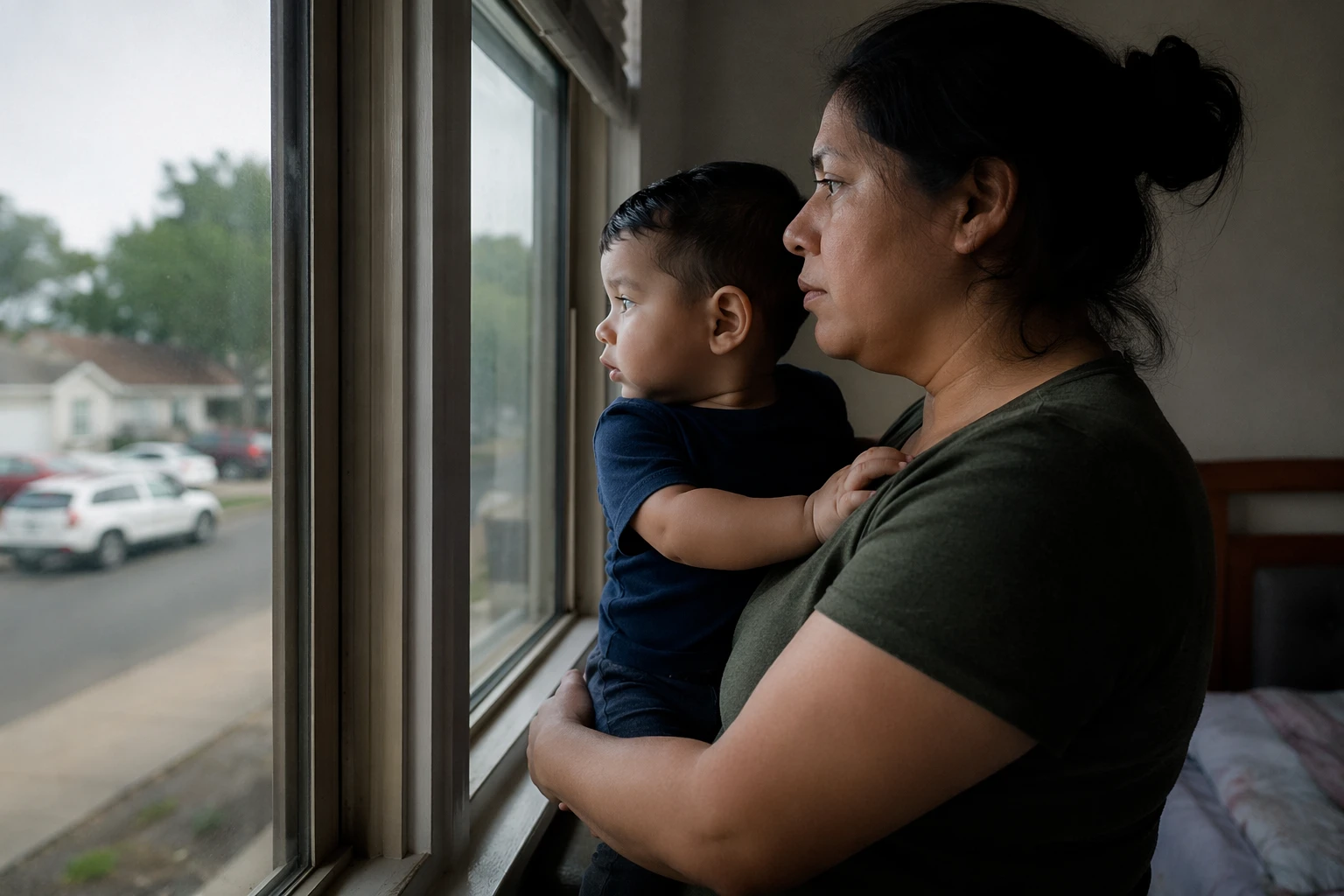
For families, the danger is not abstract. It is lodged in the ordinary decisions that shape whether a child is treated as secure and settled, or as someone whose place in the country could be questioned later. The uncertainty is especially sharp for the estimated 4.7 million mixed-status families in the United States, many of whom have long thought of themselves as fully American.
That uncertainty spills into schools first because schools are where families routinely prove who they are, where their children live, and who can speak for them in an emergency. Even without a final ruling, the legal fight can already make parents more cautious about what they share, what they keep private and whether a government form could one day be used against them.
The result is a quieter kind of pressure: second-guessing enrollment decisions, worrying over attendance if a parent fears exposure, and wondering whether public institutions that once felt routine now carry hidden risk. In that sense, the courtroom battle is already reshaping behavior long before any ruling can take effect.
A family story that reflects a wider national anxiety
Ana Temu Otting, a Colorado-based business owner born in Los Angeles, has become one of the faces of that anxiety. She was born to parents who lacked legal immigration status at the time, and she now speaks from the perspective of someone whose own citizenship has never been in question but whose family history still makes the issue feel immediate.
Her five-year-old son, David, is described as “as American as apple pie,” a phrase that captures the emotional core of the fight: for many parents, children born in the United States are not legal abstractions but the center of the family’s sense of permanence. The prospect that a court could narrow that guarantee is forcing conversations that once seemed unimaginable.
Those conversations are not limited to one household. They are happening across families who have built their lives in the United States across generations, yet still carry different immigration histories inside the same home. The question is not only what the law says, but whether a child who has always been treated as American will remain so in practice.
The stakes if the ruling goes further
Some migrant-rights advocates fear the case could reach much farther than the children named in the executive order. They warn that a broad reading could eventually give presidents or Congress a path to strip citizenship from tens of millions of adults born in the United States to parents without legal status.
That is the kind of legal shift that could do more than alter paperwork. Advocates say it could expose people to deportation to countries they have never lived in, a prospect that turns a constitutional dispute into a direct threat to family stability, employment and identity.
Even the possibility of that outcome changes how immigrant families assess the future. When the law feels uncertain, school decisions, doctor visits, travel plans and everyday interactions with government institutions can all take on a different weight. Parents begin thinking not just about what their children are today, but about whether their children’s most basic rights could be questioned later.
Trump’s presence made the case feel immediate

The Supreme Court’s April 1 oral arguments in Trump v. Barbara brought that anxiety into sharp public view. Demonstrators gathered outside the building, and President Donald Trump attended in person, a striking display of support for his executive order.
Historians and the Court described it as the first time a sitting president had attended oral arguments at the Supreme Court. That alone gave the hearing an unusual charge, turning a technical constitutional fight into a visible political confrontation over who counts as American.
Trump’s appearance underscored how central the issue is to his broader immigration agenda. It also reminded families that the legal battle is not happening in the abstract. It is unfolding in real time, with real political force behind it, while parents across the country make decisions that could affect their children’s schooling, sense of safety and trust in the institutions meant to protect them.
What schools, parents and children must navigate now
Until the court resolves the constitutional question, families are left managing uncertainty one form, one school day and one conversation at a time. For school districts, that means serving children whose parents may be increasingly wary of sharing information. For parents, it means deciding how much to reveal and how to protect a child’s sense of normal life.
For children like David, it means growing up in a country that says they belong while their parents watch the law being argued as if that belonging were still up for debate. That tension is the real story now: not just what the Supreme Court may eventually decide, but how deeply the fight is already reaching into classrooms, attendance lines and the fragile trust immigrant families place in American public life.
Sources
- [1]ca.news.yahoo.com
- [2]scotusblog.com
- [3]civics.supremecourthistory.org
- [4]oyez.org
- [5]abcnews.com
- [6]usatoday.com
- [7]nbcnews.com
- [8]daijiworld.com