US News
Supreme Court blocks Trump bid to end birthright citizenship
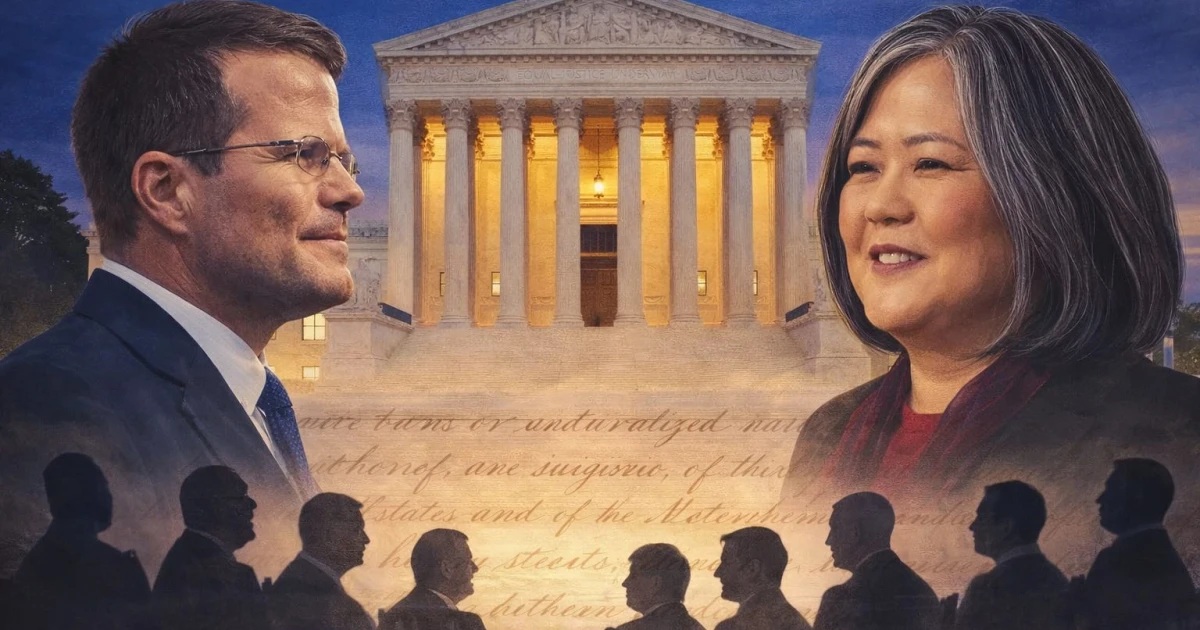
The Supreme Court on Tuesday rejected President Donald Trump’s bid to strip birthright citizenship from children born in the United States to parents who are unlawfully present or only temporarily present. The ruling in Trump v. Barbara, issued June 30, 2026, stopped Executive Order No. 14160 from taking effect.
The case put the Fourteenth Amendment’s Citizenship Clause at the center of a direct fight over presidential power. Trump signed the order on Jan. 20, 2025, and the administration argued that the amendment does not cover children born to parents without lawful status or with only temporary permission to be in the country. Plaintiffs and state challengers pointed to the constitutional text, federal statute and Supreme Court precedent.
At the heart of the dispute was United States v. Wong Kim Ark, the 1898 decision that has long stood as the key precedent for birthright citizenship. The challengers and several states pointed to that case as confirmation that nearly everyone born on U.S. soil is a citizen. The Court agreed to hear the dispute in December 2025 and heard oral arguments on April 1, 2026 after the government pressed for review before final judgment.
The American Civil Liberties Union put the policy’s reach at hundreds of thousands of families, creating a class of U.S.-born children denied citizenship. Courts had already blocked the administration from enforcing the order before the justices took the merits case, and a separate Supreme Court ruling on June 27, 2025 in Trump v. CASA limited the use of nationwide injunctions. That prompted the ACLU to pursue a nationwide class-action strategy to keep the policy blocked.
Anthony D. Romero said Trump suffered a major loss on one of his signature orders and that the case was one of the most important constitutional fights in decades.
Sources
- [1]cbsnews.com
- [2]supremecourt.gov
- [3]aclu.org