US News
Supreme Court clears Trump administration to end temporary protected status
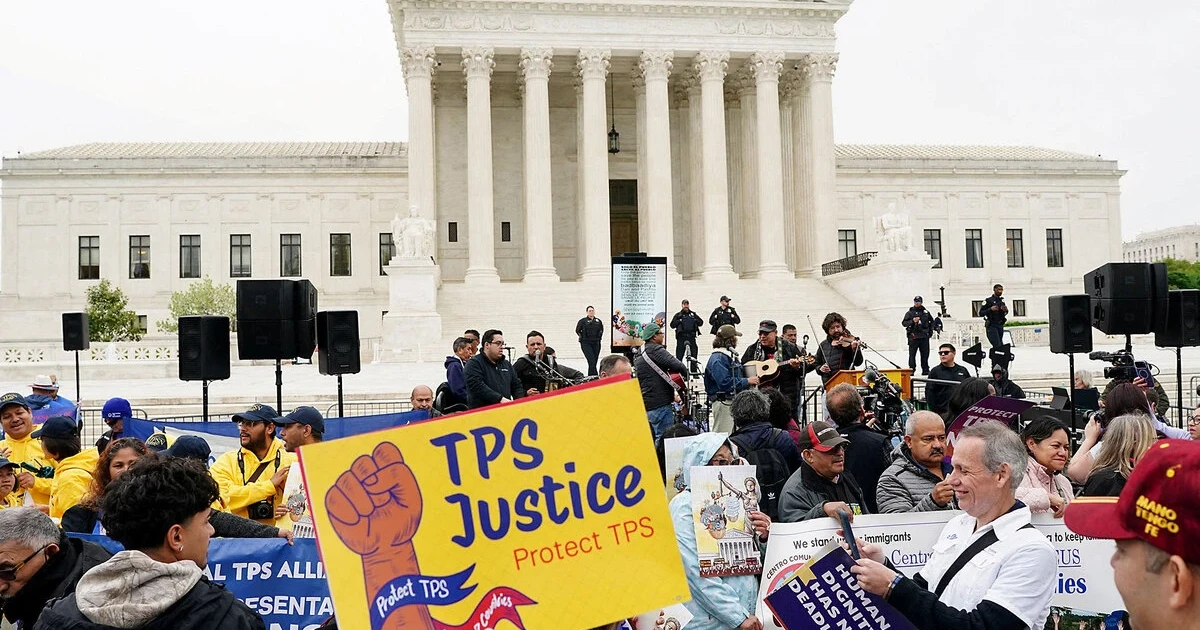
The Supreme Court gave the Trump administration permission Wednesday to end Temporary Protected Status for Haitians and Syrians, a 6-3 ruling that put hundreds of thousands of people on the edge of losing work authorization and protection from deportation. The decision lets the Department of Homeland Security proceed with the termination effort that had been blocked in lower court.
About 350,000 Haitians and roughly 6,000 to 7,000 Syrians are directly affected. Nearly 1.3 million people from 17 countries currently hold TPS, including immigrants from Venezuela, Honduras, Afghanistan and Nepal. In places with large Haitian communities, including Springfield, Ohio, and South Florida, families and local leaders were already bracing for the loss of legal status that has let many people live and work in the United States for years.
TPS was created by Congress in the Immigration Act of 1990, signed into law on November 29, 1990, to give eligible nationals of designated countries temporary protection when conditions at home make safe return difficult or impossible. The status includes protection from removal and work authorization, usually in 18-month increments, but it has often been extended for years or even decades. The court’s majority held that the government has broad discretion to end the designation when it decides a country no longer needs it.

The legal fight centered on Haiti and Syria, where nationals with TPS challenged Homeland Security Secretary Kristi Noem’s effort to end the program. The court also rejected claims that the Haiti termination was driven by racial discrimination strongly enough to justify blocking the policy while the case moved forward. DHS had already announced Haiti’s TPS termination in 2025, and U.S. Citizenship and Immigration Services set the designation and related benefits to end on February 3, 2026, before litigation paused the move.
Sources
- [1]nytimes.com
- [2]apnews.com
- [3]uscis.gov
- [4]scotusblog.com
- [5]nafsa.org