Politics
Supreme Court clears Trump to end Haiti and Syria protections
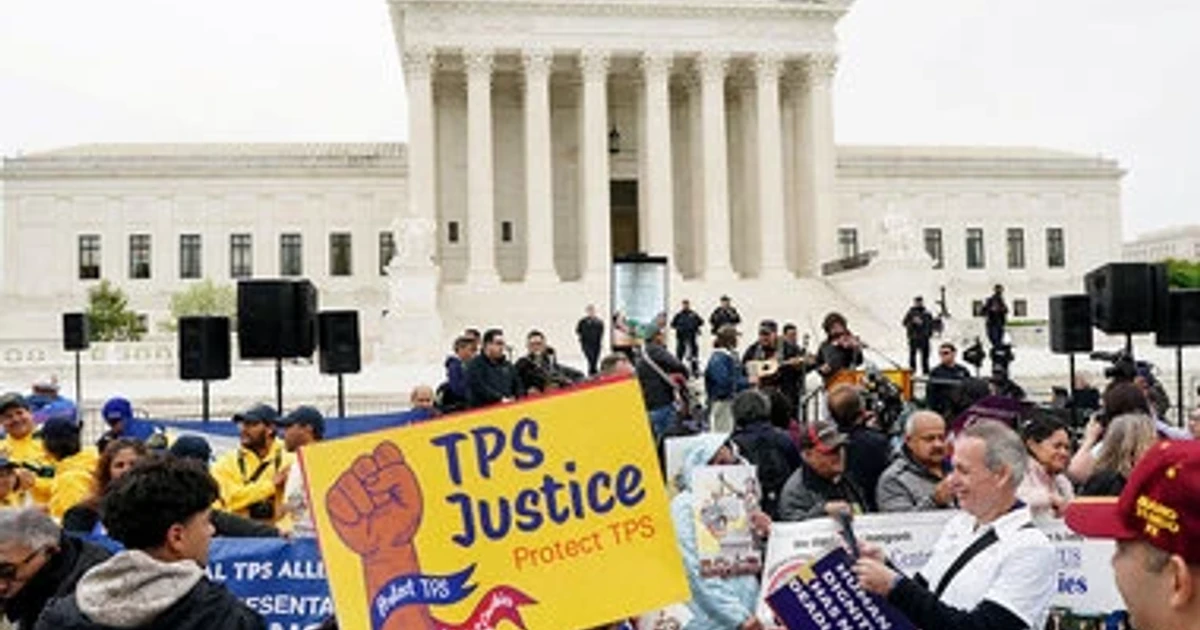
The Supreme Court handed Donald Trump two 6-3 immigration victories, letting his administration press ahead with ending Temporary Protected Status for people from Haiti and Syria and restoring a hard-line asylum practice at the U.S.-Mexico border. The rulings, both issued June 25, put immediate pressure on migrants living and working legally in the United States and on asylum seekers waiting in Mexico.
In Mullin v. Doe, the justices allowed the Trump administration to terminate TPS for Haitians and Syrians while litigation continues. That decision directly affects about 350,000 Haitians and about 6,000 Syrians, a population that has built lives around work permits and temporary legal status that TPS provided. Congress created the program in 1990 as short-term humanitarian relief for people who cannot safely return home, but many designations have lasted for years or decades. Syria received TPS in 2012 because of extraordinary and temporary conditions tied to the Assad regime, while Haiti’s designation has been linked to instability and disasters.
The practical fallout is broader than those two countries. The ruling could ripple across nearly 1.3 million people on TPS from 17 countries. For families, the immediate questions are whether deportation protection ends, whether work authorization survives, and how quickly the Department of Homeland Security moves to carry out termination. Haitian community leaders in Massachusetts and South Florida warned that the ruling could destabilize households and local economies that have come to depend on TPS workers.
The second case, Mullin v. Al Otro Lado, reached the same result for the administration at the border. The Court said an asylum seeker standing in Mexico has not yet arrived in the United States for purposes of the Immigration and Nationality Act, a reading that lets the government turn people back before they cross into U.S. territory. That clears the way for metering, a practice that limits how many people may seek asylum each day at ports of entry and was used under the Obama administration before being expanded during Trump’s first term.
Taken together, the rulings give the White House more power in two places at once: inside the country, where TPS holders from Haiti and Syria face a faster path toward losing protection, and at the border, where asylum seekers can be blocked before making formal claims in the United States. What remains unresolved is the longer fight over how far executive power can go in shrinking humanitarian protections without a full court battle on the merits.
Sources
- [1]cbsnews.com
- [2]supremecourt.gov
- [3]apnews.com
- [4]scotusblog.com
- [5]wbur.org