US News
Supreme Court Decision Upholds California Voting Map, Strengthens Democrats' Hand
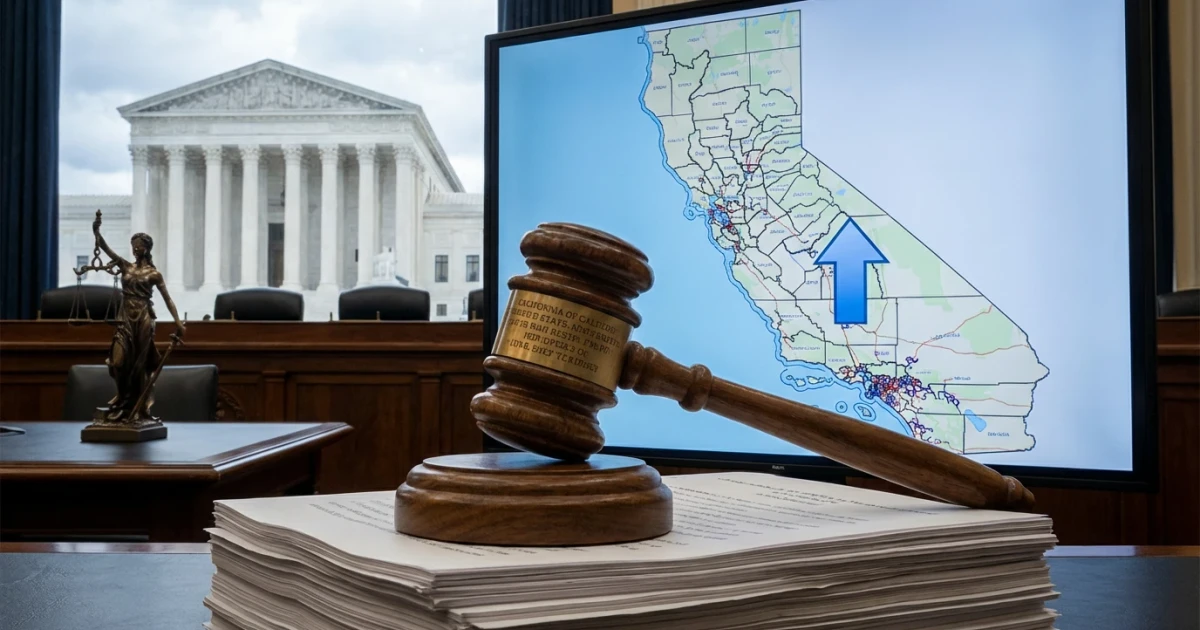
The Supreme Court has paved the way for a new California voting map to take effect, a decision widely seen as a major boost for Democratic representation in the nation’s largest state. The ruling ends a high-stakes legal battle over the state’s congressional districts and is poised to shape the balance of power in upcoming elections.
What the Supreme Court Decided
On Monday, the Court cleared the path for California to implement its latest congressional redistricting plan. By declining to block the map, the justices effectively affirmed the state’s right to proceed with district boundaries that had been challenged by various parties. This action allows California to use the new map for the 2026 elections and likely for the remainder of the decade.
Background: California’s Redistricting Controversy
California redraws its congressional districts every ten years following the census. The state’s independent redistricting commission approved the current map, but critics argued that the boundaries unfairly favored Democrats, potentially undermining Republican and independent representation. Legal challenges had sought to halt the implementation, but those efforts have now been exhausted at the nation’s highest court.
Implications for Democrats and Republicans
The new map is expected to bolster Democratic prospects across several key districts. California already sends more Democrats to the U.S. House than any other state, and the updated lines could further solidify this advantage. Political analysts note that the map creates more safe Democratic seats and makes it harder for Republicans to mount competitive campaigns in swing districts.
- California is home to 52 congressional districts, the largest delegation in the House.
- Democrats currently hold a commanding majority of these seats.
- The new map is projected to give Democrats an edge in at least three additional districts that were previously considered competitive.
Legal and Political Reactions
The Supreme Court’s decision drew strong reactions from both sides of the political aisle. Supporters argue that the independent commission’s process was transparent and nonpartisan, reflecting California’s demographic changes and population shifts. Opponents, however, contend that the outcome entrenches one-party dominance and diminishes voter choice.
What Happens Next?
With legal challenges now resolved, California officials will move forward with implementing the new district boundaries. The map will be used for candidate filings, primaries, and the general election, setting the stage for a critical test of its impact in November’s contests.
Analysis: National Ramifications
The Supreme Court’s move signals a reluctance to intervene in state-level redistricting disputes, at least in states where independent commissions oversee the process. It could also encourage other states to adopt similar models. For national Democrats, the decision provides a crucial boost as they seek to defend their House majority in a highly polarized environment. Republicans, meanwhile, face new obstacles in a state where they have already struggled to gain traction.
As the 2026 midterm elections approach, all eyes will be on California to see how the new map reshapes the political landscape—and whether other states follow suit in redrawing the lines of American democracy.