Sports
Supreme Court Declines NFL Request on Flores Arbitration
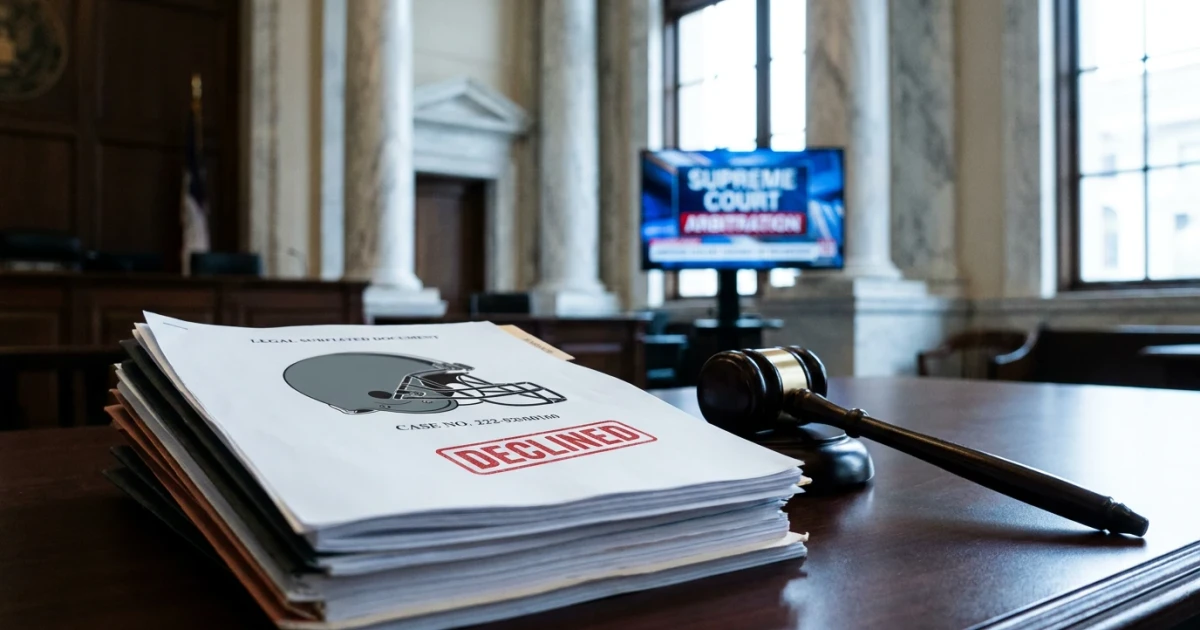
The U.S. Supreme Court has declined the National Football League's (NFL) request to move former Miami Dolphins head coach Brian Flores's racial discrimination lawsuit into arbitration, a decision that keeps Flores’ high-profile legal challenge within the public court system rather than behind closed doors.
Background of the Lawsuit
Brian Flores, who is Black and Hispanic, filed his lawsuit in 2022 after being dismissed by the Dolphins. He alleged that the NFL and several of its teams engaged in systemic discrimination against Black coaches, particularly in their hiring and retention practices. The suit named the NFL, the Dolphins, the Denver Broncos, and the New York Giants, and it drew national attention for highlighting ongoing concerns about diversity and inclusion in professional football.
Among his claims, Flores cited violations of the Rooney Rule, a league policy requiring teams to interview minority candidates for head coaching and senior football operation jobs. According to the NFL Diversity and Inclusion Report 2023, while the rule has led to some progress, Black coaches remain underrepresented in head coaching roles compared to the league’s player demographics.
The NFL’s Arbitration Bid
The NFL sought to compel arbitration based on league rules and Flores’ employment contract, which typically require disputes to be settled privately rather than in public court. Arbitration, as explained by the Legal Information Institute, is a private dispute resolution process that can keep sensitive information out of the public eye and often limits appeals. However, critics argue that arbitration can favor employers and reduce transparency on issues of public interest, such as workplace discrimination.
Both Reuters and NBC News reported that the Supreme Court’s decision to deny the NFL’s petition means the case will proceed in federal court, where proceedings and evidence are publicly accessible. This outcome is seen as significant by legal analysts, as it maintains public scrutiny over a case addressing alleged systemic bias in one of America’s most prominent sports leagues.
What the Supreme Court Decision Means
- The Supreme Court’s move was to simply decline the NFL’s request to intervene; it did not issue a written opinion or hear oral arguments, a common practice known as denying certiorari.
- Flores’ lawsuit will move forward in federal court, allowing for public hearings, discovery, and potentially a jury trial.
- The NFL and the teams named in the suit will have to defend their hiring practices in court, rather than in private arbitration.
Legal experts note that the Supreme Court’s decision does not rule on the merits of Flores’ claims but reinforces the right of employees in certain cases to have discrimination allegations heard in court, especially when public interest is high.
Context and Impact
The case comes at a time when the NFL is under pressure to improve diversity in its coaching ranks. According to the NFL Diversity and Inclusion Progress Report, Black coaches accounted for only a small percentage of recent head coaching hires, despite the majority of NFL players being Black. Data from The Digest’s Rooney Rule and Diversity Data Digest further illustrates persistent gaps in representation at the highest coaching levels.
This high-profile legal battle also reflects broader national debates over employment discrimination. The Equal Employment Opportunity Commission reported thousands of race-based discrimination charges in recent years, underscoring the ongoing challenges in achieving workplace equality.
Next Steps
With the Supreme Court declining to intervene, the case will proceed in the Southern District of New York, where Flores and his attorneys can pursue discovery and seek a public trial. The NFL maintains that its hiring practices are fair and that arbitration is the proper forum for resolving employment disputes, but will now have to make its case in open court.
This outcome ensures that issues of diversity, inclusion, and equal opportunity in the NFL remain subject to public scrutiny as the legal process unfolds. Observers will be watching closely for any broader impact on Rooney Rule enforcement and other workplace discrimination cases moving forward.