Politics
Supreme Court expands Trump’s power over independent agencies

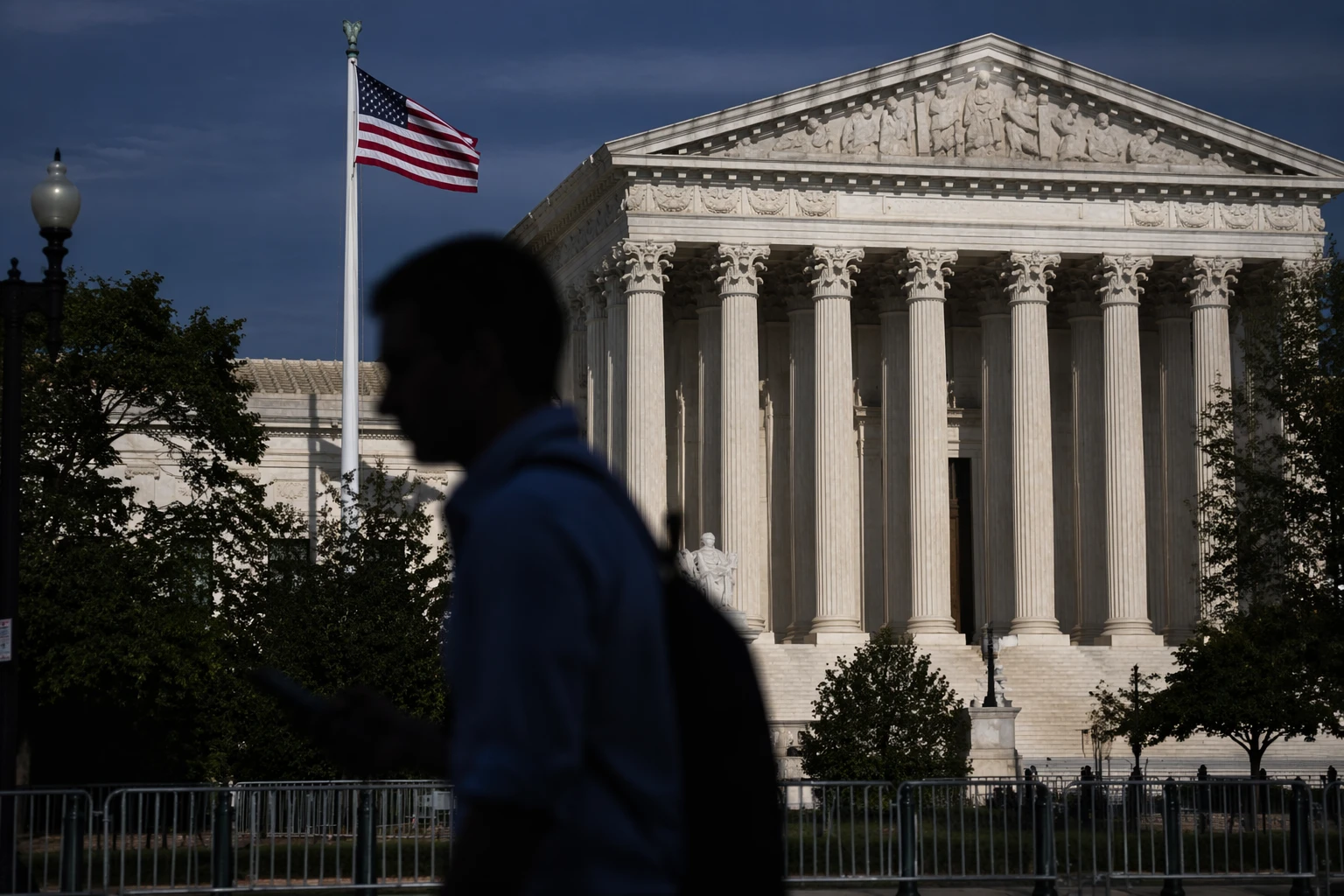
The Supreme Court gave Donald Trump a sweeping victory over independent agencies, ruling 6-3 that he could remove Federal Trade Commission commissioner Rebecca Kelly Slaughter after firing her in March 2025 without citing statutory cause. Chief Justice John Roberts wrote for the majority in Trump v. Slaughter, and the court overruled Humphrey’s Executor, the 1935 precedent that had protected some agency leaders from at-will presidential removal.
The FTC case turned on a structure Congress built to keep enforcement partly insulated from the White House. The commission has five members, it is designed to be bipartisan, and its commissioners serve seven-year terms. Under federal law, they can be removed only for “inefficiency, neglect of duty, or malfeasance in office.” By striking down those removal protections, the court opened the door to much tighter presidential control over roughly two dozen multi-member agencies that Congress had set up to operate with some independence.
Justices Sonia Sotomayor, Elena Kagan and Ketanji Brown Jackson dissented. SCOTUSblog said Sotomayor wrote a 49-page dissent, underscoring how central the dispute had become to the court’s term. The justices had already handled the matter on an emergency basis before returning to it for full review, and the final ruling settled the immediate question of whether Trump could keep Slaughter out of office.
The court did not carry that logic all the way to the Federal Reserve. On the same day, it let Fed governor Lisa Cook remain in her job for now, preserving central-bank independence in a separate dispute. That split result left the court with one major agency shield stripped away and another, for the moment, intact.
The practical effect reaches beyond Slaughter’s seat at the FTC. Future presidents now have more room to remove members of independent commissions that oversee competition policy, labor rules, securities enforcement and other watchdog functions, without having to fit their decisions inside narrow statutory cause requirements. Trump praised some of the court’s rulings on social media and criticized others, but the line the court drew in Trump v. Slaughter plainly moved leverage toward the Oval Office and away from agency leaders who had relied on congressional insulation.
Sources
- [1]cbsnews.com
- [2]supremecourt.gov
- [3]reuters.com
- [4]scotusblog.com
- [5]law.cornell.edu
- [6]apnews.com