US News
Supreme Court Halts California Trans Student Policy
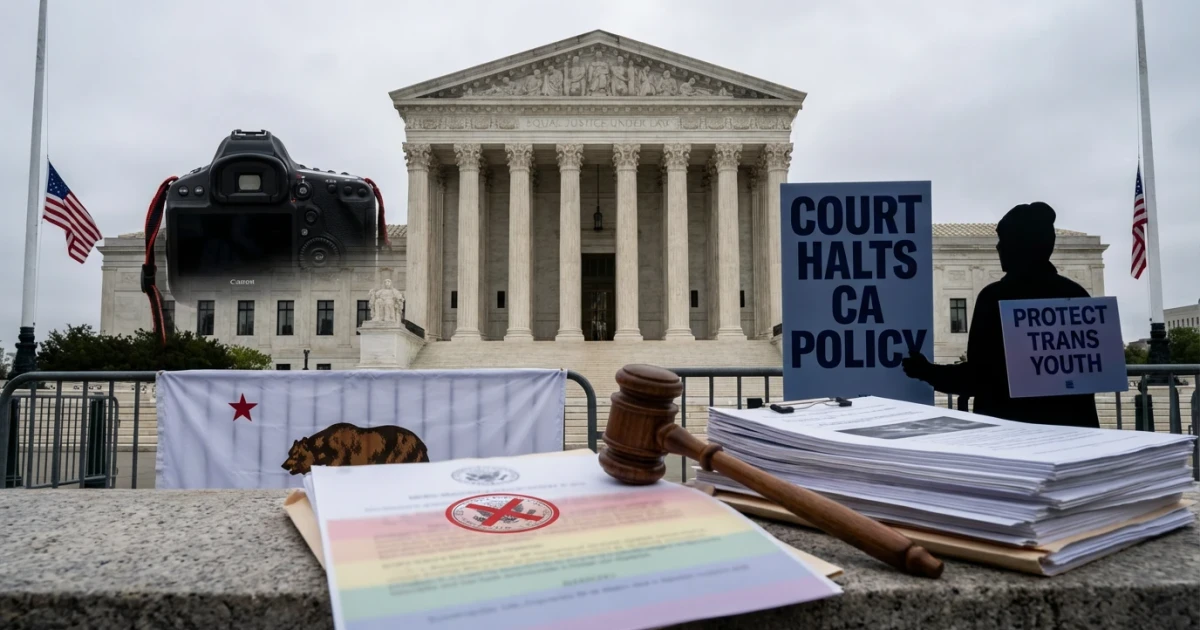
The Supreme Court issued a significant decision this week, blocking California’s efforts to enforce its policy protecting transgender students in public schools. The ruling, delivered on March 3, 2026, marks a major shift in the legal landscape around gender identity and religious rights in U.S. education.
Background of the Case
The case originated from a group of religious parents who challenged the California Department of Education’s policy that required schools to support transgender students’ rights, including using students’ chosen names and pronouns and limiting parental notification when students requested privacy. The parents argued that these rules conflicted with their religious beliefs and infringed on their rights to direct their children’s upbringing.
California’s policy, which had been backed by state law and federal Title IX guidance, was designed to protect transgender and nonbinary students from discrimination and harassment at school. The state’s approach included guidance on gender-affirming practices and privacy protections, as detailed in the California Department of Education’s Safe Schools for All FAQ.
The Supreme Court’s Decision
In a closely watched ruling, the Supreme Court sided with the religious parents, effectively blocking the enforcement of California’s policy statewide. The decision reflects the Court’s increasing willingness to weigh religious freedom claims against state-level protections for LGBTQ youth.
The Court’s opinion, available among the official Supreme Court opinions, emphasized concerns over parental rights and the First Amendment. The justices found that California’s policy placed an undue burden on parents’ ability to raise their children in accordance with their faith and beliefs. The ruling does not explicitly ban protections for transgender students, but it strikes down the state’s approach of limiting parental notification and prioritizing student privacy in all circumstances.
Implications for California Schools and Beyond
The decision is expected to have immediate effects across California’s public school system, which serves millions of students, including a significant number of transgender and nonbinary youth. School districts must now reconsider their protocols for handling gender identity issues and parental involvement.
- According to research by The Williams Institute, California has one of the largest populations of LGBTQ youth in the country, with policies historically aimed at creating inclusive and safe learning environments.
- The 2021 National School Climate Survey found that 59% of transgender students reported being prevented from using their chosen names or pronouns in school, and 42% experienced verbal harassment related to their gender identity.
With the Supreme Court’s ruling, these students may face new uncertainties about how their identities will be recognized and supported in educational settings.
National Significance and Ongoing Debate
The Supreme Court’s action is likely to influence similar cases in other states, as education officials and lawmakers navigate the balance between religious liberty, parental rights, and protections for transgender youth. The decision comes amid a wave of state-level proposals to restrict or expand rights for LGBTQ students, creating a complex and evolving legal environment.
Legal experts note that the ruling does not settle all questions about the rights of transgender students or the authority of states to protect them. Ongoing litigation and legislative efforts may further define the boundaries of educational policy on these issues in the years ahead.
Looking Forward
As California’s Department of Education and local school districts respond to the Supreme Court’s decision, advocates on all sides will closely monitor its impact on students, families, and school communities. For now, the case stands as a pivotal moment in the ongoing debate over gender identity, religious freedom, and the role of public education in the United States.