US News
Supreme Court limits human-rights lawsuits against Cisco over China surveillance tools
The Supreme Court closed off a major route for human-rights plaintiffs on Tuesday, ruling 6-3 that the Alien Tort Statute cannot be used to press Cisco Systems for allegedly aiding China’s persecution of Falun Gong members through surveillance technology. In Cisco Systems, Inc. v. Doe I, the court said the 1789 statute does not authorize plaintiffs to invent a new cause of action for aiding and abetting, sharply narrowing a legal tool that has been used for decades to bring international-abuse claims into U.S. courts.
The lawsuit, filed in 2011, was brought by 14 unnamed Falun Gong members and one U.S. citizen. They alleged that Cisco knowingly helped Chinese authorities monitor, identify and apprehend adherents of the spiritual movement by building customized systems, providing ongoing support, upgrades, implementation help and training tied to the government’s surveillance network. Advocacy and case-summary materials described that network as the Chinese government’s “Golden Shield,” a nationwide system used for censorship, surveillance, identification, tracking and detention.
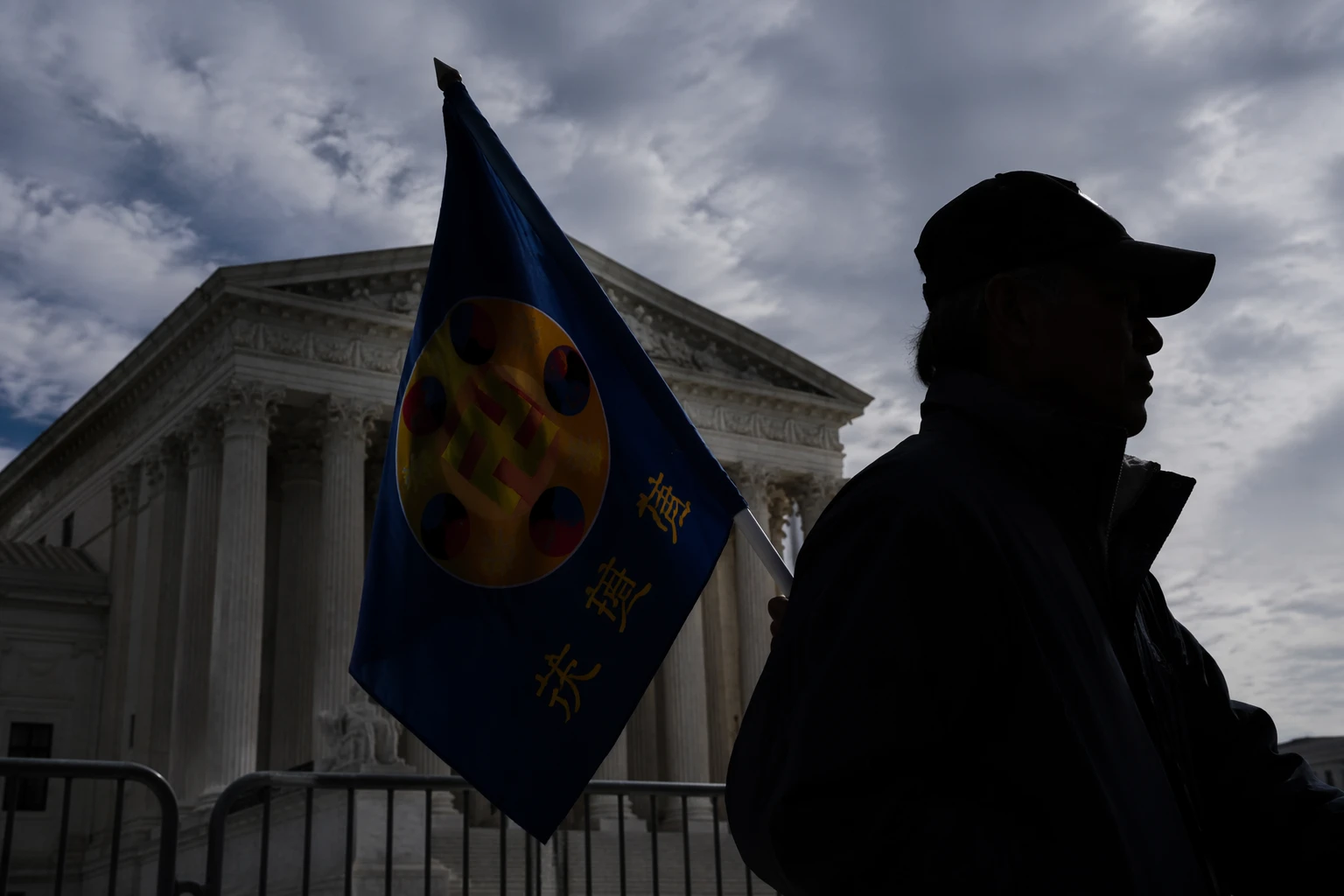
Falun Gong emerged in China in the early 1990s and was banned by the Chinese government in 1999. The plaintiffs argued that Cisco’s technology helped intensify the crackdown. The U.S. Court of Appeals for the Ninth Circuit revived the case in 2023, allowing it to move toward discovery before the Supreme Court stepped in and reversed.
Justice Amy Coney Barrett, writing on the core ATS issue, said courts cannot create a cause of action Congress has not authorized. The opinion treated the Alien Tort Statute as a law that lay dormant for two centuries before modern human-rights litigation revived it, and it rejected aiding-and-abetting liability for the conduct at issue. That leaves future plaintiffs with a far narrower path: they may still try to bring claims that fit the statute’s limited, historically recognized scope, but they cannot ask judges to expand it into a general damages remedy for overseas abuses involving U.S. companies.
The court also ruled 8-1 that a related law, the Torture Victim Protection Act, did not permit money-damages claims against two Cisco executives over alleged complicity in torture. The combined ruling is a setback for advocates who have treated U.S. courts as a venue for accountability in foreign repression cases, and a warning to technology companies that the legal fight is not about one case alone. It is about how far U.S. law will reach when American-made systems are alleged to have been used in abuses abroad.
Sources
- [1]usnews.com
- [2]supremecourt.gov
- [3]law.cornell.edu
- [4]hrlf.net
- [5]business-humanrights.org