US News
Supreme Court Narrows Scope of Voting Rights Act
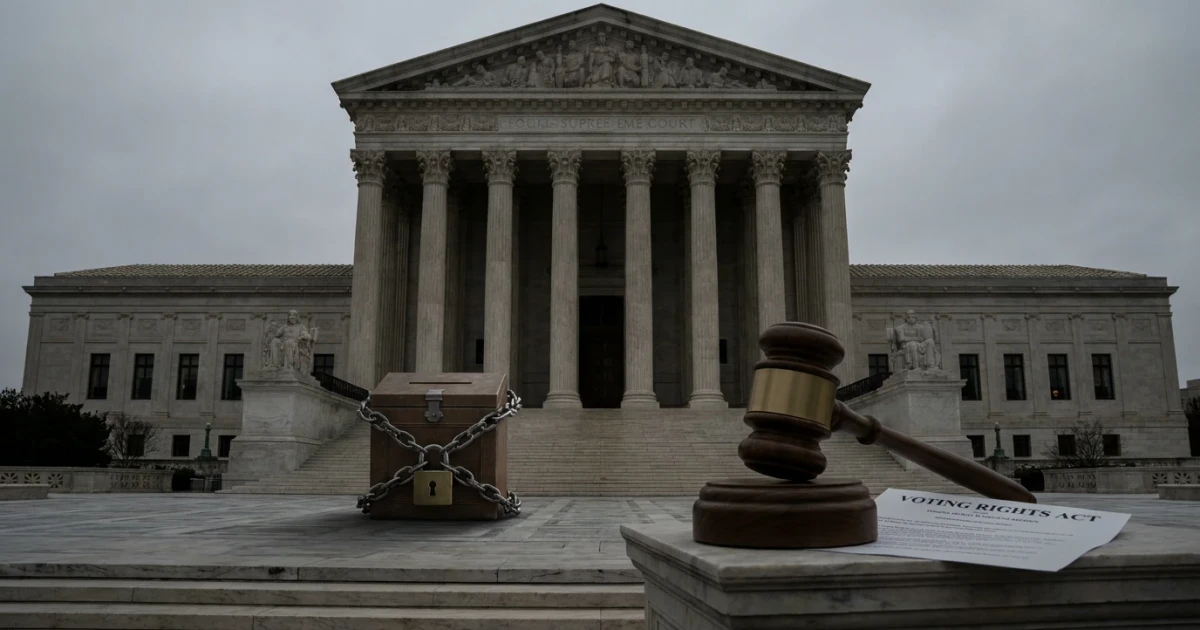
The U.S. Supreme Court has issued a ruling that narrows the reach of a key provision in the Voting Rights Act, one of the nation’s most important civil rights laws. The decision, which was reported by Reuters, has significant implications for how voting discrimination cases will be litigated and may affect protections for minority voters across the country.
Major Provision of the Voting Rights Act Limited
The Court’s ruling undermines Section 2 of the Voting Rights Act, which prohibits voting practices that discriminate based on race or ethnicity. For decades, Section 2 has been a legal tool used in challenges to voting laws perceived as unfairly restricting access or diluting minority voting power. Reuters noted that the Supreme Court’s decision now makes it more difficult for plaintiffs to prove discrimination, as it raises the standard for what constitutes a violation.
- Section 2 has been central in lawsuits contesting redistricting, voter ID laws, and other election changes.
- The new ruling limits the scope of these challenges, potentially reducing the number of successful cases.
- States will have more leeway to enact voting laws without federal oversight under Section 2.
Potential Impact on Minority Voters
Legal experts and advocacy groups warn the decision could threaten hard-won protections for minority voters. According to the Brennan Center Section 2 Litigation Tracker, Section 2 has been pivotal in dozens of cases across the country, leading to changes in election policy and maps to ensure fair representation.
Data from the U.S. Census Bureau shows that voter turnout among Black and Hispanic Americans has improved in states where Section 2 lawsuits led to reforms. With the new barriers to bringing these cases, some analysts expect fewer challenges will succeed, potentially affecting turnout and representation in future elections.
Historical Context and Recent Developments
The Voting Rights Act, first enacted in 1965, has undergone several changes as a result of Supreme Court decisions. In 2013, the Court struck down Section 5, which required certain states to obtain federal approval before changing voting rules. Now, the narrowing of Section 2 further reduces the federal government’s role in overseeing state election laws.
For a detailed timeline of these changes, readers can explore the Pew Research Center’s analysis, which tracks the law’s amendments and court rulings.
Legal Arguments and Court Reasoning
While Reuters did not provide direct quotes from the Justices, it reported that the Court’s majority argued for a stricter interpretation of Section 2, citing concerns about federal intervention in state election processes. Critics contend this move leaves minority voters more vulnerable to discriminatory practices.
Looking Ahead
With Section 2’s reach now limited, the responsibility for protecting voting rights may shift further to state legislatures and courts. Advocacy organizations are expected to focus on state-level reforms and challenge discriminatory laws through alternative legal strategies.
The Supreme Court’s decision marks another turning point in the ongoing debate over voting rights in America. As states prepare for upcoming elections, the ruling will likely shape how new voting laws are crafted and contested.
Key Resources for Readers
- U.S. Department of Justice: Voting Section — Enforcement actions and litigation records
- U.S. Census Bureau: Voting and Registration Data — Voter turnout and registration statistics
- Brennan Center Section 2 Litigation Tracker — Case summaries and outcomes
- NCSL: Voting Rights Act Overview — State-by-state coverage and background
- Pew Research Center — Timeline and analysis of VRA changes
The Supreme Court’s ruling is expected to have lasting effects on election law and minority voting protections. As legal strategies evolve, both supporters and critics will be watching closely to see how states respond and how future challenges unfold.