US News
Supreme Court set to rule on Trump birthright citizenship order today
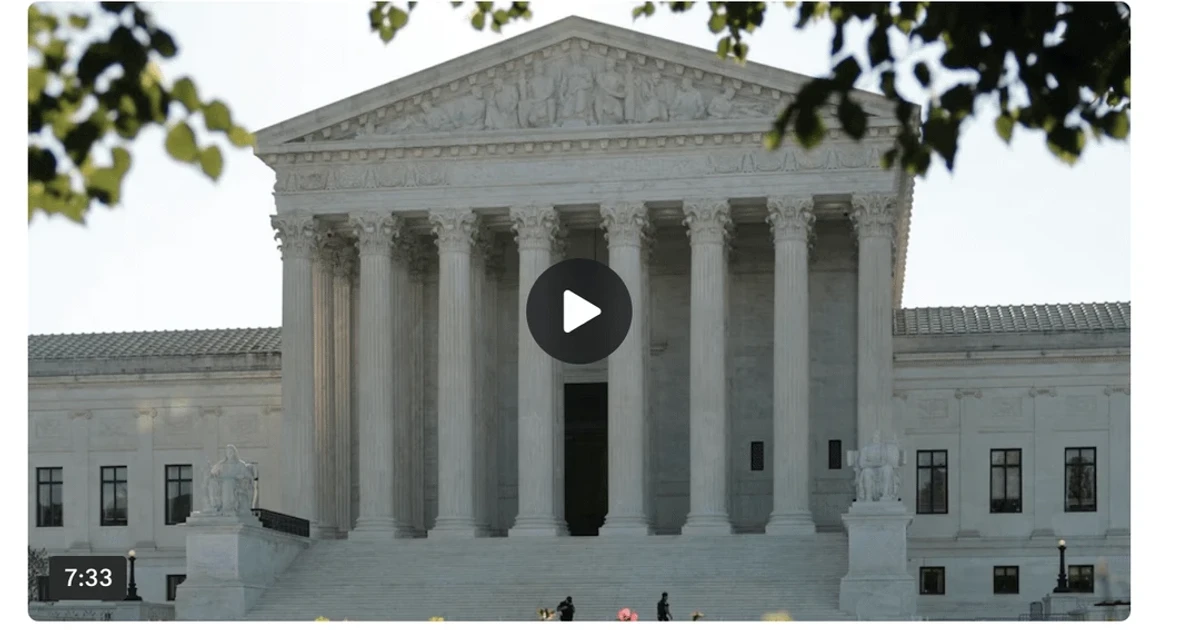
The Supreme Court is expected to rule on Donald Trump’s birthright citizenship order as it issues its final decisions of the term, putting immediate stakes on babies born in the United States to parents in the country illegally or temporarily.
Trump signed the executive order on Jan. 20, 2025, saying children born on U.S. soil to those parents should not automatically receive citizenship. The challenge turns on the 14th Amendment’s Citizenship Clause and the 1898 precedent United States v. Wong Kim Ark, which affirmed birthright citizenship for people born in the country. Lower courts blocked the order before the case reached the high court.
The justices already narrowed one major avenue for challengers on June 27, 2025, when they ruled in Trump v. CASA that federal judges generally cannot use universal injunctions to stop a policy nationwide. That decision did not resolve the constitutional question itself. The court will either take up the merits of whether the order can stand under the 14th Amendment or decide how far any ruling can reach after the limits on nationwide injunctions.
The order would affect children born in the United States to undocumented immigrants and some temporary visa holders. Trump called it a response to what he sees as a "magnet" for illegal immigration. Immigrant-rights advocates and supporters of the traditional reading of the 14th Amendment point to Wong Kim Ark, whose San Francisco case remains central to the legal history of automatic citizenship.
Preliminary FBI data show violent crime fell 9.3% from 2024 to 2025, and murders dropped an estimated 18.1%. Crime analyst Jeff Asher, co-founder of AH Datalytics, said the United States almost certainly had the lowest murder rate ever recorded in 2025, with FBI data going back to 1960, and he said the rate could fall further in 2026.
The national murder rate peaked at 6.8 deaths per 100,000 in 2021, after a previous low of 4.4 in 2014. FBI data show the rate at 9.8 per 100,000 in 1991 and 5.5 in 2000.
Sources
- [1]npr.org
- [2]supremecourt.gov
- [3]fbi.gov
- [4]vpm.org
- [5]scotusblog.com
- [6]kqed.org