US News
Supreme Court Signals Support for Reinstating Border Policy
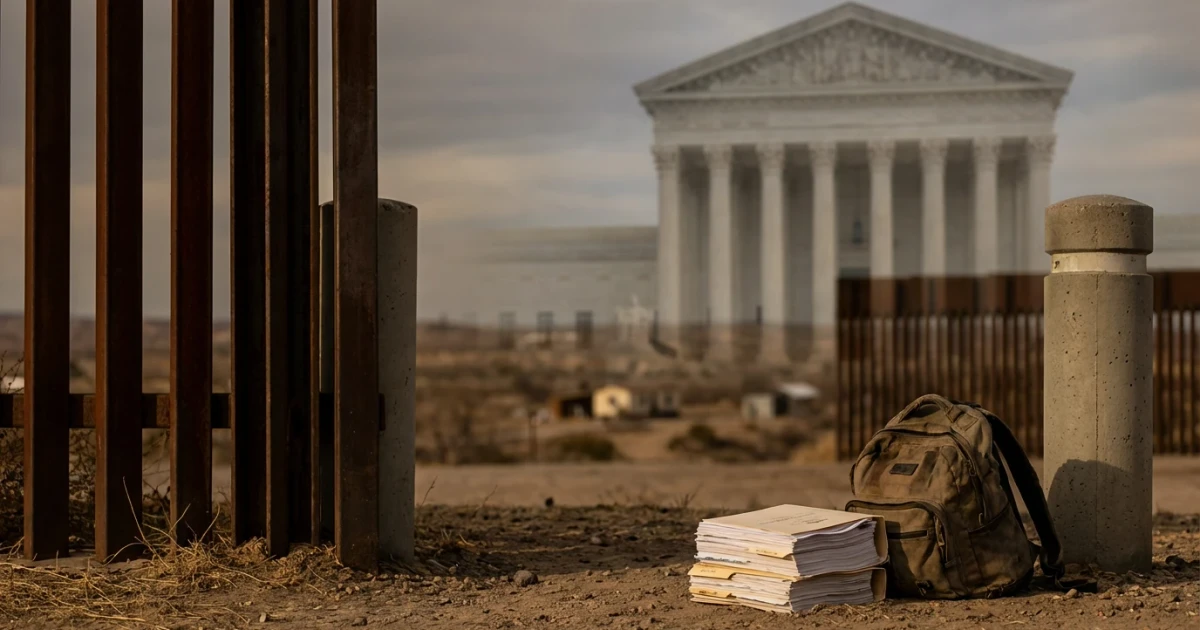
Supreme Court justices appeared inclined this week to revive a Trump-era border policy that requires migrants seeking asylum at the southern border to remain in Mexico while their cases are processed. The policy, officially known as the Migrant Protection Protocols (MPP), has been at the center of contentious legal battles and political debate over U.S. immigration enforcement.
Background on the 'Remain in Mexico' Policy
First implemented in 2019, the Migrant Protection Protocols directed asylum seekers arriving at the southwest U.S.-Mexico border to wait in Mexico while their immigration cases were adjudicated in American courts. The policy was aimed at deterring what officials described as a surge in unauthorized border crossings and meritless asylum claims. Supporters argued that the policy reduced border encounters and discouraged fraudulent asylum applications, while critics said it left vulnerable migrants exposed to dangerous conditions in Mexican border cities.
Supreme Court Hears Arguments on Policy's Future
On Monday, the Supreme Court heard arguments in a case that could determine the fate of the MPP. According to The Washington Post, the justices seemed receptive to arguments from attorneys representing the government, who asserted that reviving the policy is necessary to manage border flows and uphold immigration law.
- Justices questioned whether the executive branch has the authority to suspend the program without congressional approval.
- Some justices expressed concern over the impact of ending the policy on the already backlogged U.S. immigration system.
- The case, officially titled Wolf, Acting Secretary of Homeland Security, et al. v. Innovation Law Lab, et al., could have broad implications for presidential power and border enforcement policy.
Potential Impact on Asylum Seekers and the Border
During oral arguments, the justices probed the consequences of reinstating the MPP for both migrants and U.S. border operations. If the Court allows the policy to be reinstated, tens of thousands of migrants could again be required to wait in often precarious conditions in Mexico, sometimes for months or even years, while their cases are resolved. Data from the Executive Office for Immigration Review show that immigration courts face significant backlogs, with asylum decisions often taking years.
According to various legal analysts, the Court’s decision could also influence how future administrations use executive authority to shape immigration policy. The ongoing debate highlights the tension between border security priorities and humanitarian obligations under U.S. and international law.
Legal and Policy Considerations
Legal experts note that the case hinges not only on statutory interpretation but also on practical considerations for managing migration at the border. The Government Accountability Office previously found that the immigration court system is under strain, noting in a 2020 report that additional resources and reforms are needed to address court backlogs and ensure fair adjudication of cases.
For those interested in the mechanics and history of the MPP, the Migration Policy Institute provides an in-depth explainer on the program’s rollout, its effects on migrants, and its legal challenges.
What Comes Next
The Supreme Court is expected to issue its decision in the coming months. A ruling to revive the MPP would mark a significant shift in U.S. immigration policy, affecting thousands of asylum seekers and shaping the broader debate over border security and humanitarian commitments. Observers will be watching for further guidance not only on the specifics of the policy, but also on the limits of executive discretion in immigration enforcement.