Politics
Supreme Court takes Trump appeal on prolonged immigrant detention
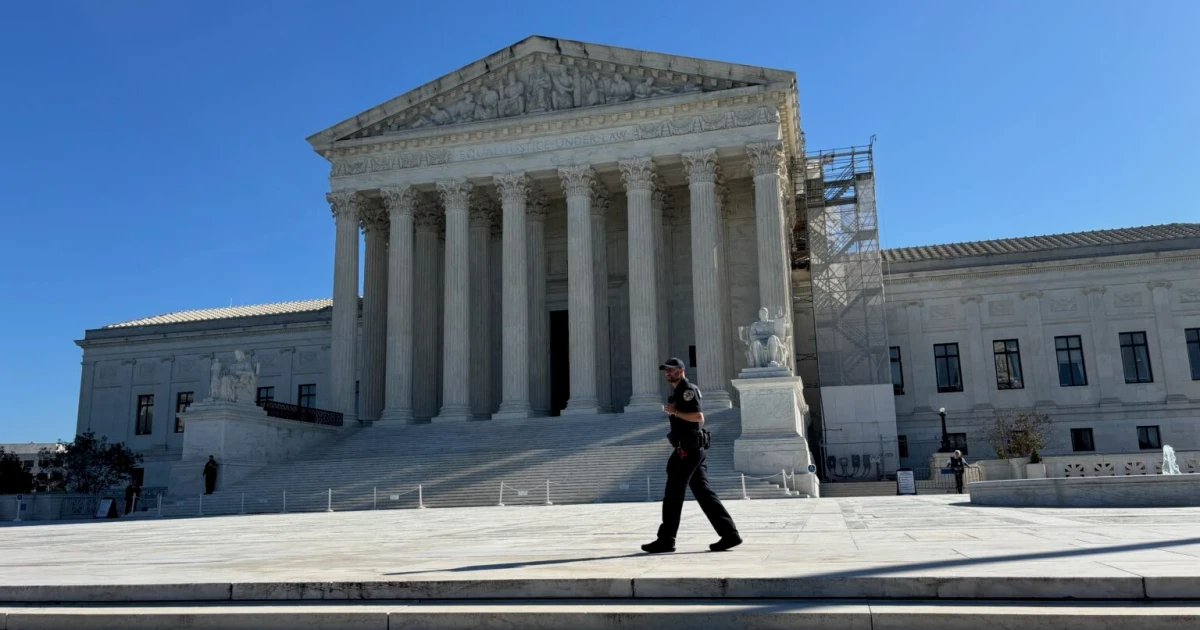
The Supreme Court’s decision to hear the Trump administration’s appeal put a broad question of detention power before the justices: how long the government can hold certain noncitizens while deportation fights drag on, and whether they must get a fast chance to ask for release. The case, Genalo v. Black, could shape the fate of immigrants with criminal convictions who are held in custody without bond hearings, and it could affect tens of thousands of people in U.S. Immigration and Customs Enforcement detention if the government’s view prevails.
The court agreed on June 15, 2026, to review a Second Circuit ruling that said due process bars “unreasonably prolonged” mandatory detention under 8 U.S.C. § 1226(c) without an individualized bond hearing. The appeals court’s May 31, 2024 decision came from two consolidated cases involving lawful permanent residents who had been held for seven months and twenty-one months without hearings. The Supreme Court also directed the parties to brief and argue whether one of the detainees’ cases is moot, setting up a review that will begin in the term opening in October 2026.

One of the New York detainees, Carol Williams Black, had been convicted in 2000 of sexually abusing a child younger than 11. Immigration authorities took him into custody in 2019, a federal judge later ordered a bond hearing in 2020, and he was eventually released on a $15,000 bond. The other consolidated case involved Keisy G.M., and the lower court’s ruling held that the government must justify continued detention by clear and convincing evidence at a bond hearing.
The appeal arrives as the Trump administration pushes for stronger immigration enforcement and fewer procedural barriers. A separate Second Circuit ruling in April 2026 rejected the administration’s newer mandatory-detention policy based on manner of entry, a decision immigrant advocates said preserved bond hearings for millions of people in removal proceedings. Judges in that case described the policy as the broadest mass-detention-without-bond mandate in the nation’s history.
At stake now is more than the two men in Genalo v. Black. A ruling for the government could make prolonged detention easier to defend for people with criminal convictions while their removal cases remain unresolved. A ruling for the detainees could reinforce the Fifth Amendment due-process principle that liberty cannot be taken away for too long without a meaningful chance to challenge government custody, and it would keep pressure on immigration authorities to move faster or justify confinement before a judge.
Sources
- [1]usnews.com
- [2]courtlistener.com
- [3]law.justia.com
- [4]nbcnews.com
- [5]aclu.org
- [6]news.bloomberglaw.com
- [7]notus.org