Politics
Supreme Court upholds mail-in ballots counted after Election Day
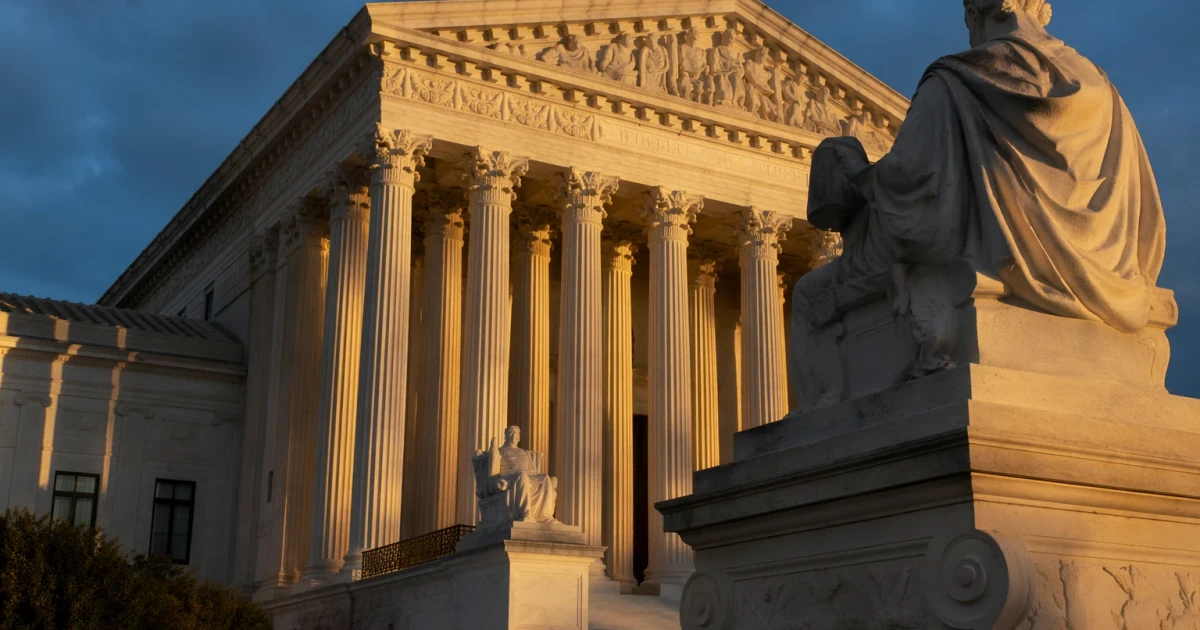
The Supreme Court on Monday preserved counting rules that let mail ballots arrive after Election Day, a decision that protects voters whose ballots are cast on time but slowed by the postal system. The 5-4 ruling in Watson v. Republican National Committee keeps Mississippi’s five-business-day grace period in place and shields similar deadlines in about 30 states and Washington, D.C.
Justice Amy Coney Barrett wrote for the majority, joined by Chief Justice John Roberts and the court’s three liberal justices. The court held that federal election-day statutes set the day for the election but do not require a ballot to be in hand by that date if it was mailed on time. Mississippi’s law allows absentee ballots postmarked by Election Day to be counted if they arrive within five business days.
The case had immediate election-administration consequences. A contrary ruling could have forced states to rewrite ballot-processing rules and retrain voters, local clerks, and election workers only months before the 2026 midterm congressional elections. The Associated Press said the ruling spared officials from that scramble, especially in states where post-Election Day processing is already part of the voting system.
The people most affected are voters whose ballots travel the farthest or move through slower mail channels, including military and overseas voters in many states. The AP said that in just over half of the states with grace periods, the more forgiving deadlines apply only to those voters. For those ballots, the difference between being counted and being rejected can come down to postal timing rather than when the voter completed the ballot.
The dispute began in 2024, when the Republican National Committee, the Mississippi Republican Party, the Libertarian Party of Mississippi and individual voters challenged Mississippi Secretary of State Michael Watson and county election officials. Mississippi adopted its rule during the COVID-19 pandemic and later made it permanent. Trump’s Justice Department backed the challenge, making the case another setback for President Donald Trump, who has repeatedly attacked mail voting.
Mail voting remains a major part of the electorate. The U.S. Election Assistance Commission said it accounted for 30% of turnout in the 2024 election, underscoring how many votes now depend on systems that can absorb weather, distance and delivery delays. In close races, the ruling means those ballots will continue to be counted when they were cast on time, not only when they finally reach election offices.
Sources
- [1]cbsnews.com
- [2]supremecourt.gov
- [3]news.bloomberglaw.com
- [4]politico.com
- [5]usnews.com
- [6]brennancenter.org