Politics
Supreme Court upholds state bans on transgender athletes in girls sports
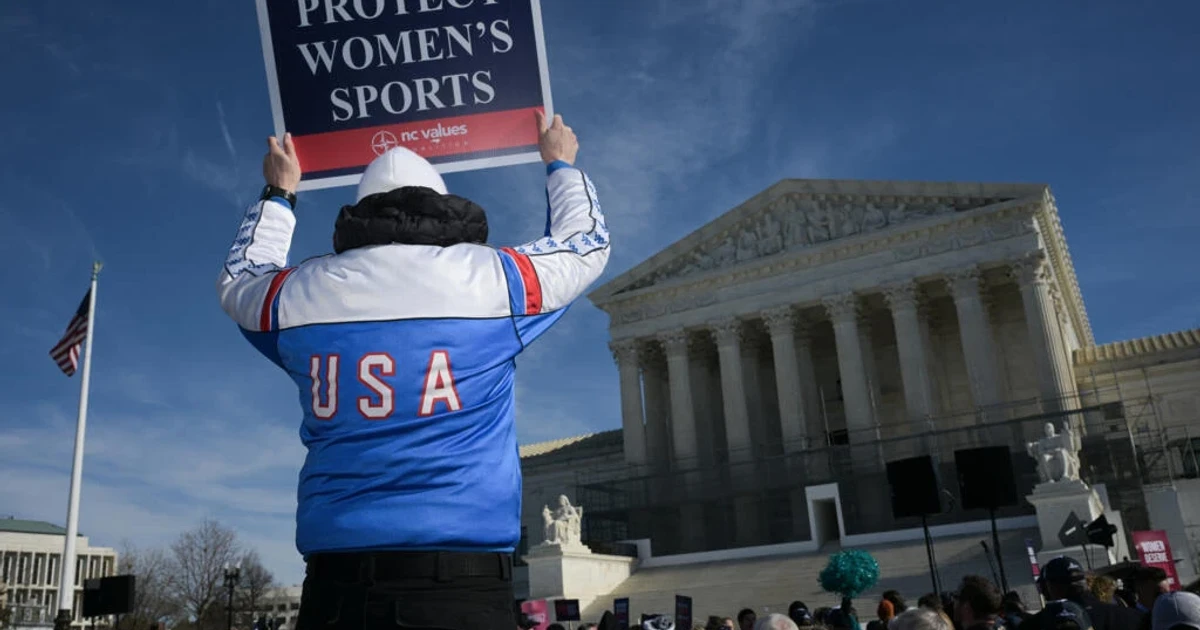
The Supreme Court on Tuesday upheld West Virginia and Idaho laws that bar transgender girls from girls’ and women’s sports, handing state lawmakers a victory in the fight over who sets eligibility rules in public schools and colleges. Justice Brett Kavanaugh wrote for the 6-3 majority, and the decision reversed lower-court rulings that had blocked the bans under Title IX and the 14th Amendment.
The Court said schools may maintain women’s and girls’ teams for biological females and determine eligibility based on biological sex. In the West Virginia case, the state’s Save Women’s Sports Act, enacted in 2021, says sex is determined by biology, while Idaho’s 2020 Fairness in Women’s Sports Act uses the same rule and says separate sex-specific teams further sex equality by preserving opportunities for female athletes. The syllabus says the Court viewed sex-separated teams as reasonable because inherent physical differences can affect injury risk and competitive fairness.
The practical effect is immediate for school systems in the states that have passed these laws. Athletic directors, principals and state associations in West Virginia and Idaho can now enforce their roster rules without the federal constitutional barrier that had stood in the way, and the ruling strengthens similar statutes across the country. The Court said 27 states have enacted laws over the past six years that keep female sports for biological females, while 21 states allow transgender girls to compete, including California and New York.

Justice Sonia Sotomayor, joined by Justices Elena Kagan and Ketanji Brown Jackson, dissented in part and said the majority cut off transgender students’ constitutional claims before lower courts could resolve the factual disputes around individual athletes. Her warning signals the next legal frontier: broad equal-protection attacks on sex-based team rules are now much harder, but future plaintiffs may still try as-applied challenges in cases where they argue a state ban should not govern a specific student. For districts and athletic leagues, the ruling now turns a national civil-rights fight into a state-by-state compliance map, with eligibility decisions following the law of the state rather than a single national rule.
Sources
- [1]cbsnews.com