US News
Supreme Court upholds state bans on transgender girls in school sports
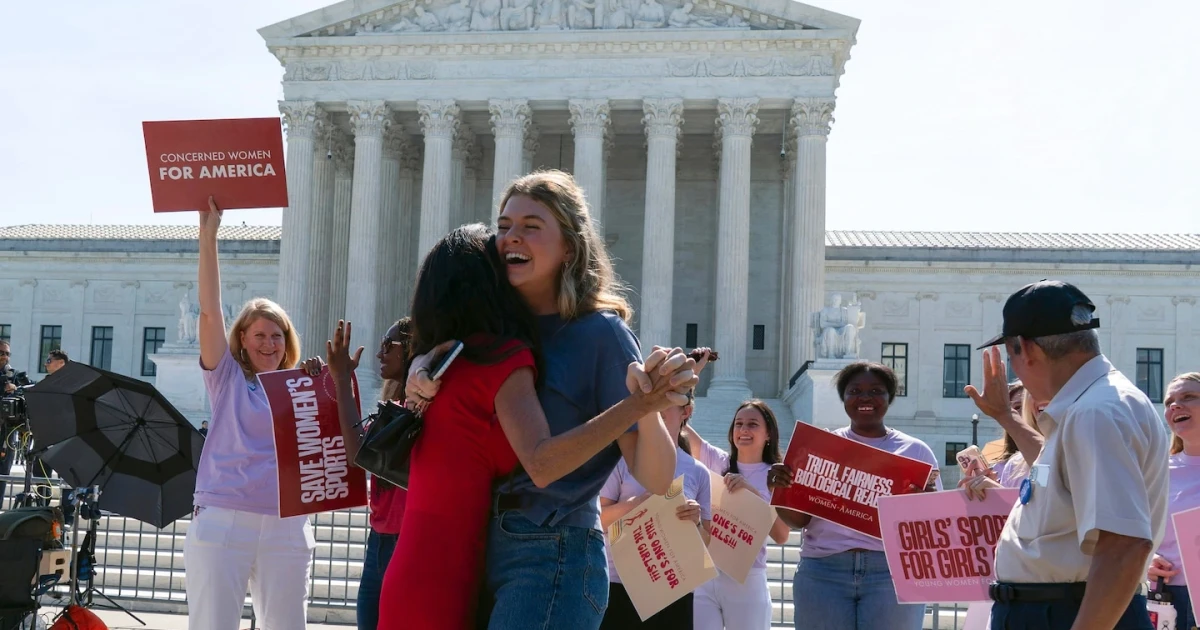
The Supreme Court’s 6-3 decision on June 30 in West Virginia v. B.P.J. and Little v. Hecox upheld state bans on transgender girls and women competing on girls’ and women’s school sports teams. The ruling strengthens the position of women and girls who argue that schools or states exposed them to unequal competition, but it does not itself hand plaintiffs money or settle every question about liability.
The cases turned on Title IX and the Constitution’s Equal Protection Clause, after lower federal courts had blocked enforcement of the Idaho and West Virginia laws. With those bans back in force, the decision leaves intact restrictions in states such as Idaho and West Virginia and reaches far beyond them, because 27 states have adopted similar laws restricting transgender athletes in girls’ and women’s sports.
A plaintiff will now have a stronger argument that courts can recognize harm from exclusion, unequal treatment, or lost competitive opportunity when a school or athletic body allows transgender girls or women onto female teams. But future lawsuits will still have to clear the usual legal thresholds: identifying the institution responsible, showing a concrete injury, and connecting that injury to a policy or decision a court can remedy.

The NCAA’s updated transgender participation policy, effective February 6, 2025, bars athletes assigned male at birth from competing on women’s teams in NCAA sports with gender-separated championships, while schools retain autonomy but remain subject to federal, state and local law. NCAA President Charlie Baker does not expect the association to change its rules after the Supreme Court ruling.
In July 2025, the University of Pennsylvania agreed to ban transgender women from women’s sports as part of a civil-rights resolution involving swimmer Lia Thomas.
Sources
- [1]news.google.com
- [2]cbsnews.com
- [3]ncaa.org
- [4]supremecourt.gov
- [5]scotusblog.com