US News
Suspect in Correspondents’ Dinner Shooting Linked to Disturbing Online Claims
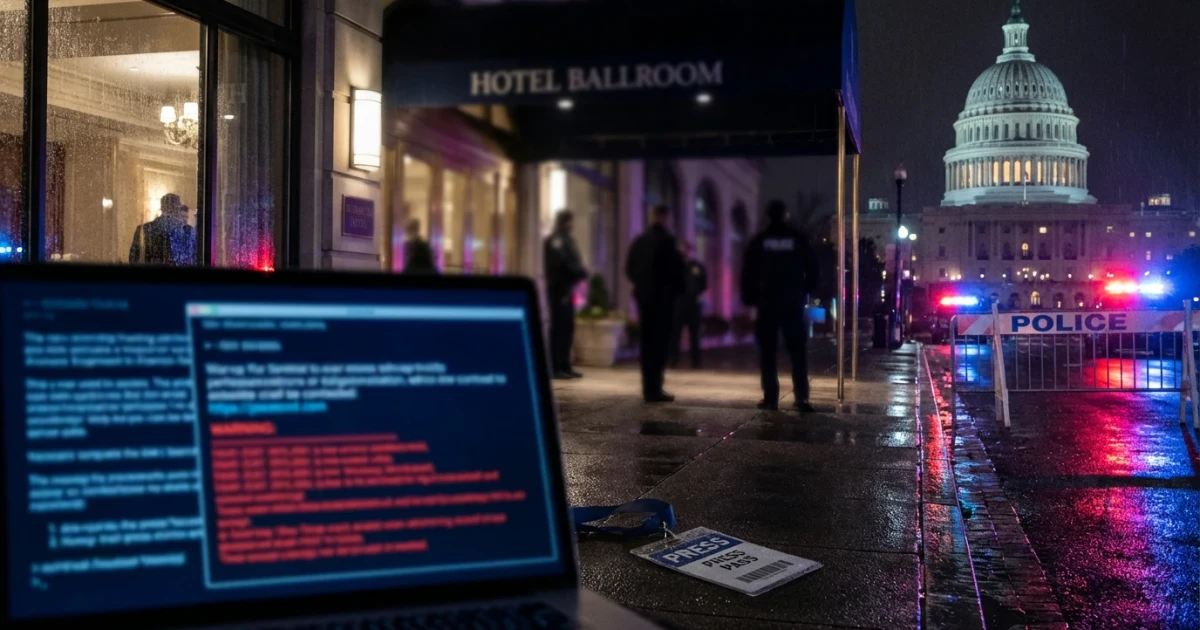
Security at the annual White House Correspondents’ Dinner has come under sharp scrutiny after a shooting incident disrupted the high-profile event. According to reporting from The Washington Post, the suspect in the case had previously referred to himself online as a “friendly federal assassin,” language that is now being examined by investigators as they piece together motivations and potential warning signs.
Incident at the Correspondents’ Dinner
The shooting occurred during one of Washington, D.C.’s most well-attended events, drawing journalists, government officials, and celebrities. As gunfire erupted, most guests dived for cover, while one attendee was notably described by The Washington Post as continuing to eat his burrata salad amid the chaos—a detail highlighting the confusion and disbelief that gripped the room in the moments following the shots.
Suspect’s Troubling Online Persona
Investigators, as noted by The Washington Post, are focusing on the suspect’s digital footprint, where he called himself a “friendly federal assassin.” This unsettling self-description is being analyzed for indications of premeditation or intent. The case underscores the growing challenge faced by law enforcement in identifying credible threats from online rhetoric, especially as such language can overlap with real-world violence.
Context: Threats Against Public Figures
The shooting at the Correspondents’ Dinner is the latest in a series of high-profile security incidents in public spaces. Analysis from the U.S. Secret Service’s 2023 report on mass attacks shows that assailants often display behavioral warning signs, such as threatening communications or fixation on government targets, before acting. The suspect’s self-styled moniker fits a pattern seen in previous cases examined by federal authorities.
Official statistics from the FBI’s 2022 violent crime tables indicate that incidents involving firearms at public gatherings remain rare but are particularly disruptive when they occur. The event’s high-profile nature and concentration of public figures heighten the stakes for both security professionals and policymakers.
Federal Response and Legal Proceedings
Following the incident, federal authorities launched a criminal investigation, drawing on resources from agencies tasked with protecting public officials and large-scale events. Details of the case, including any criminal complaints or charges, are typically filed in databases such as the CourtListener Federal Docket Search, which provides public access to federal court proceedings.
Legal analysts have noted that attacks or threats against public figures are prosecuted under a range of federal statutes. The suspect’s self-identification and actions at a federally protected event could result in significant charges, as outlined in legislation such as the Federal Protective Service Reform Act of 2018.
Looking Ahead: Warning Signs and Prevention
This incident renews debate over early intervention strategies and the monitoring of public threats. Research summarized by the National Criminal Justice Reference Service finds that many attackers broadcast their intentions in advance, though distinguishing serious threats from hyperbolic statements remains a challenge for law enforcement.
- High-profile events like the Correspondents’ Dinner require layered security and advance threat assessment.
- Online rhetoric, as seen in this case, may serve as an early warning if properly identified and acted upon.
- Federal agencies continue to refine methods for distinguishing credible threats from the background noise of the internet.
As legal proceedings move forward, the case is likely to prompt new discussions among lawmakers, law enforcement, and event organizers about improving security and identifying behavioral warning signs before violence occurs.